Kayaking With Your Dog: What to Know Before You Go
For many dog owners, an adventure is always better with their furry friend along for the journey. And kayaking can be a wag-tastic way to explore the outdoors together.
But before you picture your four-legged bestie sitting happily at the front of your kayak, taking in the scenery, there are a few things worth mulling over.
It’s not just cats—some dogs can also be slow to warm to the idea of being out on the water. But some patience, along with the right preparation, can make a big difference to how comfortable and safe the experience is for both of you.
So, here's what you should know before hopping in your kayak and taking your pup out kayaking for the first time.
Is Your Dog Suited to Kayaking?
Some dogs are naturally comfortable around water, and some are even bred for it. Others would much rather keep all four paws squarely on solid ground.
A dog's breed or size doesn't necessarily determine whether they'll enjoy kayaking. Their temperament, confidence and ability to remain relatively calm are often much more important.
A dog that becomes highly excited by birds, passing boats or other animals may need some additional training before heading onto the water.
It's also worth considering your dog's age, fitness and physical condition. Older dogs or those with mobility difficulties may struggle to get in and out of a kayak comfortably.
The important thing is making sure your dog actually enjoys the experience, rather than simply tolerating it (you know, like they do every year when you put them in a Halloween costume).
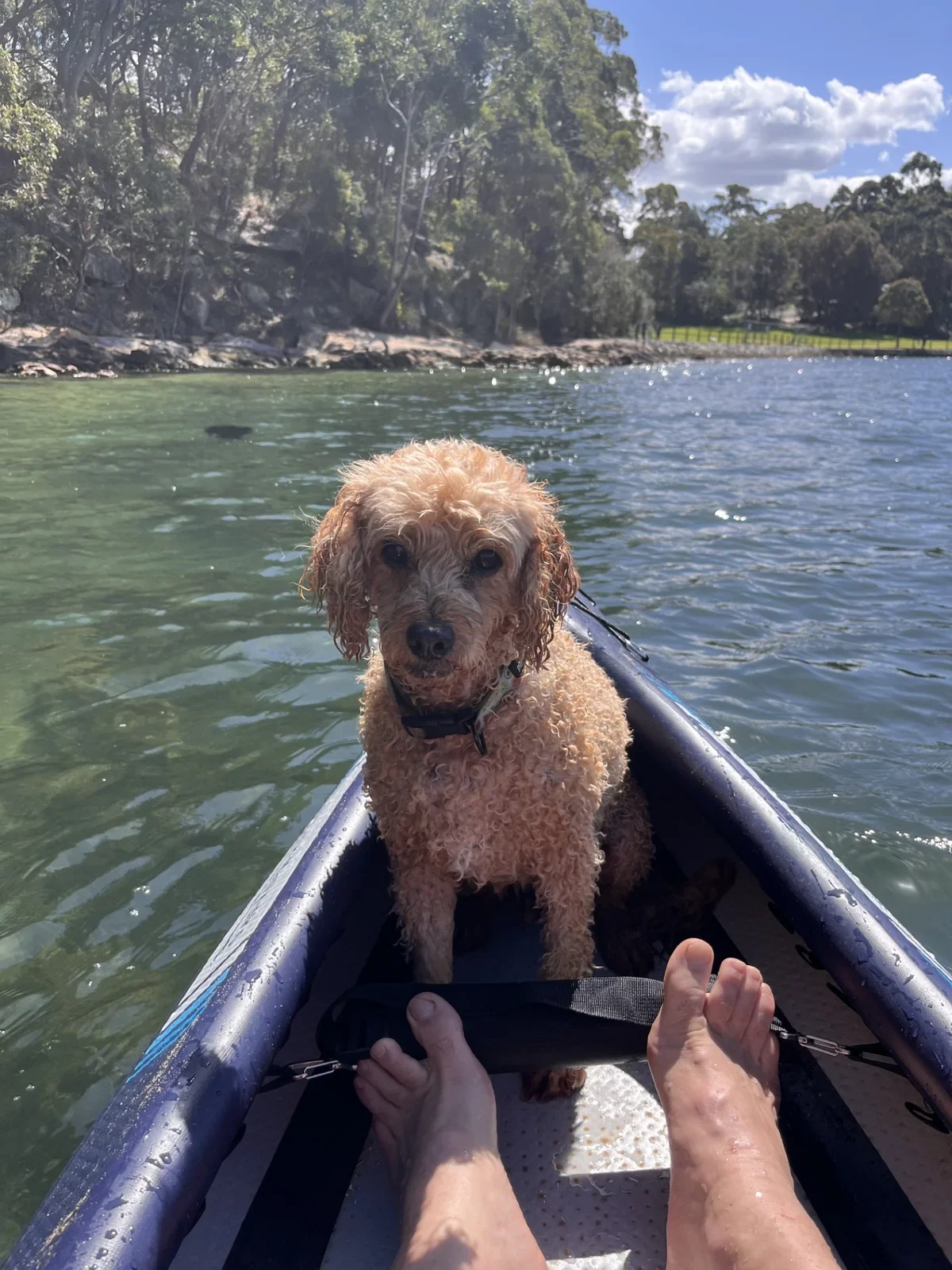
Choosing the Right Kayak for Your Dog
When kayaking with a dog, stability and space are particularly important.
Your dog needs somewhere comfortable to sit or lie down without interfering with your paddling. Larger dogs naturally need more room, but even smaller dogs benefit from having a designated spot.
A wide, stable recreational kayak like the R1 and R2 Ultra is generally a good starting point, especially if you’re new to kayaking. Kayaks with a multi-chine hull, such as the Razor Kayaks Sprint Solo and Sprint Duo, also offer secondary stability, helping the kayak remain stable as it tilts. This can be useful when paddling with an active dog. If you have a large dog a 2-person kayak will provide more room for the two of you.
Inflatable kayaks can be a practical option, with some models offering an open layout and generous interior space for your dog.
You might be wondering whether your dog’s claws could damage an inflatable kayak. Razor Kayaks are made from robust, reinforced materials designed to withstand regular use. Keeping your dog’s nails trimmed and adding a non-slip mat can provide extra protection while giving them a comfortable surface with better grip. You can find more information about what materials make the best inflatable kayak here.
For example, the Razor Kayaks R2 Ultra and Sprint Duo offer roomy cockpits and can be configured for solo paddling, leaving extra space for a canine passenger.
Whatever kayak you choose, check that its maximum load capacity comfortably accommodates you, your dog and any equipment you’re bringing.
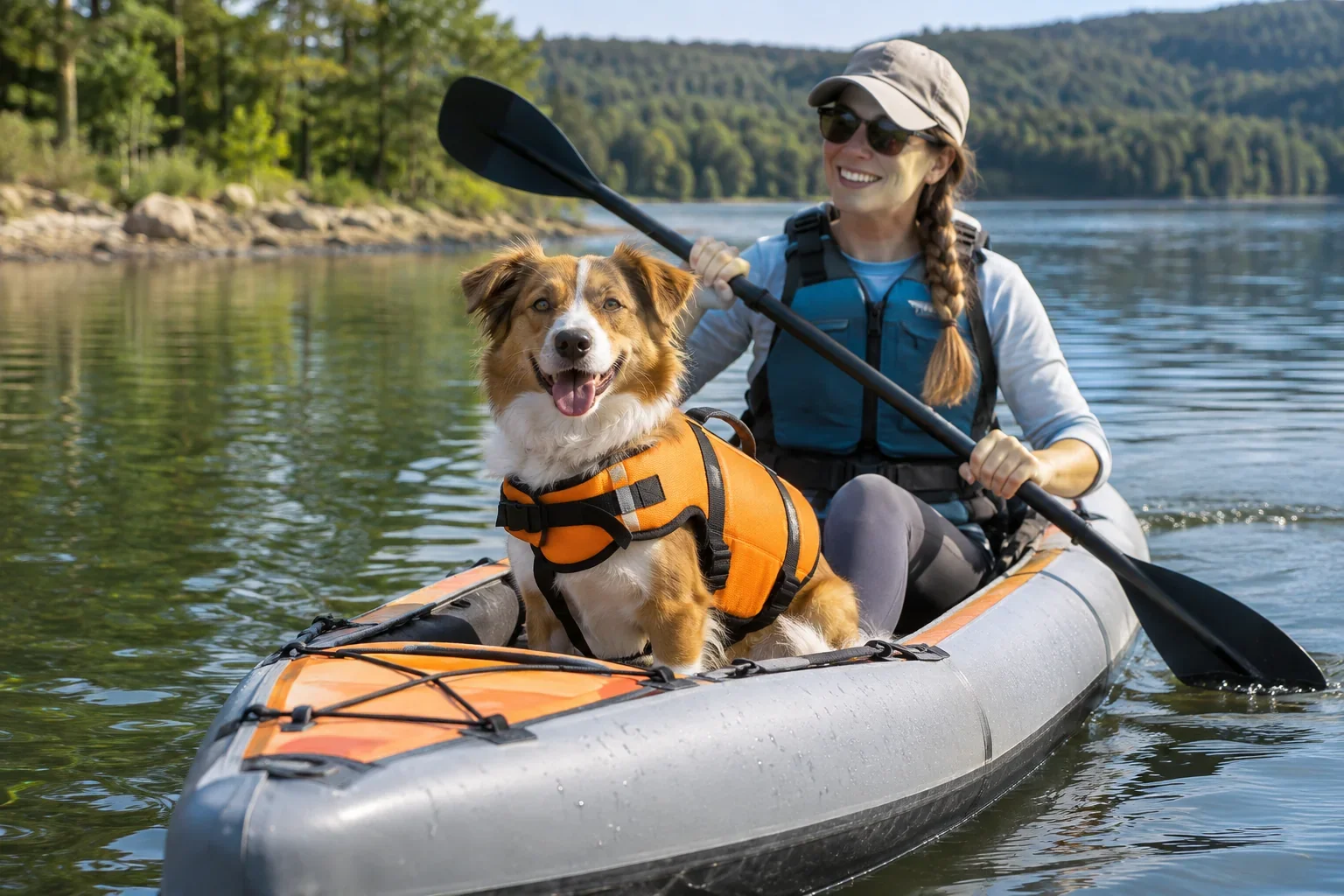
Introduce Your Dog to the Kayak on Land
Your dog's first introduction to kayaking shouldn't involve suddenly floating away from the shore.
Instead, start with the kayak on level ground and allow your dog to investigate it at their own pace.
Encourage them to climb in, sit down and become familiar with the surfaces. Treats and positive reinforcement can help them associate the kayak with something enjoyable.
Once they're comfortable, introduce the paddle and practice the movements you'll make while paddling.
It's useful to teach your dog where you'd like them to sit and encourage them to remain there.
Don't rush this stage. A dog that feels comfortable in the kayak on land is much more likely to settle once you're on the water.
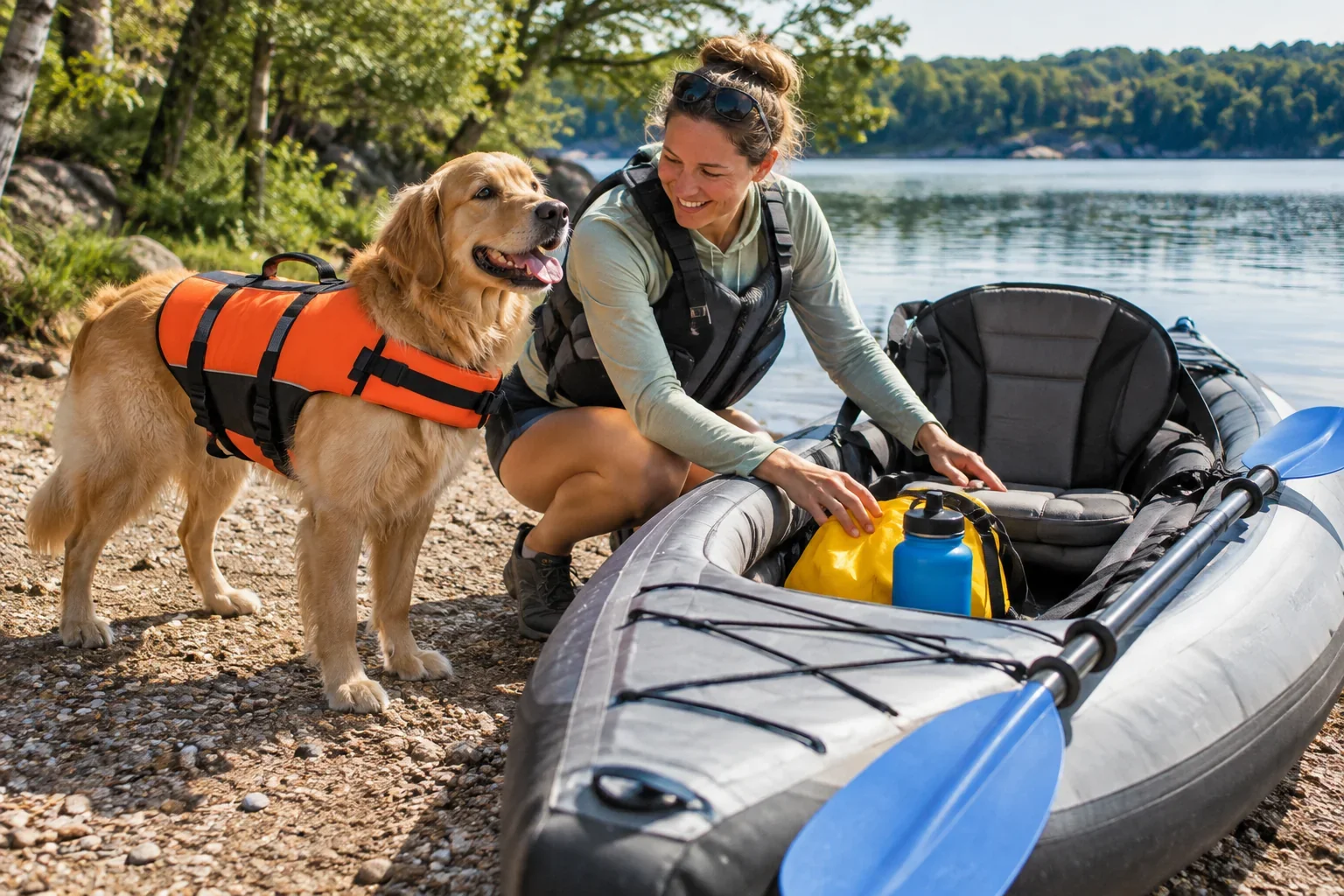
Make Sure Your Dog Has a Life Jacket
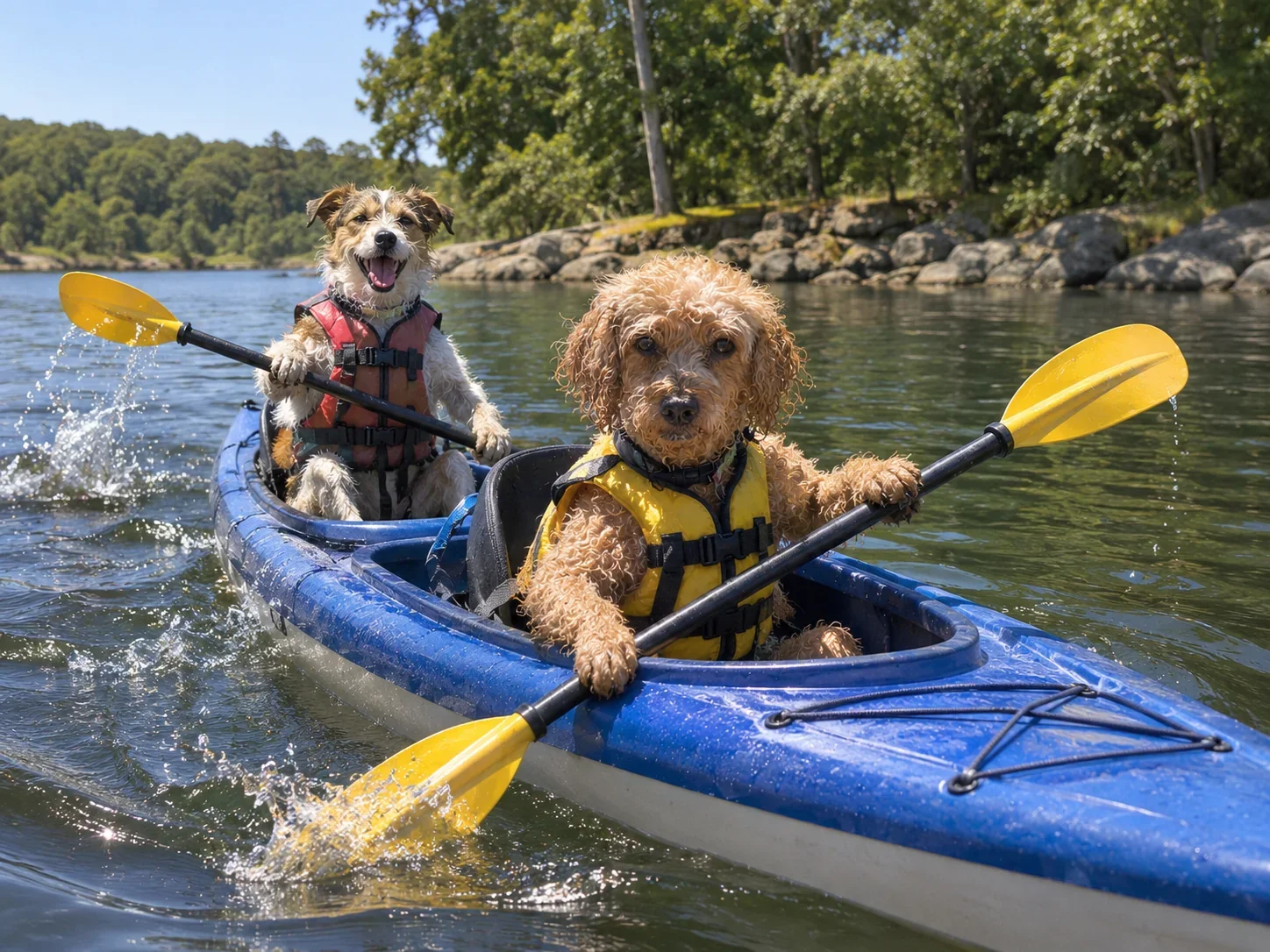
Even if your dog is an excellent swimmer, a properly fitted canine life jacket is essential.
An unexpected fall into the water can be disorienting, particularly if your dog becomes frightened or tired.
Look for a life jacket designed specifically for dogs, with secure adjustable straps and a sturdy handle on the back.
The handle can be particularly helpful if you need to assist your dog back into the kayak.
Let your dog become comfortable wearing the jacket before your first outing, and practice swimming and assisted recovery in safe, shallow water.
You should also wear your own appropriately fitted life jacket.
One important precaution: never tether your dog to the kayak. If the kayak capsizes, a leash or tether could trap your dog underwater.
Choose Calm Water for Your First Trip
Your first outing together isn't the time to tackle challenging conditions.
Look for a sheltered lake or calm stretch of water with minimal current, light winds and easy access to shore.
Avoid busy boating areas, strong currents and locations where waves could make entering or leaving the kayak difficult.
A gently sloping beach or shoreline is ideal, as it allows your dog to get in and out without negotiating slippery rocks or steep banks.
Keep the first paddle short and remain close to shore.
If your dog appears anxious or uncomfortable, there's nothing wrong with turning around and trying again another day.
Make the Kayak Comfortable
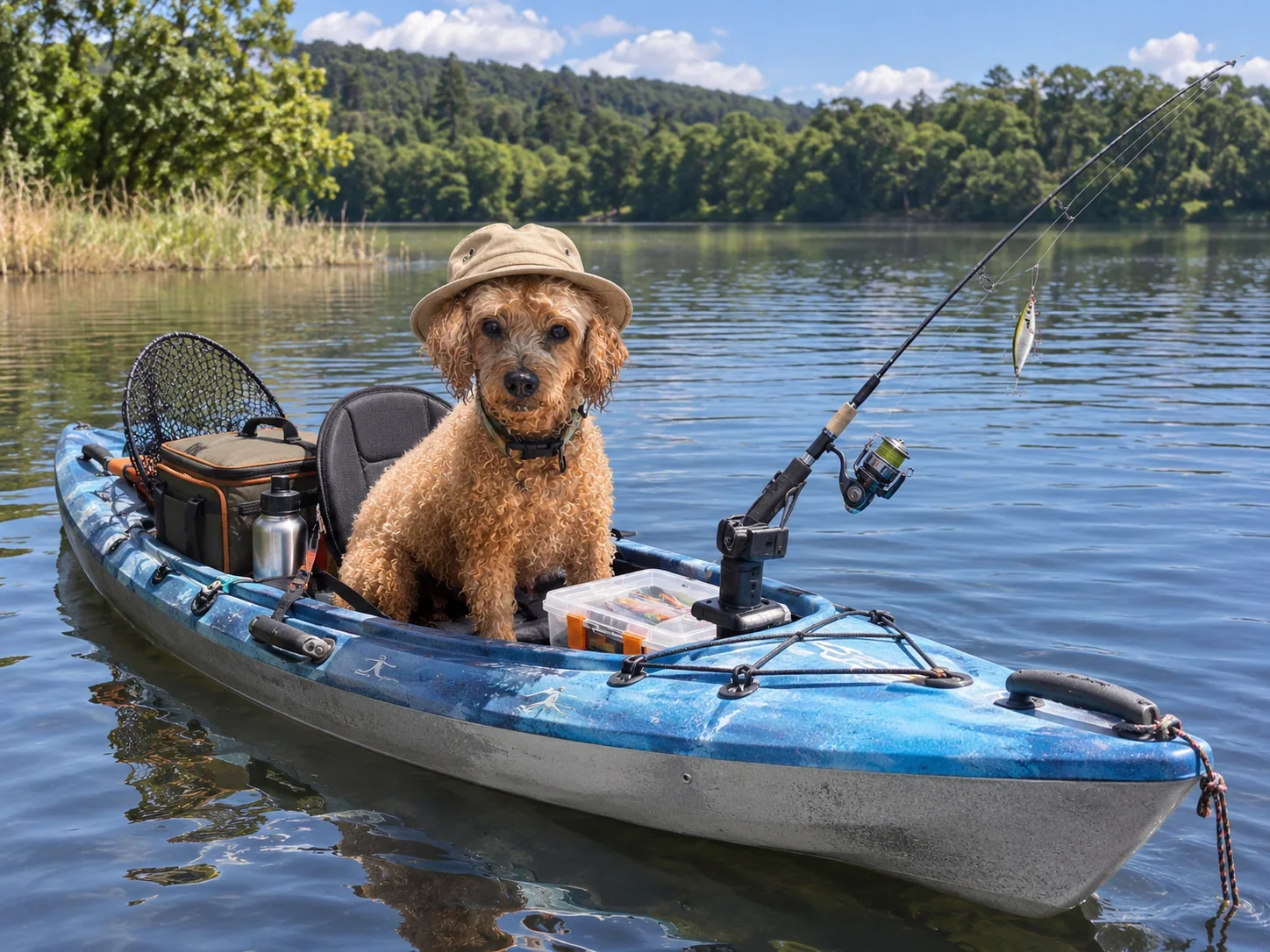
A slippery kayak floor can make it difficult for dogs to maintain their footing, particularly when the kayak moves.
A suitable non-slip mat can help provide grip and give your dog a more comfortable place to sit or lie down but it’s not essential for a kayak made with solid materials.
You should also consider the weather. Dogs can become overheated in direct sunlight, particularly during warmer months.
Bring fresh drinking water, a collapsible bowl and any other essentials your dog might need.
If you're planning a longer outing, allow time for breaks on shore so your dog can stretch, drink and relieve themselves.
And while your dog may be enthusiastic about investigating the water, avoid encouraging them to drink from lakes, rivers or the sea.
Be Prepared for an Unexpected Swim
Even well-trained dogs can become distracted.
A nearby duck, an interesting splash or an unexpected movement could be enough to tempt your dog overboard.
Before heading out, practice how you'll help your dog back into the kayak from the water.
This is especially important with larger dogs, as lifting a heavy, wet animal can affect the kayak's stability.
Keep your movements controlled and avoid leaning so far over the side that you risk capsizing yourself, counter balancing helps.
If getting your dog back aboard isn't manageable, staying close enough to safely reach shore is an important precaution.
Enjoy the Adventure Together
Kayaking with your dog can be a wonderful way to spend time outdoors, provided you approach it with a little patience and preparation.
Choose a stable kayak, introduce your dog gradually, use appropriate safety equipment and start with calm, sheltered conditions.
Most importantly, pay attention to your dog's behavior. Some will take to kayaking almost immediately, while others may need several outings to build confidence.
And some may decide that watching from the shoreline is much more their style.
Either way, a successful trip isn't about how far you paddle. It's about making the experience enjoyable for both of you.
The water will still be there tomorrow. And with a little luck, it'll be considerably more cooperative.