
Types Of Inflatable Kayaks Explained
As discussed in our article Inflatable Kayaks: The Complete Guide, there are several common types of inflatable kayaks, each designed for a different style of paddling.
For some people, that overview is enough to make a decision. But if you’re still unsure which type is right for you, you’re not alone. In practice, choosing the right kayak comes down to a handful of key considerations, where you plan to paddle, how far you want to go, who you’ll be paddling with, and what kind of experience you’re looking for on the water.
This section is designed to walk through those considerations in more detail, so you can narrow things down with more confidence and choose a kayak that actually fits how you want to paddle.
If you’ve already read the complete guide, feel free to skip ahead to our Water Conditions section. If not, read on.
Putting Design Into Practice
One of the most important decisions when choosing an inflatable kayak is how you plan to use it. While there are some excellent all-rounders available, no kayak can truly excel at everything. Different activities demand different designs and construction. For example, a kayak built for category V whitewater won’t be suitable for long-distance touring, and vice versa, because each requires very different performance characteristics.
Below are some of the most common types of inflatable kayaks and the kinds of paddling they’re designed for.
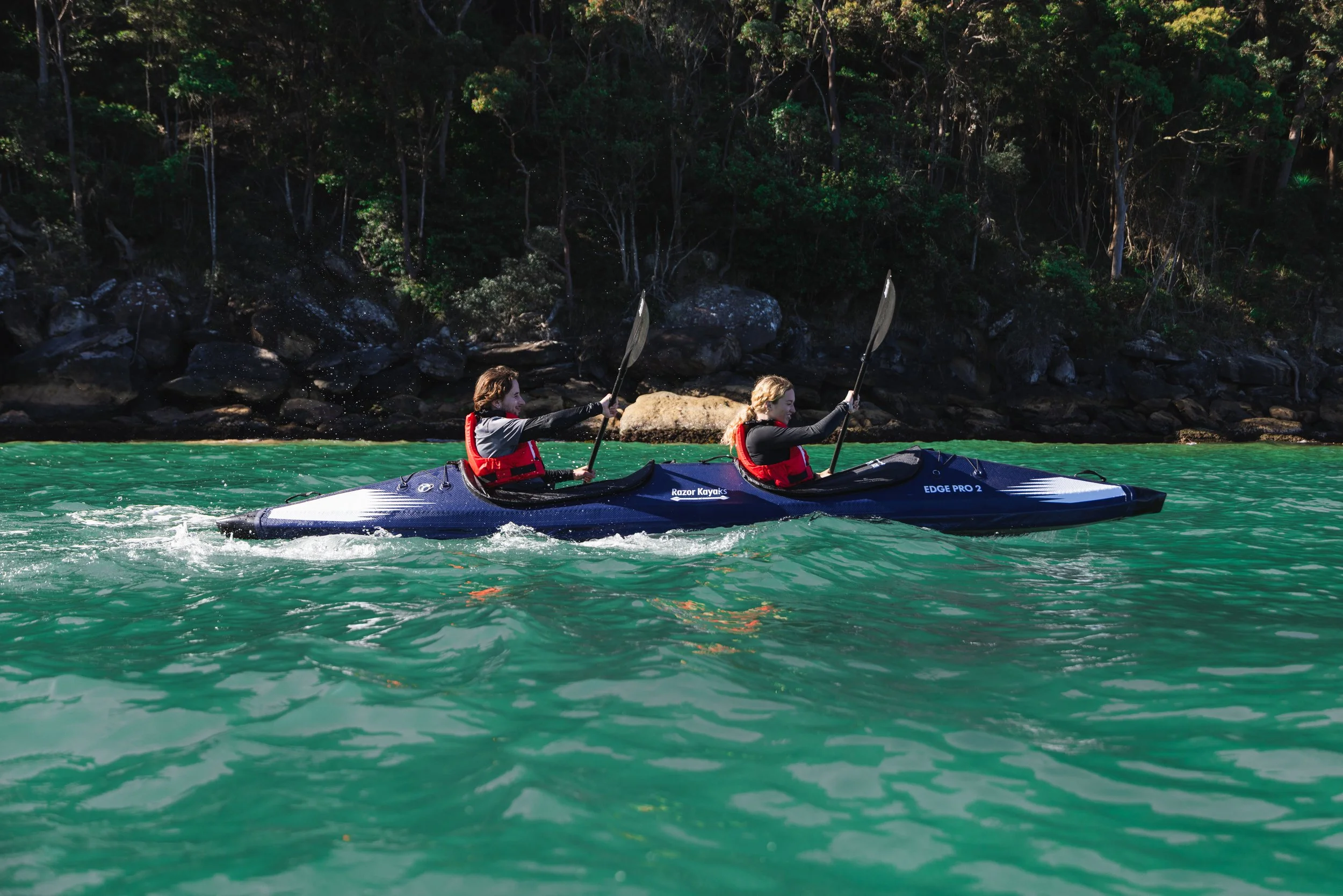
Touring Inflatable Kayaks
Best for distance paddling and longer trips.
Touring kayaks are designed to cover distance efficiently. They are typically longer and narrower, which helps them glide smoothly between paddle strokes and maintain momentum over longer paddles. Many include fins to help them track straight in wind or open water.
Because they’re often used for extended trips, touring kayaks usually include generous deck rigging or cargo areas at the bow and stern, allowing paddlers to carry dry bags, food, spare clothing, and safety gear.
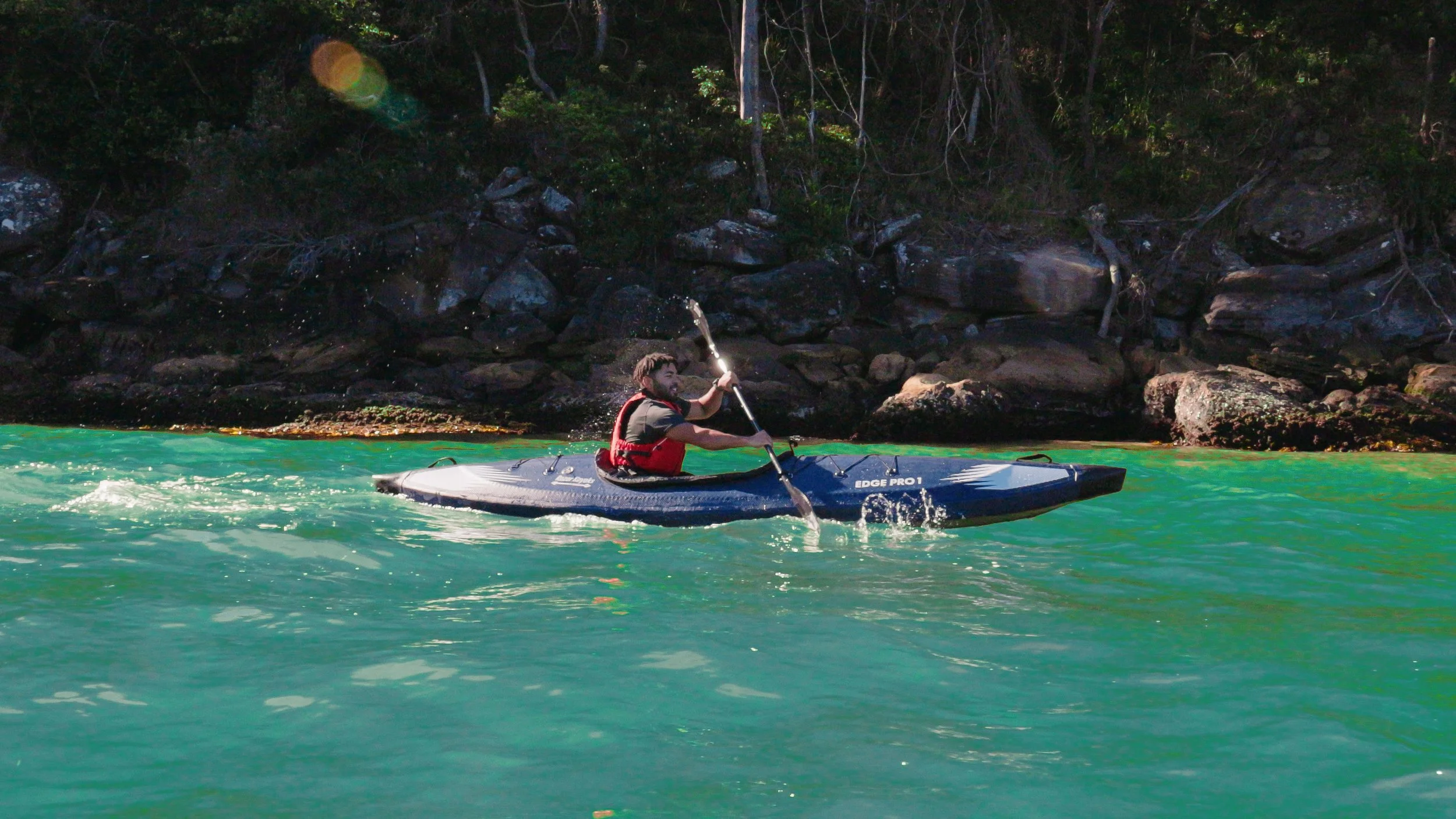
Adventure Inflatable Kayaks
Best for versatile paddling and exploring different waterways.
Adventure kayaks are designed to be adaptable all-rounders. They usually balance stability, efficiency, and cargo capacity, making them suitable for day trips, exploring rivers and lakes, or light overnight trips.
Their length and width generally sit between touring and recreational designs, offering a mix of glide and maneuverability. Many also include deck rigging or attachment points for carrying additional gear.
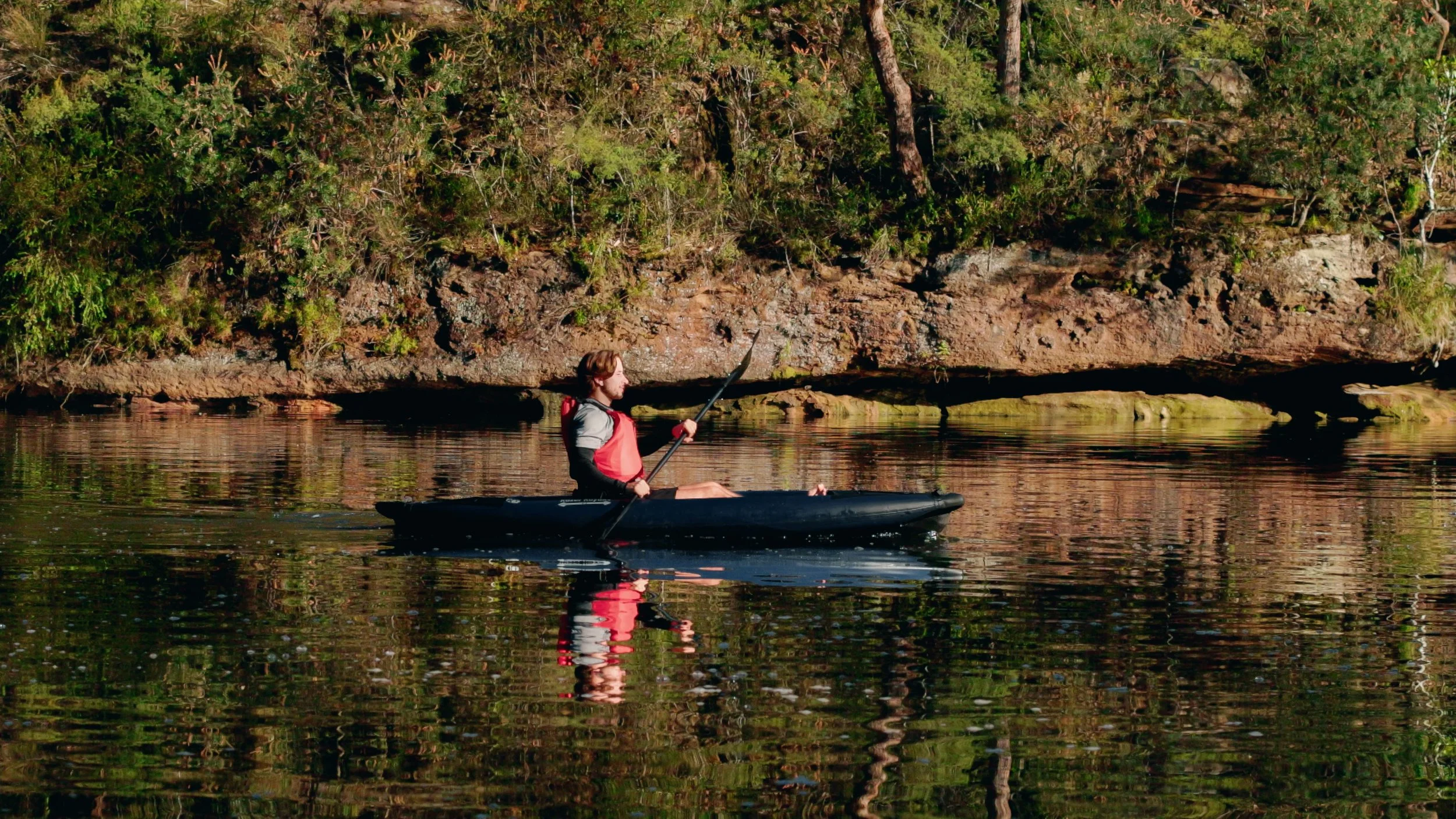
Recreational Inflatable Kayaks
Best for relaxed paddling on calm water.
Recreational kayaks prioritize simplicity and ease of use. They are usually shorter and wider, which makes them feel stable and approachable for beginners or casual paddlers. Speed and long-distance efficiency are not the main priorities.
Storage space is typically modest, often limited to small deck bungees or cargo areas for essentials such as a dry bag or water bottle. These kayaks are best suited to relaxed paddling on calm lakes, sheltered waterways, or short trips close to shore.
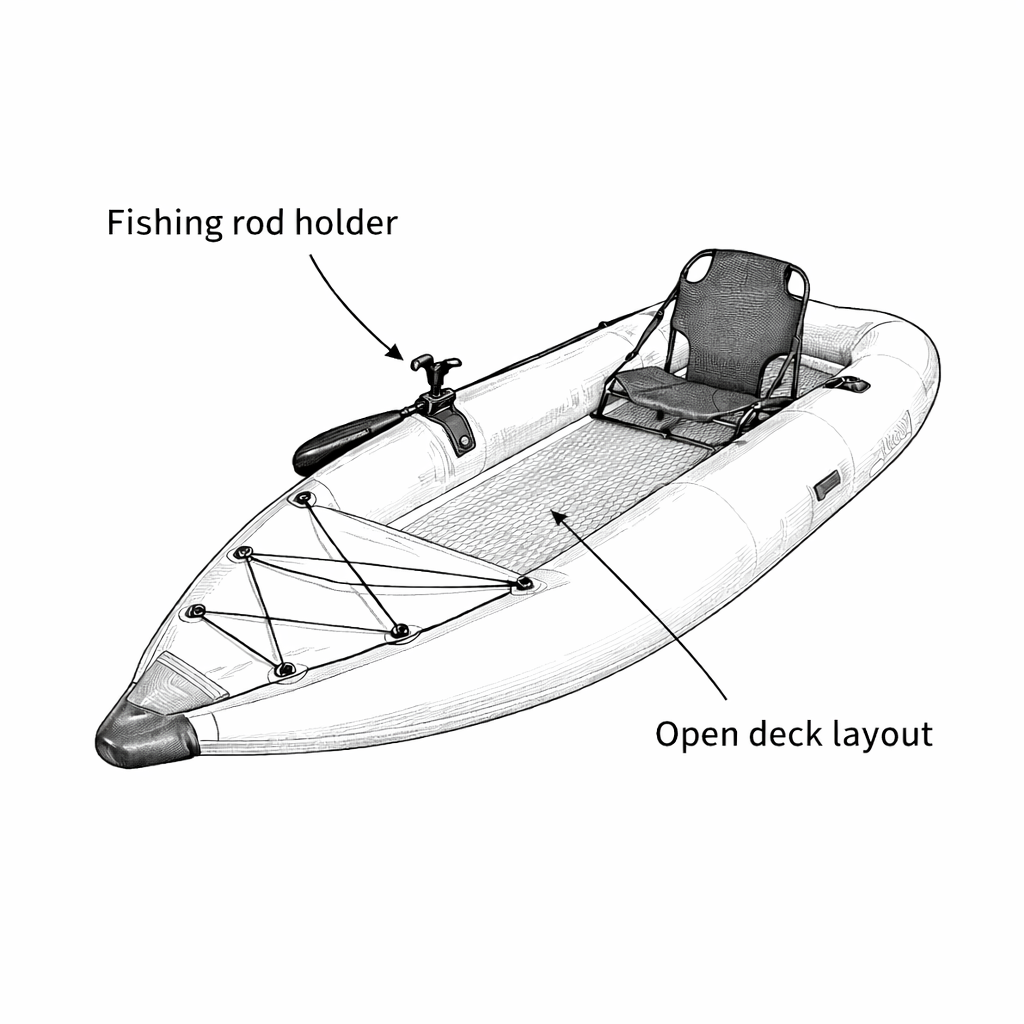
Fishing Inflatable Kayaks
Best for stability and gear-heavy outings.
Fishing kayaks prioritize stability and equipment storage. Because anglers often reach for gear or cast while seated, these kayaks are usually wider and designed to feel very stable on the water.
They commonly include open deck layouts, mounting points and space for rods, tackle boxes, higher seats and other fishing equipment. Efficiency is less of a focus, as the main goal is providing a steady platform for managing gear comfortably.
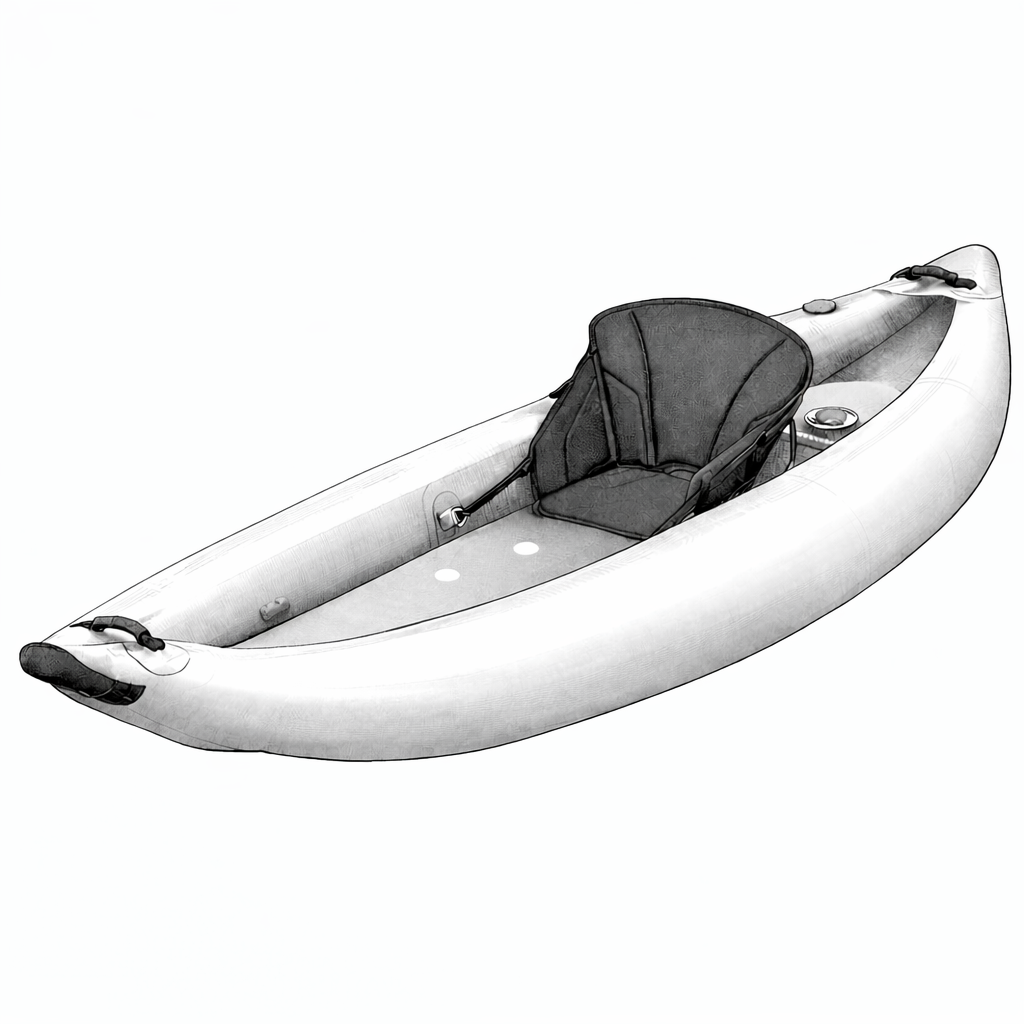
Whitewater Inflatable Kayaks
Best for maneuverability in moving water.
Whitewater kayaks are designed for control in rivers and rapids. They are typically shorter and include significant rocker, which helps them turn quickly and ride over waves, currents, and obstacles. They usually include self-bailing drainage holes, which can reduce efficiency on flat water but allow water to drain out of the hull as you move down the river through rapids.
In these environments, maneuverability and responsiveness matter far more than straight-line efficiency. Storage space is usually minimal, as the kayak is built to remain compact and agile rather than carry large amounts of gear.
Lakes and rivers
Calm lakes and sheltered waterways are generally more forgiving and place fewer demands on the kayak. In these environments, most good quality inflatable kayaks will be able to handle these conditions, which makes them the most accessible place to start. Efficient kayaks with rounded, multi-chine hulls or flat bottoms are great here.
Water Conditions
Where you plan to paddle is one of the first things to think about.
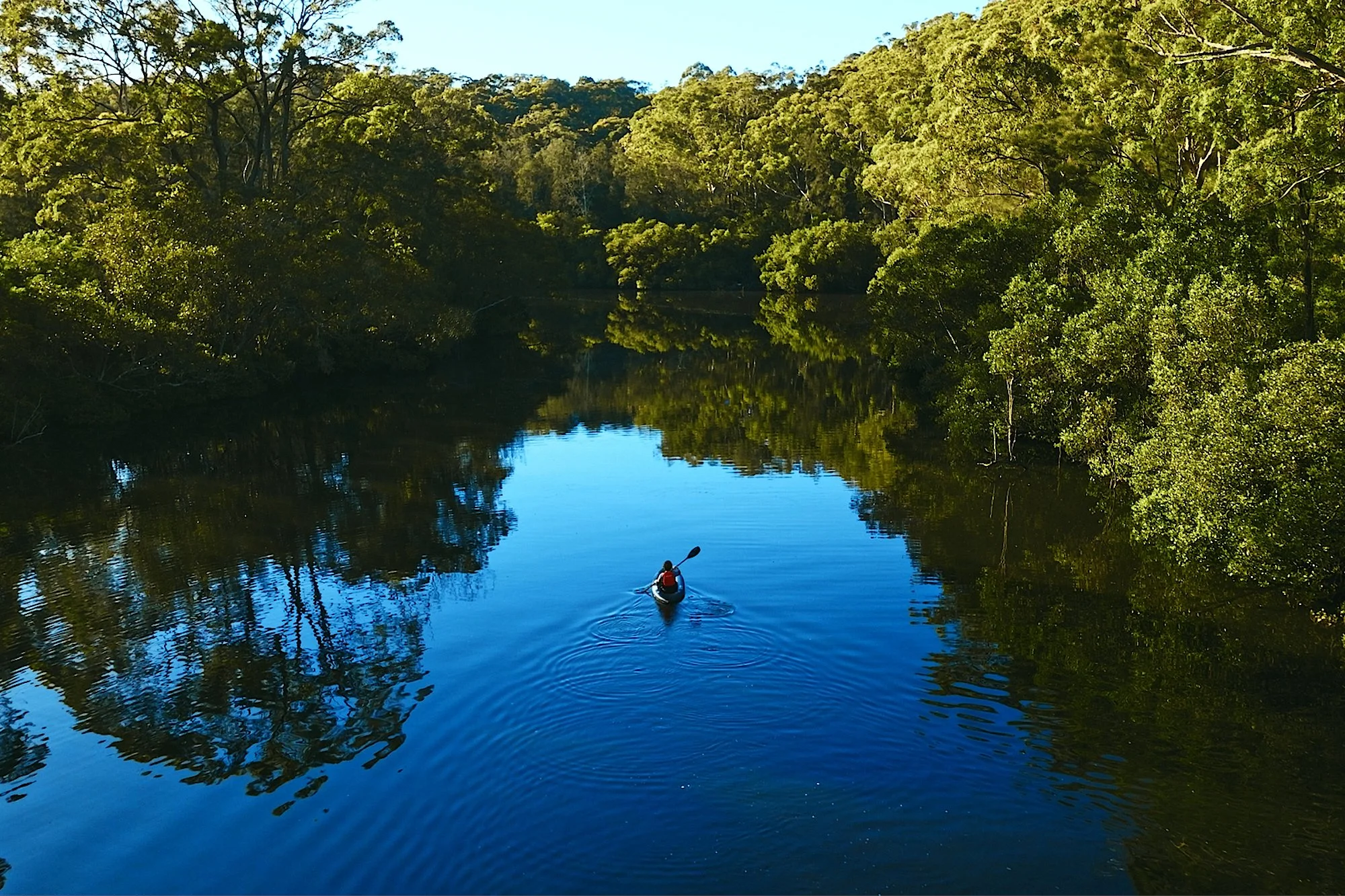
Coastal waters
As conditions become more exposed, whether that’s coastal paddling, open water, or rivers with current, the demands on the kayak increase quite quickly.
If you’re paddling in coastal or open water, the focus shifts toward control, predictability, and how well the kayak handles small waves and wind. A kayak that can hold its shape, track consistently, and cut through the water cleanly will feel far more manageable in these environments.
It’s also worth paying attention to build quality. Kayaks designed for this kind of use will typically incorporate more robust construction and marine-grade components, such as corrosion-resistant stainless steel fittings, to ensure they continue performing reliably with repeated exposure to saltwater.
Wind is also a factor here so avoid flat pannel side tubes that can get blown around in the wind. Enclosed sit in kayaks with round side tubes or curved side panels are typically better.
If you’re considering whitewater the requirements change again.
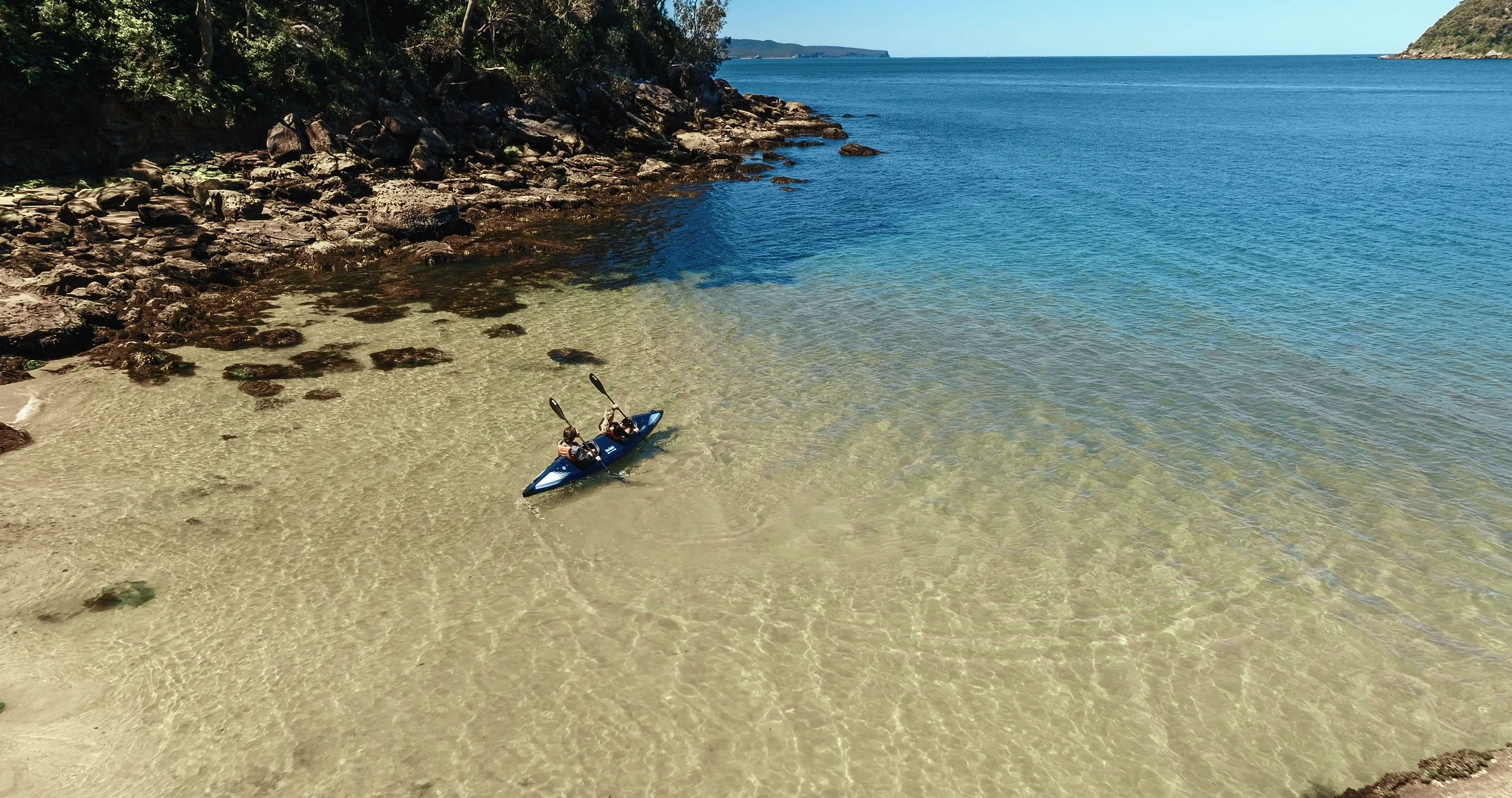
Whitewater
In whitewater or more dynamic river conditions, maneuverability and safety features become critical. One of the key indicators here is whether the kayak is self-bailing. This means it has built-in drainage that allows water to exit the kayak as it enters.
If a kayak does not have self-bailing capability, it should not really be used in significant whitewater conditions.
These kayaks are specifically designed to handle water coming over the deck, recover quickly, and remain controllable in more technical environments. For flat water paddling though self bailing holes increase drag and slow you down so they are more of a specialist craft.
The key is not just where you paddle, but how demanding those conditions are likely to be, and how confident you want the kayak to feel when conditions aren’t perfectly calm.
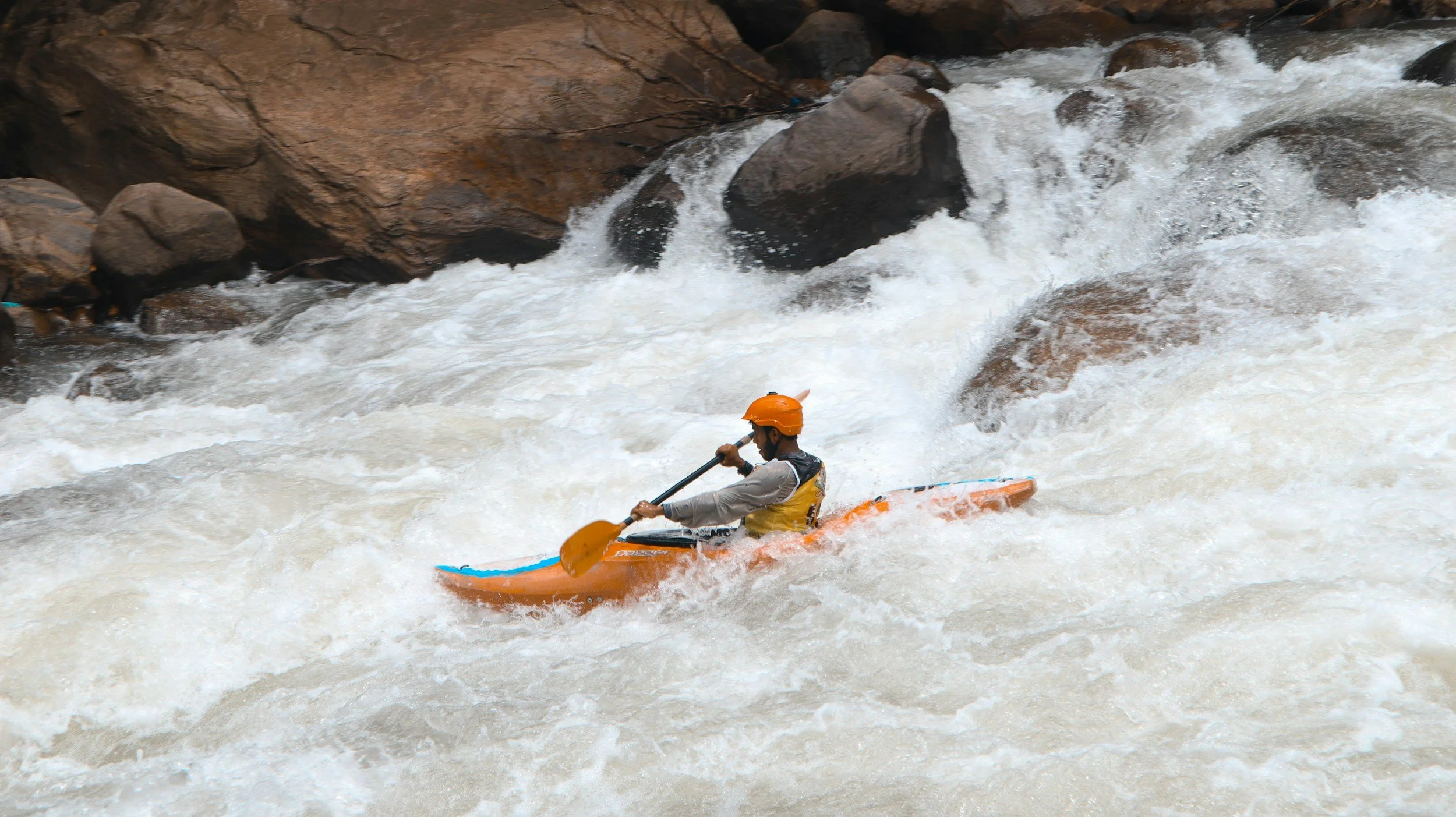
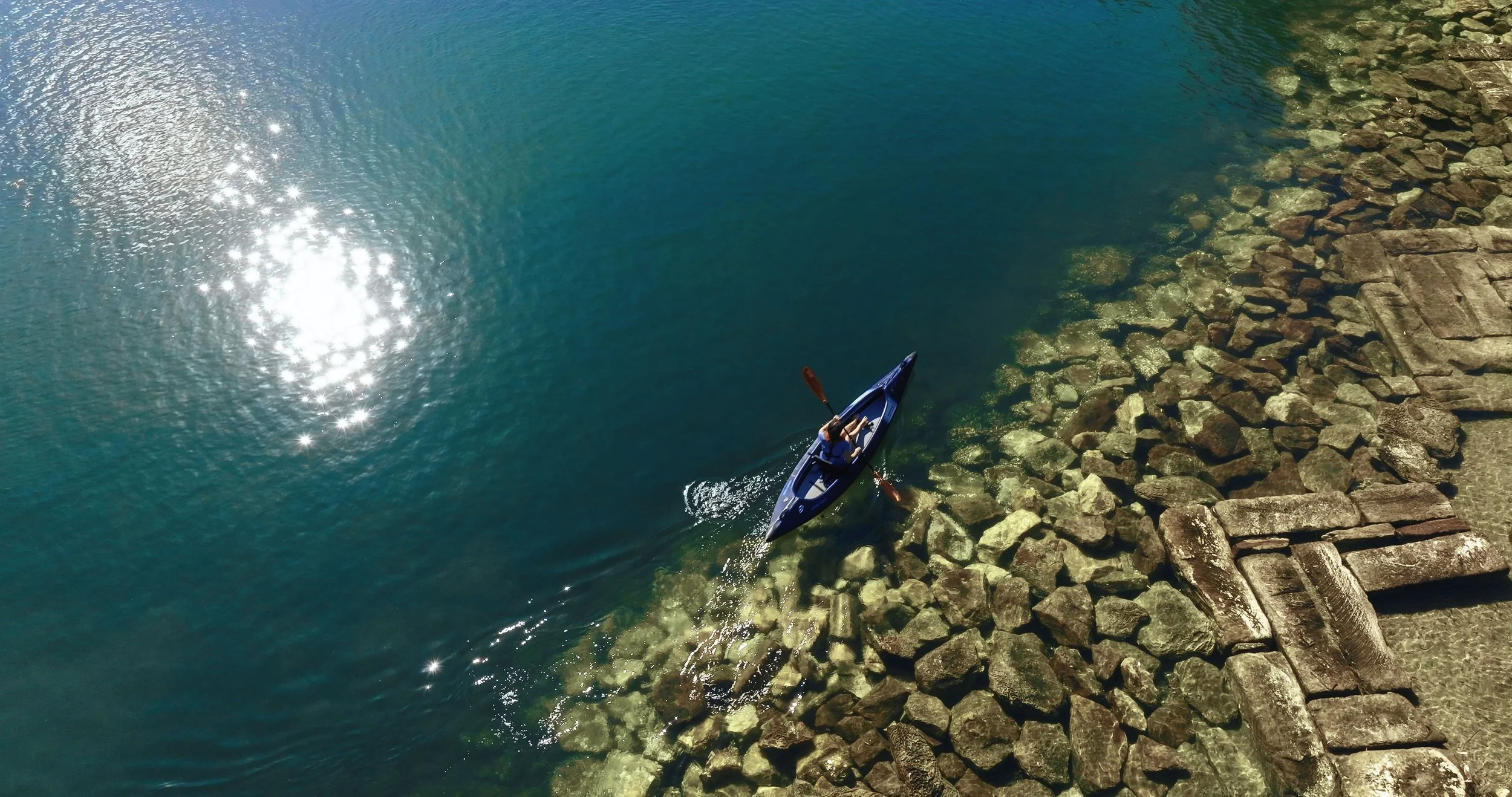
Distance, Duration, and Intensity
One of the biggest differences between kayak types shows up over time.
Short, relaxed paddles place very different demands on a kayak compared to longer sessions where you’re covering distance and paddling more consistently.
A recreational kayak that feels stable and comfortable over 20 minutes can start to feel slow or tiring over a few hours.
If you expect to paddle for longer periods, even occasionally, it’s worth considering how efficiently the kayak moves through the water, not just how stable it feels at rest. Therefore, selecting an adventure or touring kayak may be a more suitable option in this case.
Portability, Storage, and Access
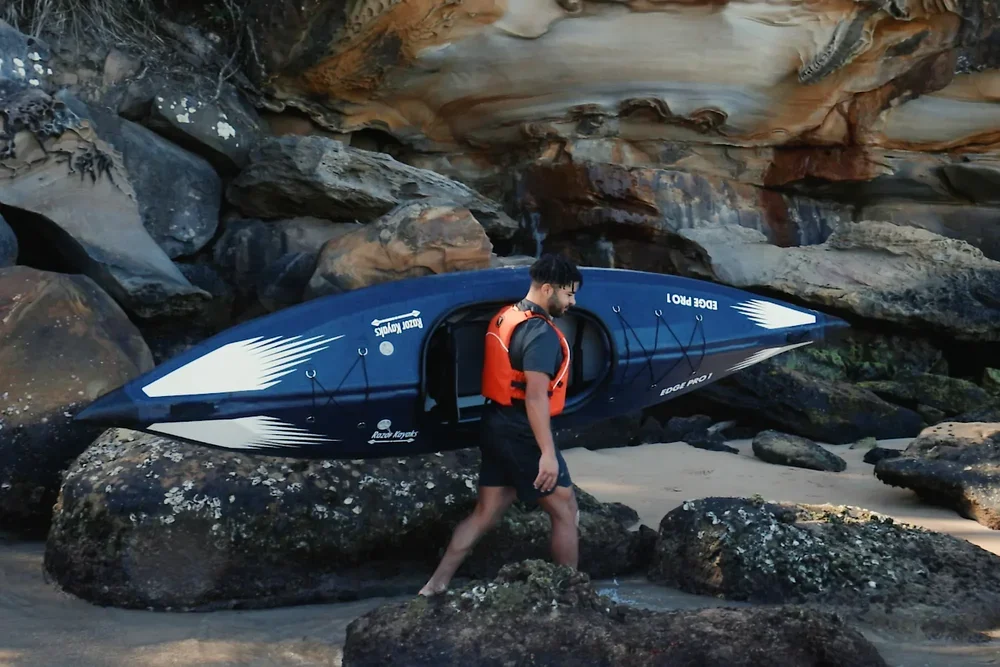
One of the main advantages of inflatable kayaks is how easy they are to transport and store, and across most well-designed models, this is fairly consistent.
While there are some differences in packed size and weight between brands, they are generally not significant enough to be a deciding factor on their own. Most high-quality inflatable kayaks are designed to be portable and will comfortably fit in a car boot, cupboard, or storage space without much difficulty.
There are more compact and ultra-lightweight options available, but these typically come with trade-offs in materials, rigidity, and overall performance on the water. As a result, they are usually designed for more specific use cases rather than general paddling.
If you do plan to carry your kayak longer distances, for example to remote launch points, then weight and packability become more relevant. In those cases, a kayak in the 17–29 lbs (8–13 kg) range would generally be considered extremely lightweight.
For most paddlers, portability is a given rather than a key differentiator. It only becomes a deciding factor if you have a specific need where size and weight are especially important. Higher weight inflatable kayaks are still easily transported and typically more robust and allow for better heavier duty materials.

Solo, Tandem, or Convertible
Another key decision is how many people will be paddling.
If you’ll mostly be paddling on your own, a solo kayak will usually feel lighter, easier to handle, and more responsive. If you plan to paddle with another person regularly, a 2 person tandem kayak provides the space and capacity to do that comfortably.
Convertible kayaks sit somewhere in between. They allow you to paddle solo or with a second person by adjusting the seating position. Most are designed for 2 people while allowing you to paddle as a one person occasionally. If you’re planning on paddling 90% of the time by yourself it might feel a bit cumbersome but they do offer good flexibility. Be aware though that the length of a convertible is important, if it’s too short there won't be enough room for 2 people and if it’s too long it’ll be hard to paddle for one person. To find the right tandem kayak for you, check out our guide on 2-Person Inflatable Kayaks.
Sit-In vs Sit-On-Top
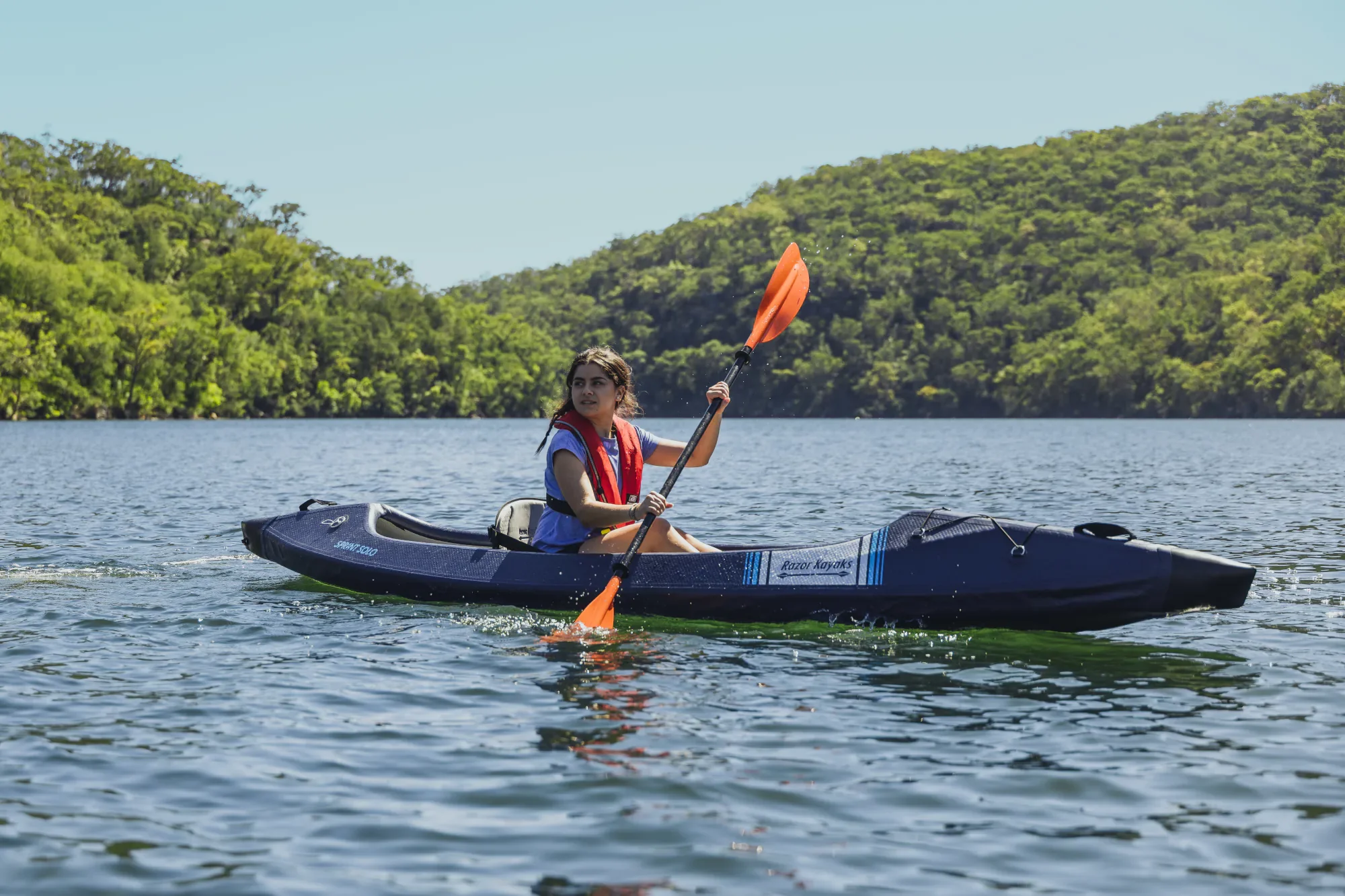
The choice between sit-in and sit-on-top kayaks is less about performance and more about how you want the experience to feel.
Sit-in kayaks position you inside the hull, creating a more enclosed and connected feel. They tend to offer better protection from wind and splash, and are often preferred for longer paddles. Some also typically offer an option for spray skirts which help keep you dry.
Sit-on-top kayaks place you above the hull instead. They feel more open, are easier to get in and out of, and are often more approachable for beginners.
They also make it easier to access gear, which can be useful for relaxed paddling or activities like fishing.
Neither option is strictly better. Sit in hulls offer more flexibility in different conditions but for most It really comes down to personal preference.
Replacing a Hard-Shell Kayak
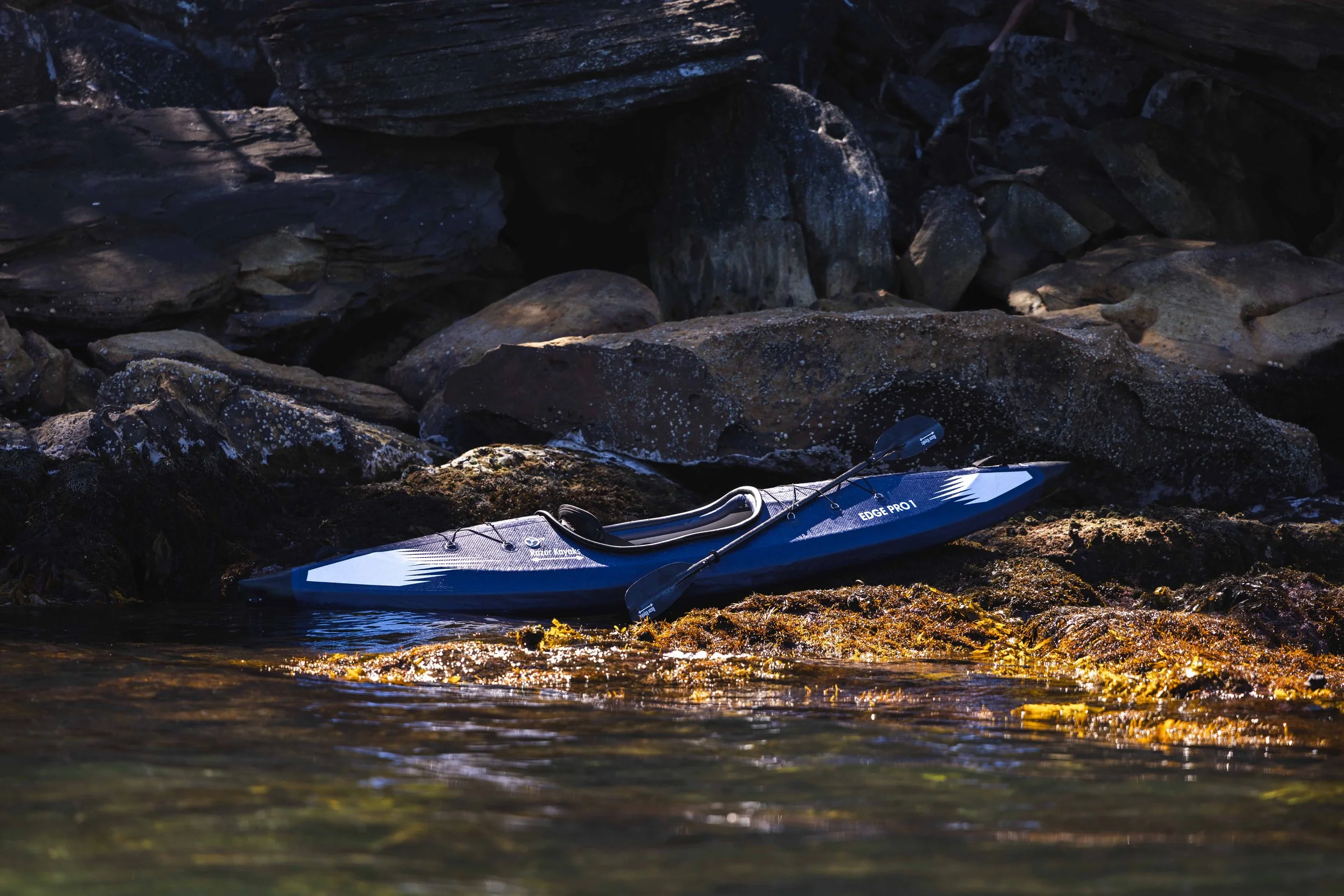
If you’re coming from a hard-shell kayak background, and new to inflatable kayaks you know what to look for in a kayak.
In your case, the goal is often to find something that offers similar performance, while gaining the benefits of portability and storage.
Not all inflatable kayaks will feel the same on the water. Lower-pressure designs with flexible materials are inefficient in the water, while higher-performance inflatables are designed to hold their shape and transfer energy more efficiently. Modern high-performance kayaks are widely regarded as outperforming many plastic hard shell kayaks and if your coming from a kayaking background you’ll appreciate the inflatable with a rounded hull and streamlined design. Many of these actually can outperform plastic kayaks in the water, they’re not carbon racing kayaks but the pace, glide and handling performance of top inflatable kayaks often out perform the expectations of experienced hard shell kayakers.
If maintaining performance is important, it’s worth paying closer attention to construction, rigidity, and how the kayak is designed to behave over distance.
Bringing It All Together
Each of these considerations plays a role in shaping what type of kayak will suit you best.
Rather than focusing on a single factor, the goal is to look at the overall picture, how you plan to paddle, where you’ll go, and what kind of experience you want to have on the water.
Once those pieces are clear, the right type of kayak usually becomes much easier to identify.
Looking for more info
Check out our article Inflatable Kayaks: The Complete Guide for a comprehensive overview of inflatable kayaks, how they are made and what makes one inflatable kayak different to another. Alternatively, if you want to find the right tandem kayak for you, check out our guide 2 Person Inflatable Kayaks.
Our global customer service team are knowledgeable and always happy to help. If you have any further questions please feel free to call or emails us. Details can be found on our contact page.
We’ve also designed this online guide to help make the process easier, and match you with the inflatable kayak we believe best fits your needs.