
Inflatable Kayak Materials & Construction Explained
As discussed in our article Inflatable Kayaks: The Complete Guide, the biggest differences between inflatable kayaks often come down to how they’re built. While many inflatable kayaks can appear fairly similar at first glance, the materials used, the way the hull is constructed, and the pressures the kayak is designed to operate at all have a major impact on durability, rigidity, efficiency, and long-term performance on the water.
In that guide, we briefly touched on the different construction styles used across the inflatable kayak market. In reality, the differences go much deeper than we were able to cover there. From single-layer vinyl designs through to reinforced PVC and full drop stitch construction, each approach comes with its own trade-offs in weight, durability, rigidity, drying time, and paddling performance.
In this deeper dive, we’ll take a closer look at how inflatable kayaks are constructed, how materials like reinforced PVC and drop stitch actually work, and why air pressure plays such an important role in the way a kayak feels on the water. We’ll also explore some of the smaller construction details, such as valves, seams, and fittings, that can reveal a lot about the overall quality of a kayak.
Some of the concepts below may sound technical at first, but once you understand the fundamentals, it becomes much easier to recognise why some inflatable kayaks feel rigid and efficient while others feel soft, sluggish, or less durable.
If you've already read that guide skip ahead to “Understanding Denier”, if not read on.
When choosing an inflatable kayak, most of the differences in price and durability come down to how they’re built.
From the outside, many inflatable kayaks can look fairly similar. But the materials used, how thick those materials are, and how the kayak is designed to hold air pressure can make a big difference in how tough it is and how well it holds its shape in the water.
Broadly speaking, inflatable kayaks tend to fall into three construction categories: entry-level, mid-range, and high-performance.
Materials and Construction
Materials
Entry-Level Construction
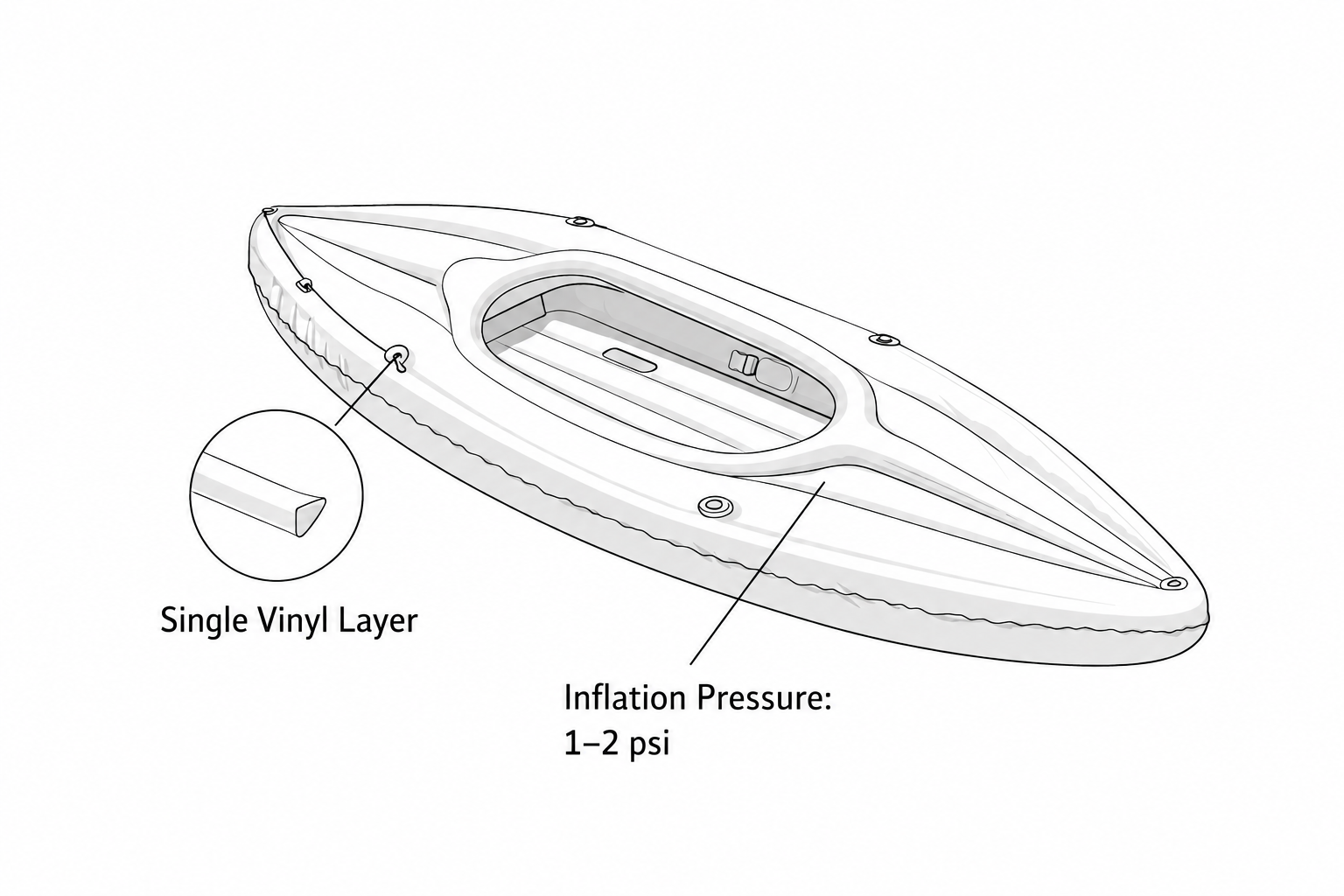
Entry-level inflatable kayaks are usually made from single-layer vinyl and operate at fairly low air pressures, often somewhere around 1 psi.
Their main advantages are that they’re lightweight and inexpensive. For someone who just wants something to use occasionally on a calm lake or while on vacation, they can serve a purpose, but they do come significant drawbacks.
A lot of the performance frustrations people associate with inflatable kayaks come from this entry-level category. Low pressures mean the hull flexes more, so efficiency is lost and thinner materials are less resistant to wear making them feel more like pool toys. On the water, this shows up as a kayak that feels slow, where each paddle stroke doesn’t quite translate into forward movement the way you expect. As a result, if someone’s first time paddling is with one of these softer designs, it can easily lead people to come away from paddling inflatable kayaks with a negative experience. Therefore, for anyone looking to really enjoy recreational kayaking or planning longer trips, we would generally recommend avoiding this type of kayak.
Mid-Range Construction
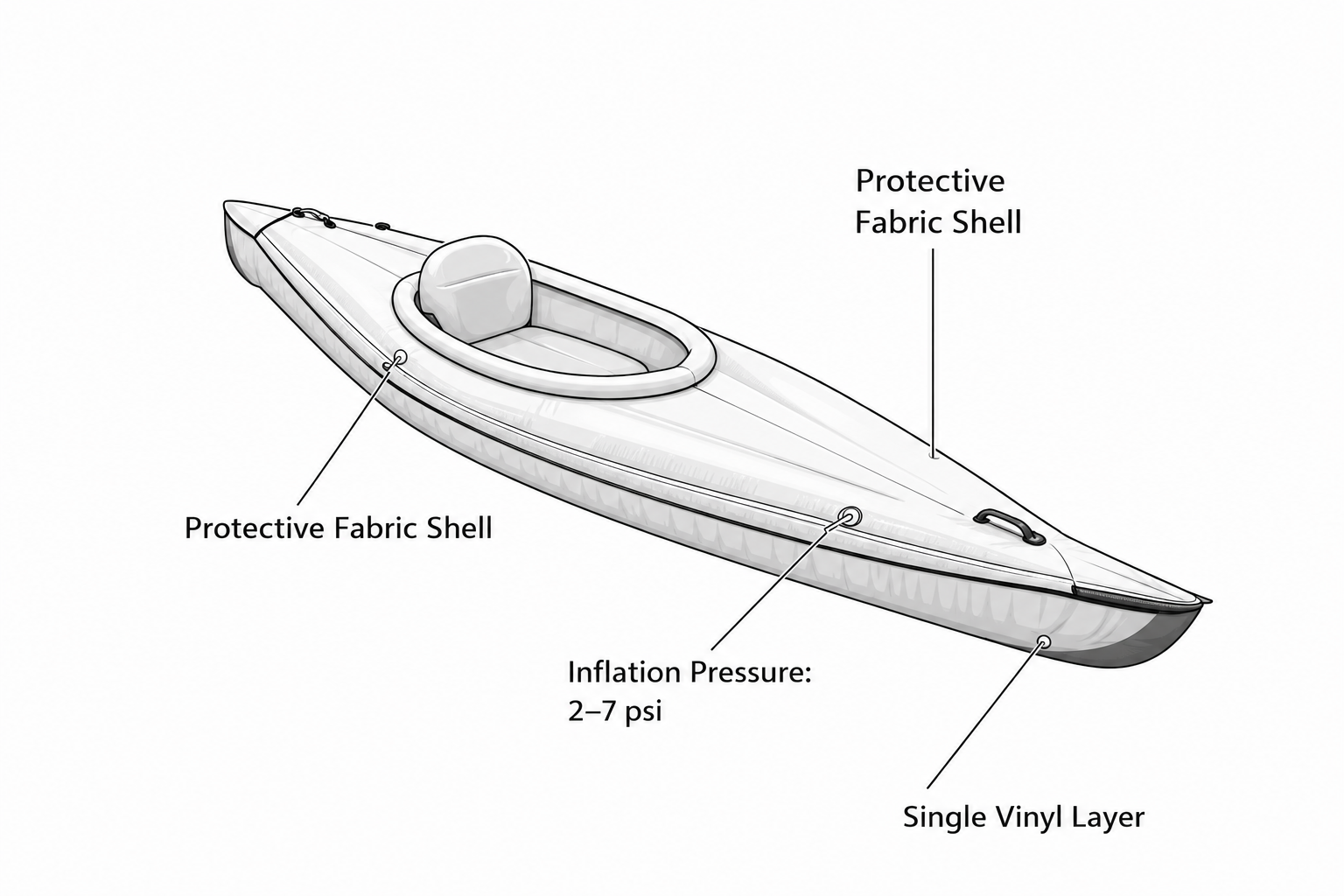
Mid-range inflatable kayaks often use a PVC inner bladder with an outer fabric shell, usually made from nylon or polyester.
That outer layer acts as a protective skin, helping the kayak resist scrapes and general wear a bit better than simpler designs. They tend to feel more robust overall and are a noticeable step up in durability compared with entry-level models.
That said, on the inside of the fabric shell, they remain single layer vinyl and so will still have some flex and lose efficiency in the water. Also, the fabric shell adds durability but can hold water, meaning these kayaks may take longer to dry after use.
High-Performance Construction
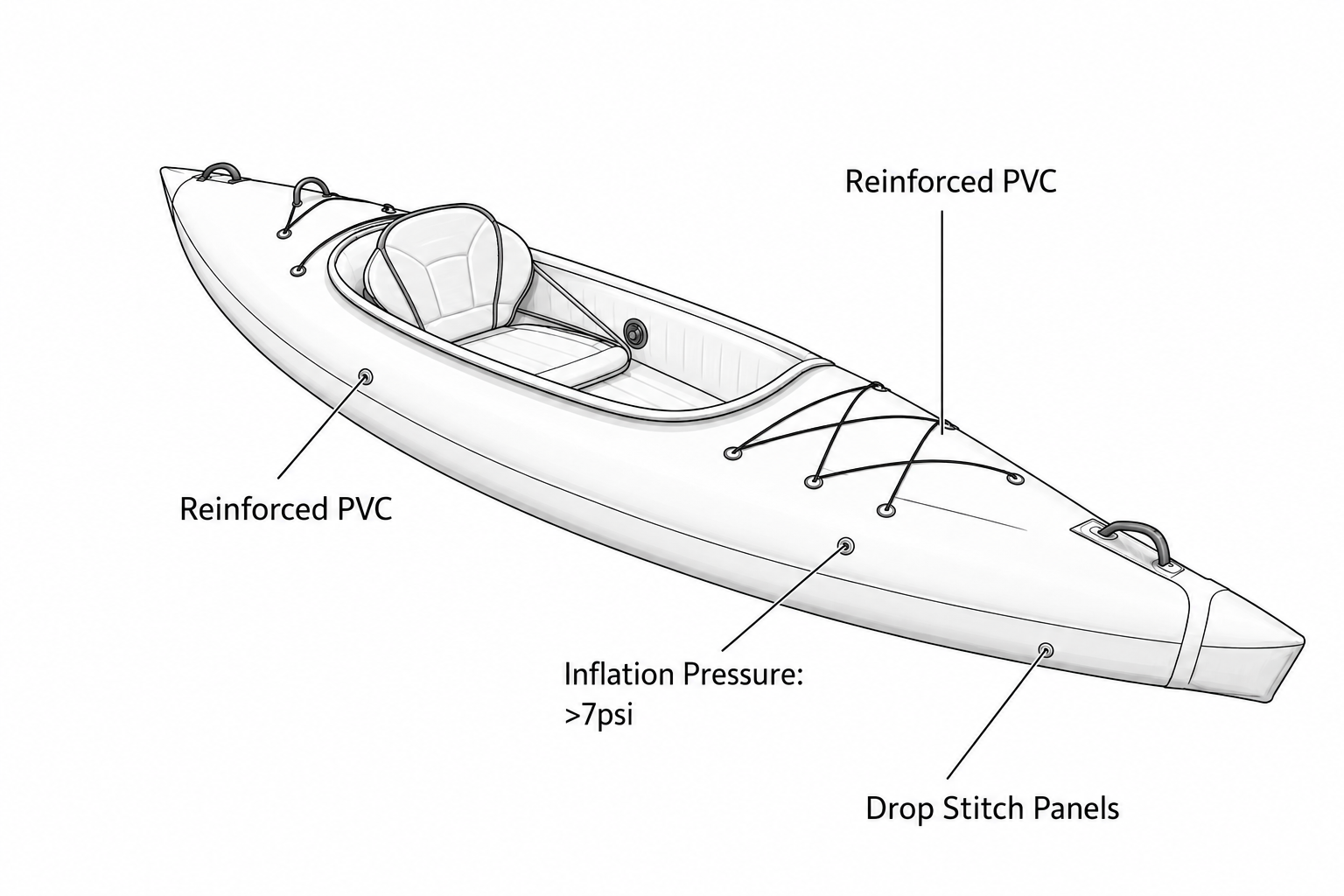
High-performance inflatable kayaks are designed to be rigid. They use thicker multi-layer reinforced PVC and operate at much higher pressures, typically between 0.55 and 0.83 bar. At those higher pressures, the hull holds its shape far more effectively, which improves efficiency on the water.
When talking about paddling efficiency, it helps to think of it like the difference between riding a rusty old bike and a well-tuned racing bike. Both move forward, but one transfers your effort much more effectively. This is something you feel within the first few strokes, as a kayak that holds its shape wastes far less energy through flex, meaning significantly more of each paddle stroke actually moves you forward. It makes a huge difference to the enjoyment of your paddling experience.
These designs are also generally more resistant to punctures and abrasion thanks to their thicker materials. They do typically weigh slightly more, but the reinforced construction and higher pressures add strength and rigidity and are worth the trade off.
If you want a kayak that feels efficient, tracks well, and doesn’t leave you fatigued after a short paddle, this is the category to focus on.
| Category | Typical Materials | Pressure | Performance | Best For |
|---|---|---|---|---|
| Entry-Level | Single-Layer Vinyl | 1 - 2 psi | High Efficiency Loss | Not Recommended for Recreational Kayaking |
| Mid-Range | Vinyl Bladders + Fabric Shell | 2 - 7 psi | Moderate | Short Trips |
| High-Performance | Reinforced PVC + Full Drop Stitch | >7 psi | Rigid and Efficient | Recreation and Touring |
Internal Hull Structure
Beyond the outer materials, the internal structure of an inflatable kayak plays an important role as well.
Most quality inflatable kayaks are built with multiple independent air chambers. This means that if one chamber were ever to lose pressure, the others help keep the kayak afloat and stable enough to get back to shore.
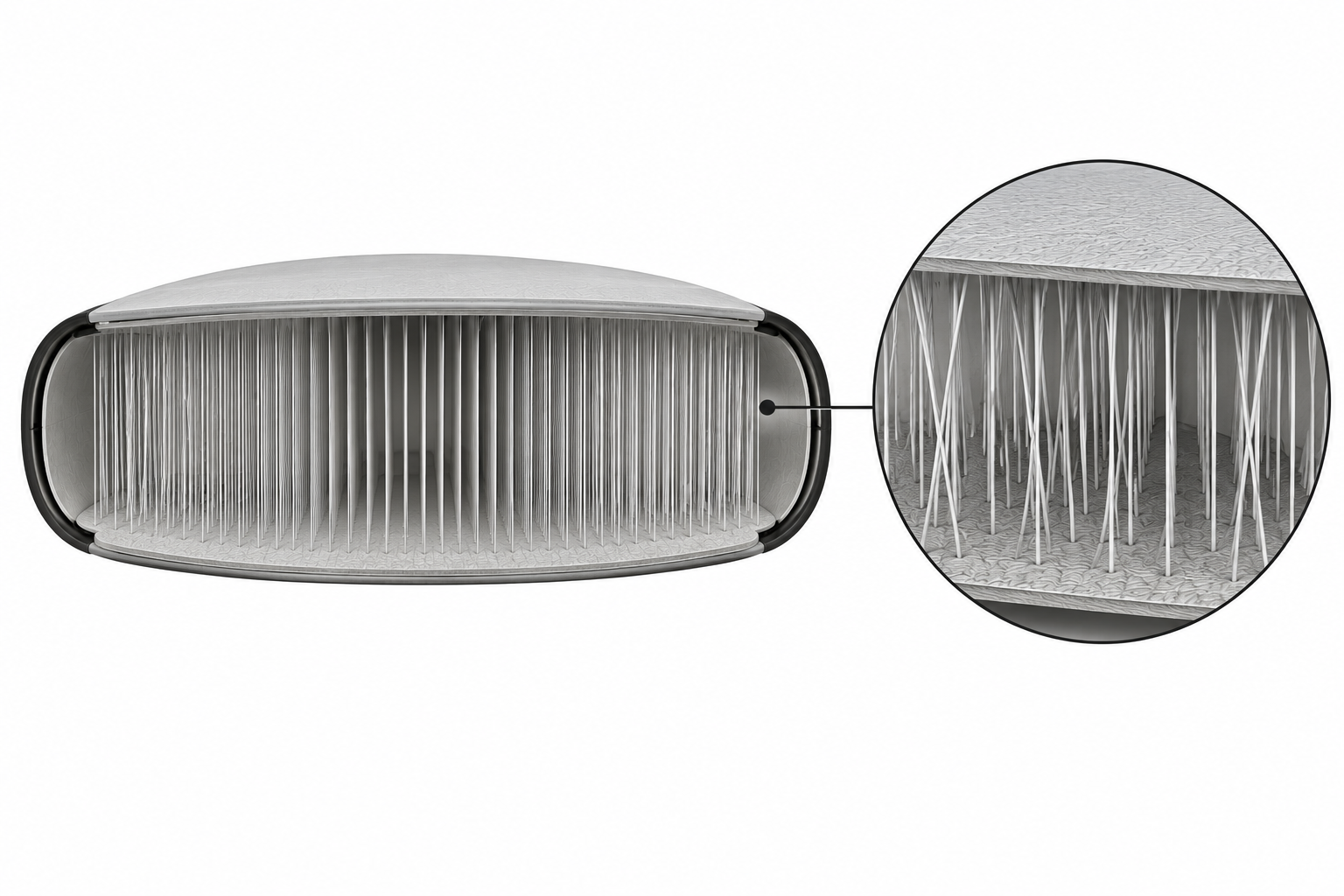
In higher-end inflatable kayaks you’ll often find drop stitch construction, particularly in the floor or other structural panels. This technology uses internal threads from one side of the chamber to the other to stop the panels from bulging when inflated, creating a flat, rigid surface that helps the kayak maintain its shape. In practice, this is one of the biggest upgrades you can feel, as full drop stitch construction is widely recognized as the gold standard in inflatable kayak manufacturing.
Drop Stitch Cross-Section
The Small Details
Construction does most of the heavy lifting, but there are also a few smaller details that can tell you a lot about the overall quality of a kayak.
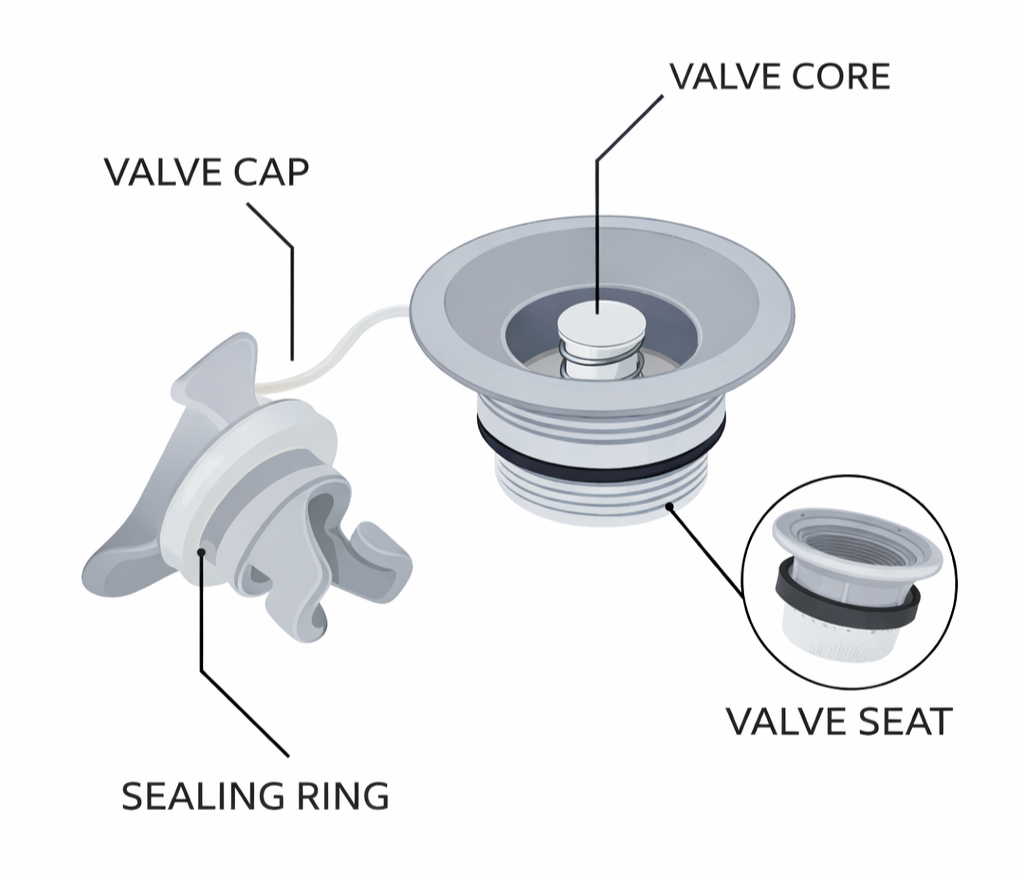
One of the first things we usually look at is the valves. Most well-built inflatable kayaks use a Halkey-Roberts (HR) style valve, which are user-friendly and designed to handle higher pressures and seal reliably once the kayak is inflated. If a kayak uses simple push-in valves like those found on air mattresses or beach inflatables, it’s a sign that it isn’t designed to operate at higher pressures.
Footrests are another detail people often overlook. A good kayak should allow you to brace your feet firmly and adjust the position easily. Being able to plant your feet properly makes a surprising difference to both stability and paddling comfort. Without this, many paddlers end up feeling like they’re sliding slightly in the seat, which reduces control and makes longer paddles more tiring.Nothing fancy is required here but a solid padded strap or brace is a must.
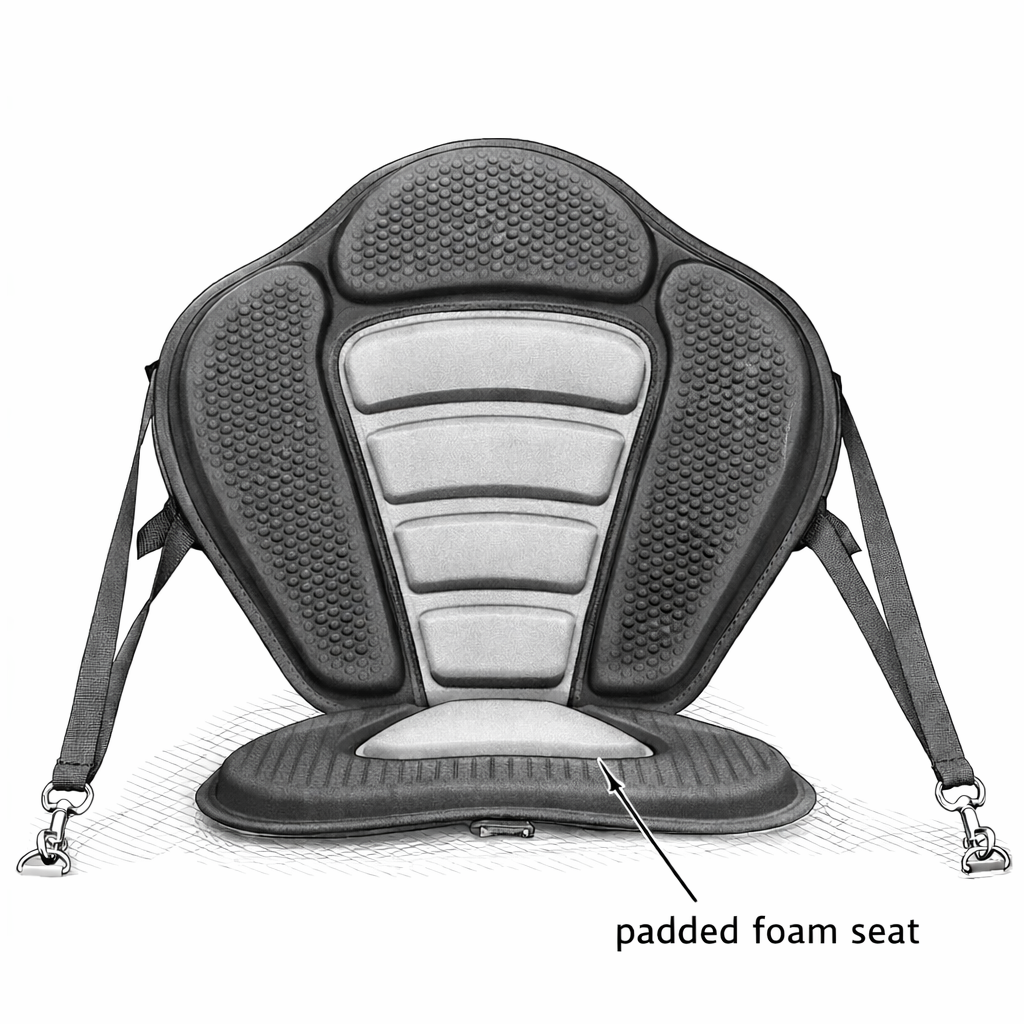
Seats are worth paying attention to as well. Inflatable seats pack down small but are an extra setup step . More structured padded seats that clip into place usually provide better long-term support and a more comfortable paddling position, especially on longer trips.
Individually these details may seem small, but together they can make a noticeable difference to how comfortable and practical a kayak feels once you’re actually using it.
It’s also worth noting that not every inflatable kayak fits neatly into the three construction categories mentioned earlier. Some designs combine elements from different styles. For example, a kayak might use a high-pressure drop stitch floor while still including a protective outer fabric shell.
In practice, these categories simply help explain why inflatable kayaks vary so much in price. As materials become stronger and features like drop stitch panels or high quality seats are added, designs naturally move toward the high-performance end of the spectrum.
Understanding Denier
When researching inflatable kayaks, you’ll often see materials described with numbers such as 600D or 1000D. These numbers refer to something called denier.
Denier is a measurement used to describe the thickness of fibers in a woven fabric. Technically, it represents the weight in grams of 9,000 meters of fiber. In simple terms, higher denier numbers generally mean thicker threads. However, a misconception in the inflatable kayak industry is that a higher denier automatically means a stronger or better kayak. In reality, denier is only one small part of how durable a material actually is.
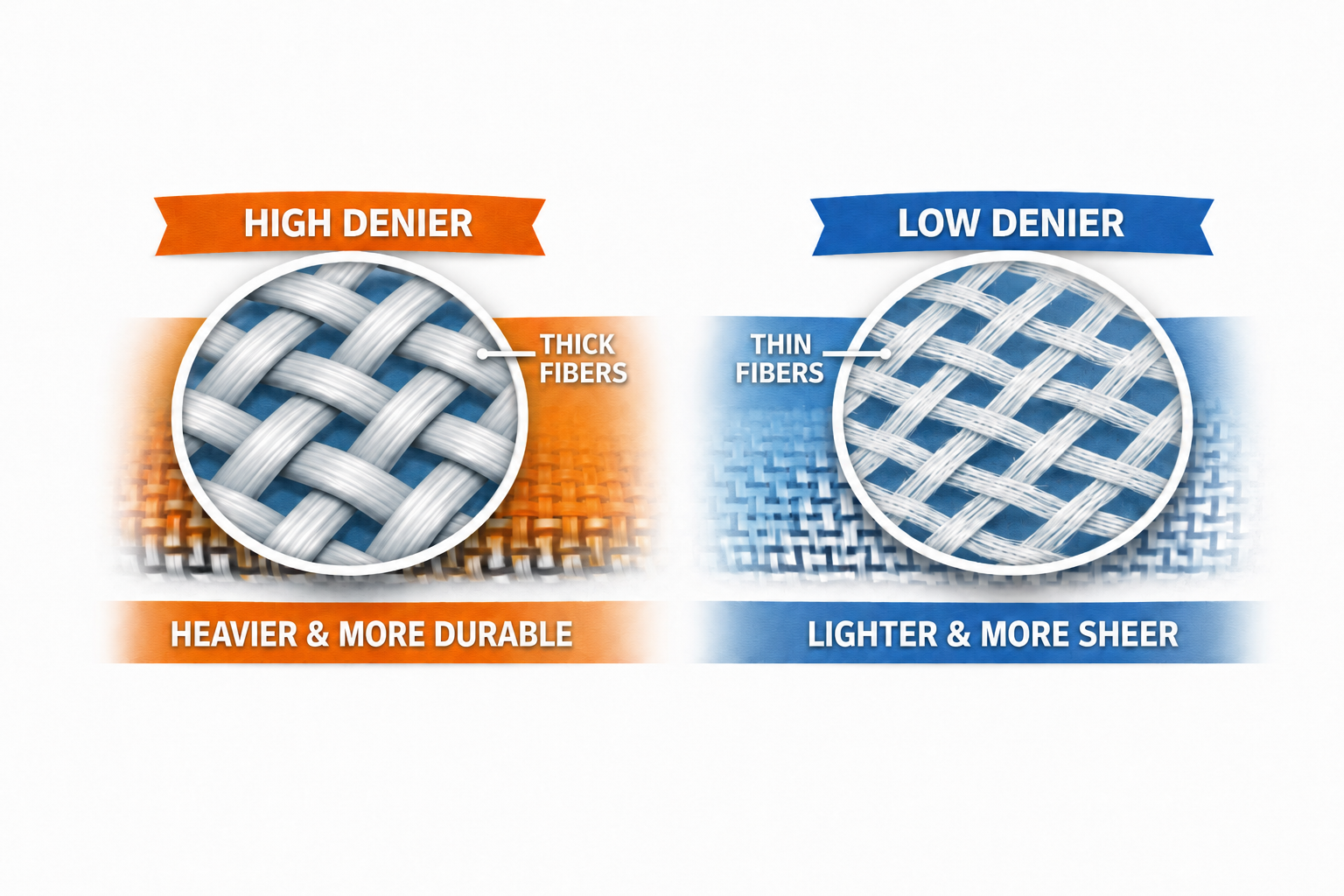
Because denier measures the thickness of woven fibers, it only applies to fabrics such as polyester or nylon. In inflatable kayaks, these fabrics are either woven through layers of PVC to add structure and reduce stretching, or wrapped around the air chambers as a protective outer layer.
Some inflatable kayak materials incorporate a woven reinforcement layer within the PVC construction. This woven fabric helps improve structure, reduce stretching, and increase abrasion resistance. As with denier, its overall performance depends on the quality of the materials and manufacturing rather than any single specification.
PVC itself does not have a denier rating because it is a solid plastic sheet rather than a woven textile. Instead, PVC is usually measured by its thickness and overall construction. This is why entry-level inflatable kayaks made from single-layer vinyl will not have a denier.
When denier is used to describe reinforced PVC materials, a higher D rating does not automatically mean a stronger or better material. Factors such as PVC thickness, weave density, fiber quality, fiber material, coating methods, and how the fibers are woven or knitted together all play a major role in determining durability and performance.
This means two kayaks with the same denier rating can perform very differently, and in some cases a well-engineered 500D material may actually outlast a poorly constructed 1000D material.
In mid-range inflatable kayaks, rather than weaving the fabric through the PVC the denier ratings usually refer to the protective outer fabric shell. These kayaks often use a PVC inner air chamber combined with a polyester or nylon outer cover. That fabric layer helps protect the inflatable structure from abrasion and general wear but because of this, they are harder to dry. Most designs in this category tend to use fabrics somewhere in the range of 600D to 800D, which provides a good balance between durability and weight.
The Bottom Line
Denier is useful for understanding the type of fabric used in an inflatable kayak, but it should never be treated as a direct indicator of overall quality. A well-designed lower denier material with high-quality PVC, proper reinforcement, and strong construction methods can easily outperform a kayak that simply advertises a bigger denier number. When comparing inflatable kayaks, it’s far more important to look at the complete material construction and how the kayak is engineered as a whole, rather than focusing on denier alone.
Reinforced PVC Construction
Higher-performance inflatable kayaks sometimes list denier ratings as well, even though the main structure of the kayak is made from PVC.
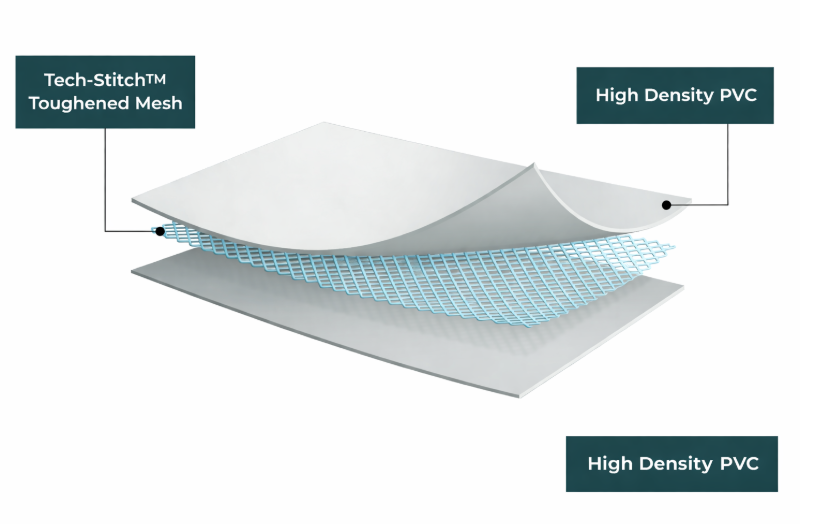
In these cases, the material is usually reinforced PVC, which contains a woven polyester mesh laminated between two layers of PVC.
The denier rating refers to the polyester reinforcement fabric embedded within the PVC.
This reinforcement layer acts as a structural backbone for the material. The woven fibers help prevent the PVC from stretching or tearing under load, while the outer PVC layers provide the airtight and waterproof surface needed for an inflatable structure.
The result is a material that is significantly stronger and more dimensionally stable than plain PVC sheets. Reinforced PVC can tolerate higher pressures, resist abrasion more effectively, and maintain its shape better over time.
This is the same general approach used in many high-end inflatable watercraft, including SUPs and professional-grade inflatables. It’s a big part of why high-performance inflatable kayaks feel noticeably more rigid and durable than simpler constructions and is the gold standard in modern inflatable kayak construction.
Drop Stitch Explained
Another area worth understanding in more detail is drop stitch construction.
As mentioned in our Complete Guide To Inflatable Kayaks, drop stitch uses thousands of internal threads to connect the top and bottom layers of the material. These threads prevent the structure from bulging outward when inflated, forcing it to hold a flat, rigid shape.
This structure allows drop stitch panels to be inflated to much higher pressures than traditional inflatable chambers. While simpler inflatables operate at relatively low pressures, drop stitch panels can typically handle pressures in the range of 8-12 psi, depending on the design.
However, not all drop stitch materials are the same.
The rigidity and durability of a panel depend on several factors, including:
the density, material and spacing of the internal threads
the strength of the base fabric those threads are anchored to
and the quality of the PVC lamination used to seal the structure
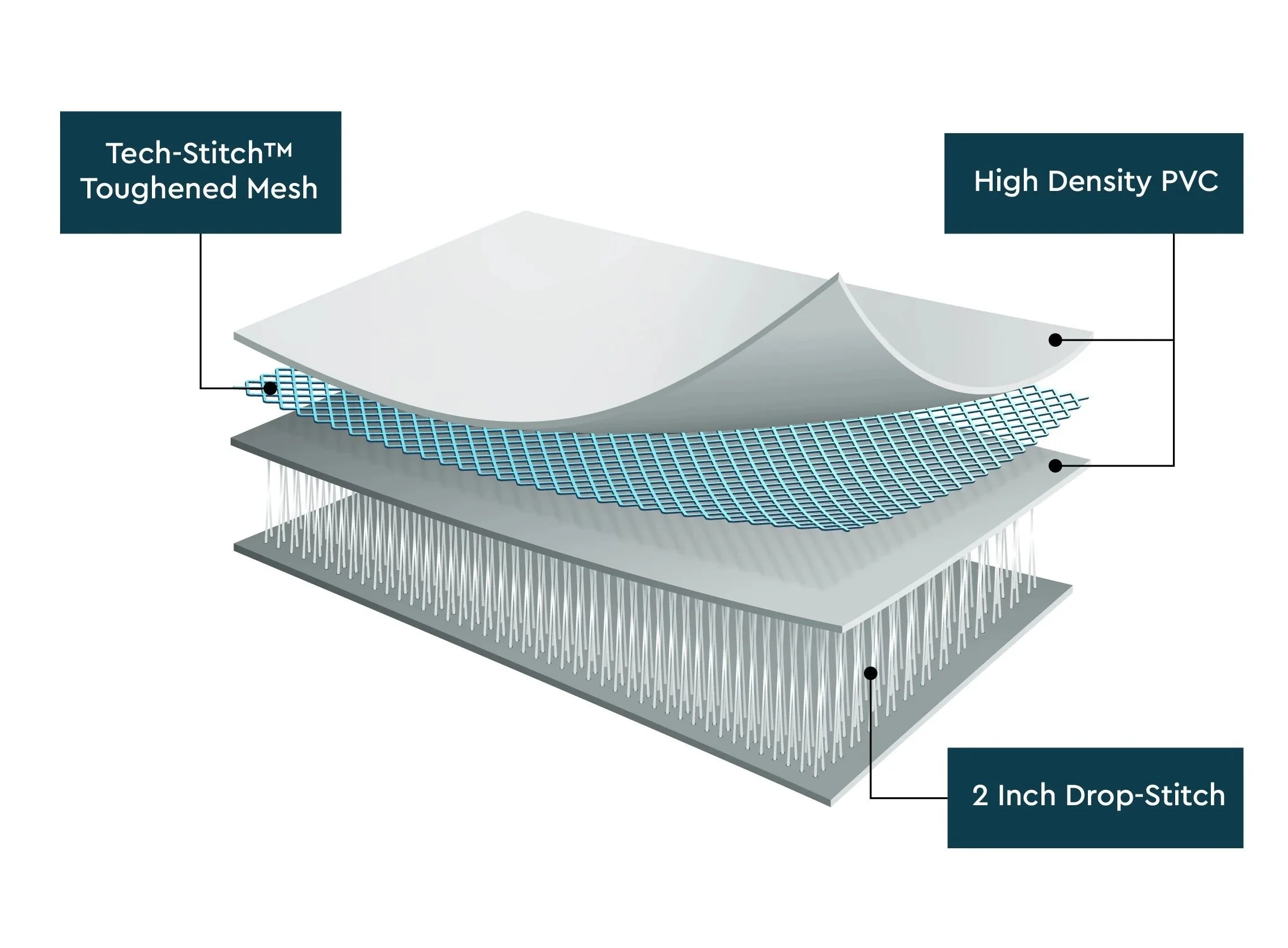
This is why two kayaks can both advertise drop stitch construction but still feel noticeably different once inflated. Higher-quality panels tend to use better thread, deser thread patterns, stronger base fabrics, and heavy duty reinforced PVC layers, allowing them to maintain stiffness and structural integrity over time.
Traditionally, drop stitch panels have been manufactured with chamber thickness of around 3 inches (8 cm), which provides excellent rigidity but can add bulk to the kayak’s profile. Advances in manufacturing have recently allowed some designs to use 2-inch panels, reducing thickness and weight while still maintaining the stiffness needed for efficient paddling. If you’re looking for a high performing kayak 2-inch drop stitch is the way to go.
Modern manufacturing techniques have also made it possible to form drop stitch panels into more refined hull shapes rather than simple flat surfaces. This allows designers to introduce more efficient hull geometry that improves glide, tracking, and overall performance. For a deeper explanation of how these shapes influence performance, see our article on Inflatable Kayak Design Explained.
Air Pressure and Hull Rigidity
While materials and construction determine how strong an inflatable kayak is, air pressure plays a major role in how it performs on the water.
Inflatable kayaks rely on internal air pressure to maintain their shape. Pressures of 8 psi and above lead to a kayak feeling rigid and stable, similar to that of a hard shell.
Conversely, kayaks that take less than 2 psi tend to flex more under load. When the hull bends slightly with each paddle stroke, some of the paddler’s energy is absorbed by that movement rather than being transferred into forward motion meaning the kayak will feel sluggish and like it’s fighting the water.
Higher-pressure kayaks behave quite differently. Because the structure remains firm, the hull holds its intended shape in the water and transfers energy from each paddle stroke more efficiently so you glide along after each paddle stroke.
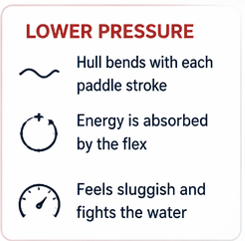
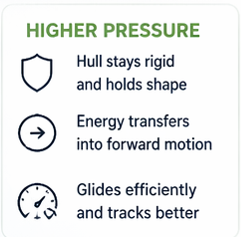
A helpful way to picture this is the difference between cutting with a metal knife and a plastic one. The rigid blade cuts cleanly, while the flexible one bends and struggles to maintain its edge. In much the same way, a rigid kayak hull moves through the water more efficiently than one that flexes under load.
This is something most paddlers feel immediately when they try a higher-pressure kayak for the first time.
In inflatable kayaks, this level of rigidity usually comes from the combination of strong materials, reinforced construction, and technologies such as drop stitch, which allow the kayak to safely hold higher internal pressures.
Seams, Valves, and Construction Details
While materials, rigidity and hull shape play the largest role in performance, smaller construction details can reveal a lot about the overall quality of an inflatable kayak.
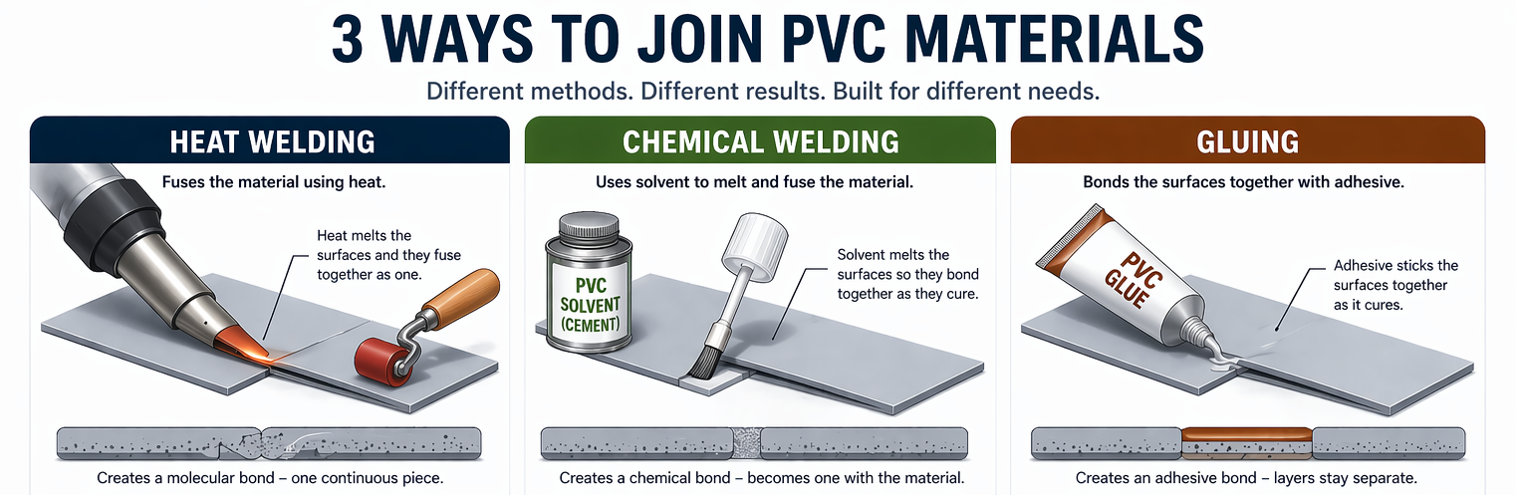
One area to pay attention to is how the panels are joined together. There are a number of techniques used here. Heat welding, chemical welding and gluing. Heat welding is great but it is better for rounded shapes. High end inflatable kayaks require tighter angles for efficiency so heat welding isn’t suitable for efficient craft. Chemical welding fuses the materials together at a molecular level, creating a stronger and more consistent bond that is less likely to weaken over time. This is the best method of joining panels together in high end kayaks. Gluing is the most basic method and the most prone to issues. Surprisingly you do still see this method be used on some high end kayaks. Best to avoid glued kayaks where possible.
Valves are another small but important component. Higher-quality kayaks typically use reliable valves designed to hold higher pressures and seal consistently, helping ensure the kayak maintains its rigidity once inflated.
If a kayak is genuinely designed for saltwater use, it’s also worth looking at the materials used for fittings and hardware. Saltwater is highly corrosive, so well-designed kayaks often incorporate marine-grade stainless steel materials for clips, fasteners, and attachment points. These components are built to resist corrosion and continue functioning reliably even after repeated exposure to saltwater.
Individually these construction details might seem minor, but together they play a significant role in long-term durability and reliability.
Bringing Materials Back to Performance
Understanding how inflatable kayak materials are constructed helps explain why different kayaks can feel so different on the water.
From reinforced fabrics to the structure of drop stitch panels and the pressures they can safely handle, each part of the construction plays a role in determining durability, rigidity, and long-term performance.
In practice, this is often the biggest difference between entry-level and high-performance inflatable kayaks.
When stronger materials, reinforced structures, and thoughtful construction details come together, the result is a kayak that holds its shape more effectively, feels more responsive, and performs more efficiently on the water.
Looking for more info
Check out our article Inflatable Kayaks: The Complete Guide for a comprehensive overview of inflatable kayaks, how they are made and what makes one inflatable kayak different to another. Alternatively, if you want to find the right tandem kayak for you, check out our guide on 2 Person Inflatable Kayaks.
Our global customer service team are knowledgeable and always happy to help. If you have any further questions please feel free to call or email us. Details can be found on our contact page.
We’ve also designed an online guide to help make the process easier, and match you with the inflatable kayak we believe best fits your needs.