
Inflatable Kayaks: The Complete Guide
Over the years we’ve spoken to thousands of customers about inflatable kayaks. Some are buying their first kayak, others are upgrading after years of paddling, and many arrive with the same questions.
This guide brings together an overview of everything we’ve learned from those conversations, along with our many years of hands-on experience working with and building inflatable kayaks. By the end of this article we aim to explain how they work, what affects their performance, and how to choose the right one for the way you want to paddle.
This guide is designed for:
Anyone looking for a clear overview of how inflatable kayaks work
Buyers trying to understand the differences between inflatable kayaks
Beginners new to kayaking trying to choosing their first inflatable kayak
Paddlers comparing between inflatable and hard-shell kayaks
Materials and Construction
When choosing an inflatable kayak, most of the differences in price and durability come down to how they’re built.
From the outside, many inflatable kayaks can look fairly similar. But the materials used, how heavy duty those materials are, and how the kayak is designed to hold air pressure can make a big difference in how tough it is and how well it holds its shape in the water.
Broadly speaking, inflatable kayaks tend to fall into three construction categories: entry-level, mid-range, and high-performance.
Materials
Entry-Level Construction
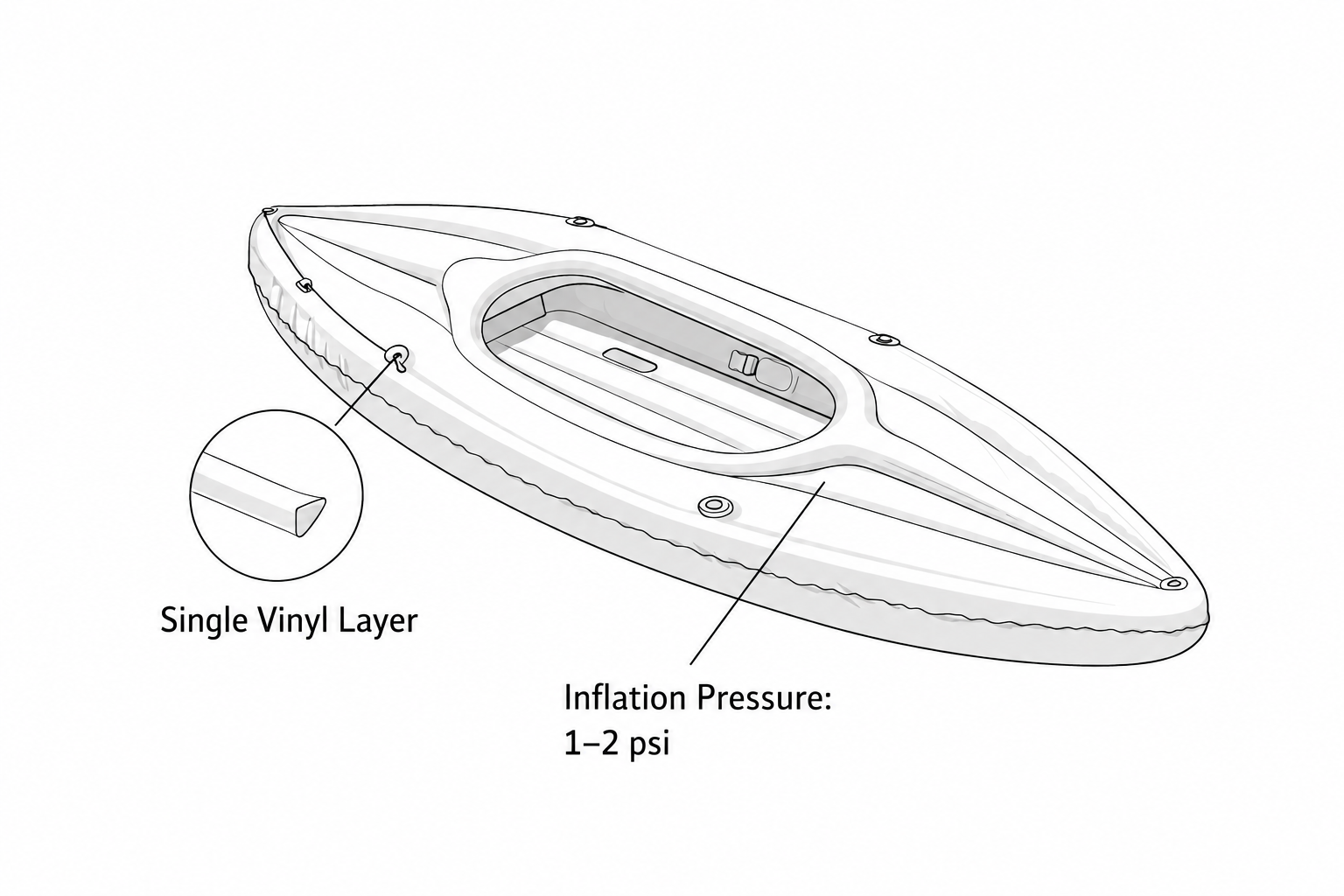
Entry-level inflatable kayaks are usually made from single-layer vinyl and operate at fairly low air pressures, often somewhere around 1psi.
Their main advantages are that they’re lightweight and inexpensive. For someone who just wants something to use occasionally on a calm lake or while on vacation, they can serve a purpose, but they do come with some significant drawbacks.
A lot of the performance frustrations people associate with inflatable kayaks come from this entry-level category. Low pressures mean the hull flexes more, so efficiency is lost and thinner materials are less resistant to wear making them feel more like pool toys. On the water, this shows up as a kayak that feels slow, where each paddle stroke doesn’t quite translate into forward movement the way you expect. As a result, if someone’s first time paddling is with one of these softer designs, it can easily lead people to come away from paddling inflatable kayaks with a negative experience. Therefore, for anyone looking to really enjoy recreational kayaking or planning longer trips, we would generally recommend avoiding this type of kayak.
Mid-Range Construction
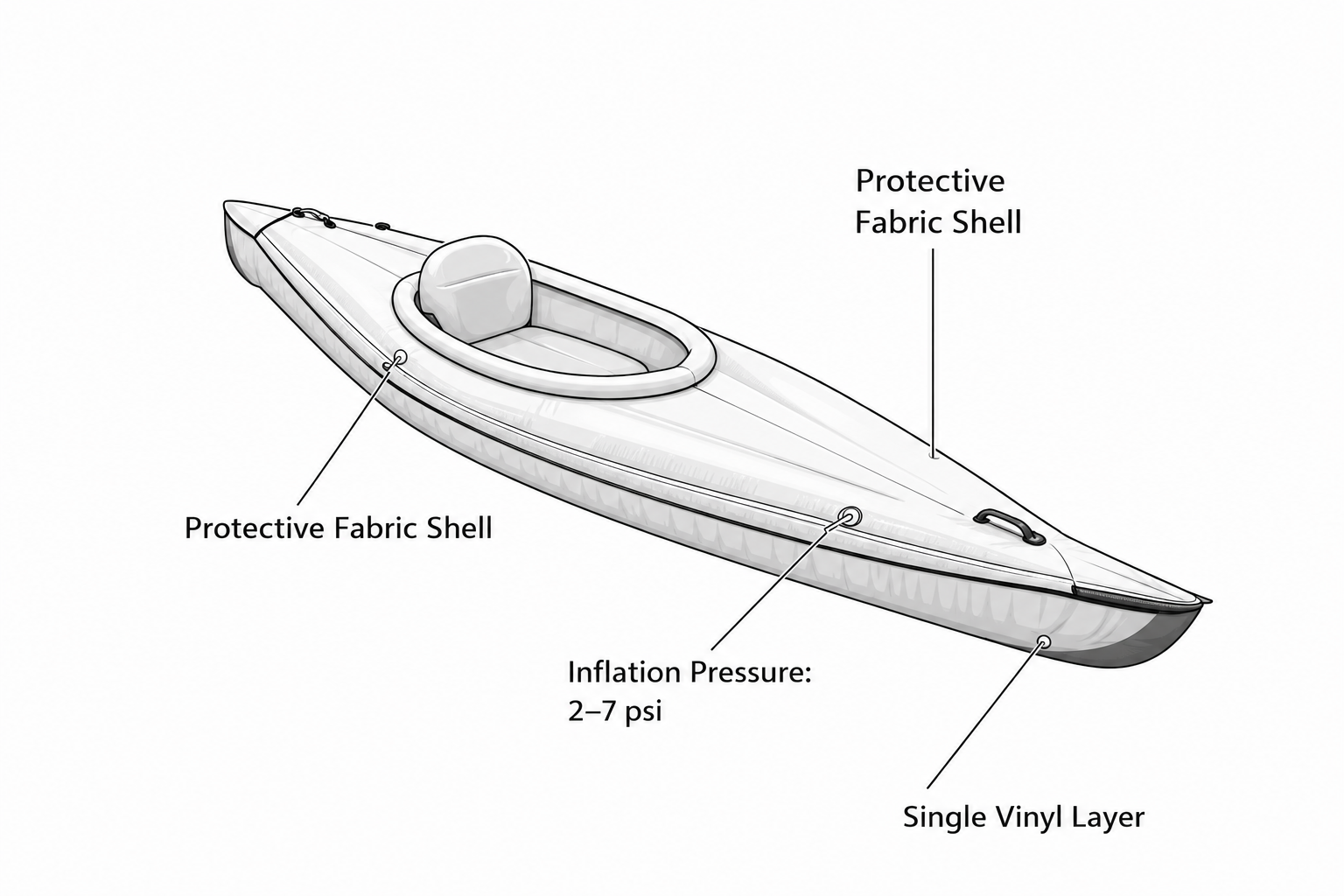
Mid-range inflatable kayaks often use a PVC inner bladder with an outer fabric shell, usually made from nylon or polyester.
That outer layer acts as a protective skin, helping the kayak resist scrapes and general wear a bit better than simpler designs. They tend to feel more robust overall and are a noticeable step up in durability compared with entry-level models.
That said, on the inside of the fabric shell, they remain single layer vinyl and so will still have some flex and lose efficiency in the water. Also, the fabric shell adds durability but can hold water, meaning these kayaks may take longer to dry after use.
High-Performance Construction
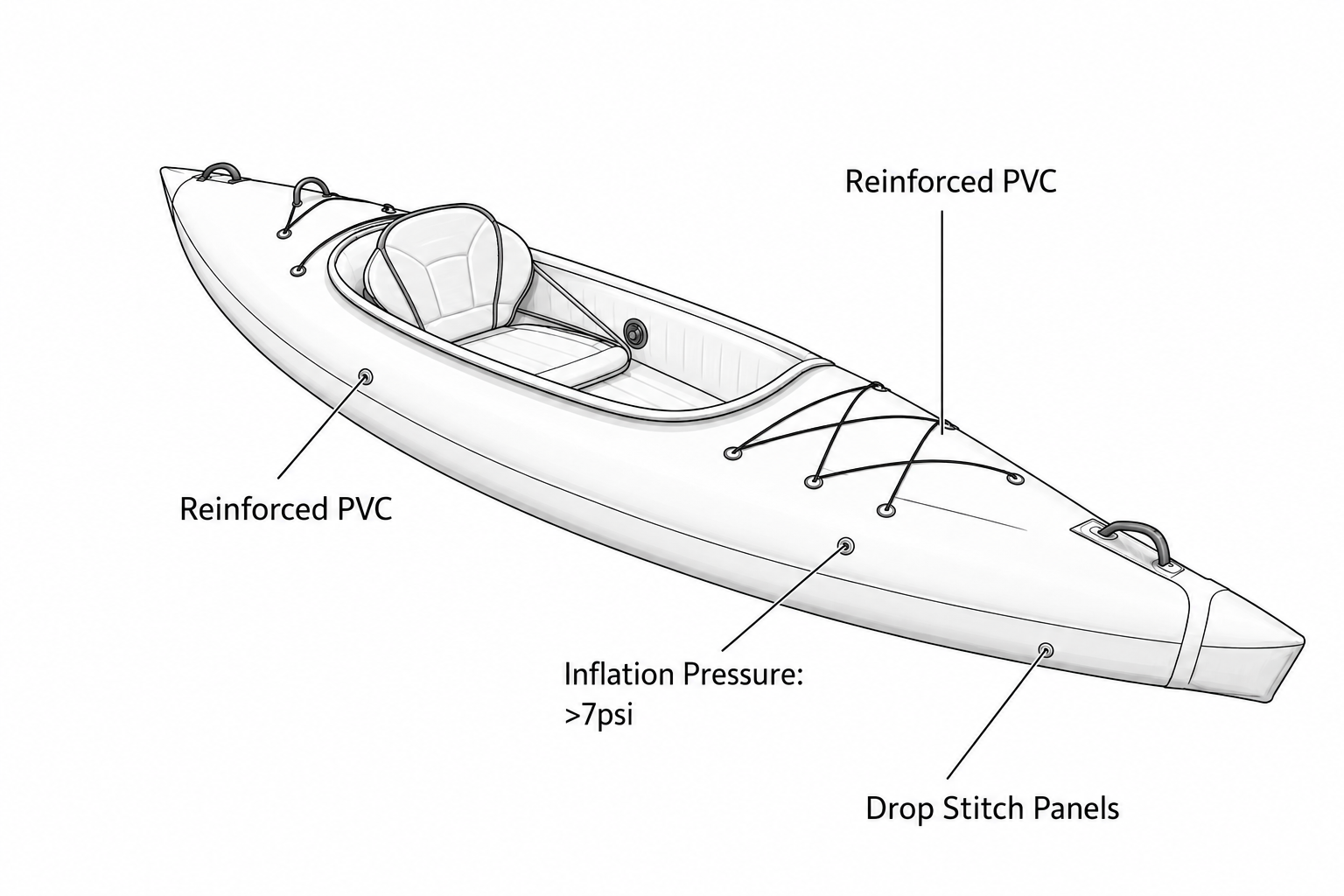
High-performance inflatable kayaks are designed to be rigid. They use thicker multi-layer reinforced PVC and operate at much higher pressures, typically between 7 and 12psi. At those higher pressures, the hull holds its shape far more effectively, which improves efficiency on the water.
When talking about paddling efficiency, it helps to think of it like the difference between riding a rusty old bike and a well-tuned racing bike. Both move forward, but one transfers your effort much more effectively. This is something you feel within the first few strokes, as a kayak that holds its shape wastes far less energy through flex, meaning significantly more of each paddle stroke actually moves you forward. It makes a huge difference to the enjoyment of your paddling experience.
These designs are also generally more resistant to punctures and abrasion thanks to their thicker materials. They do typically weigh slightly more, but the reinforced construction and higher pressures add strength and rigidity and are worth the trade off.
If you want a kayak that feels efficient, tracks well, and doesn’t leave you fatigued after a short paddle, this is the category to focus on.
| Category | Typical Materials | Pressure | Performance | Best For |
|---|---|---|---|---|
| Entry-Level | Single-Layer Vinyl | 1 - 2 psi | High Efficiency Loss | Not Recommended for Recreational Kayaking |
| Mid-Range | Vinyl Bladders + Fabric Shell | 2 - 7 psi | Moderate | Short Trips |
| High-Performance | Reinforced PVC + Full Drop Stitch | > 7 psi | Rigid and Efficient | Recreation and Touring |
Internal Hull Structure
Beyond the outer materials, the internal structure of an inflatable kayak plays an important role as well.
Most quality inflatable kayaks are built with multiple independent air chambers. This means that if one chamber were ever to lose pressure, the others help keep the kayak afloat and stable enough to get back to shore.
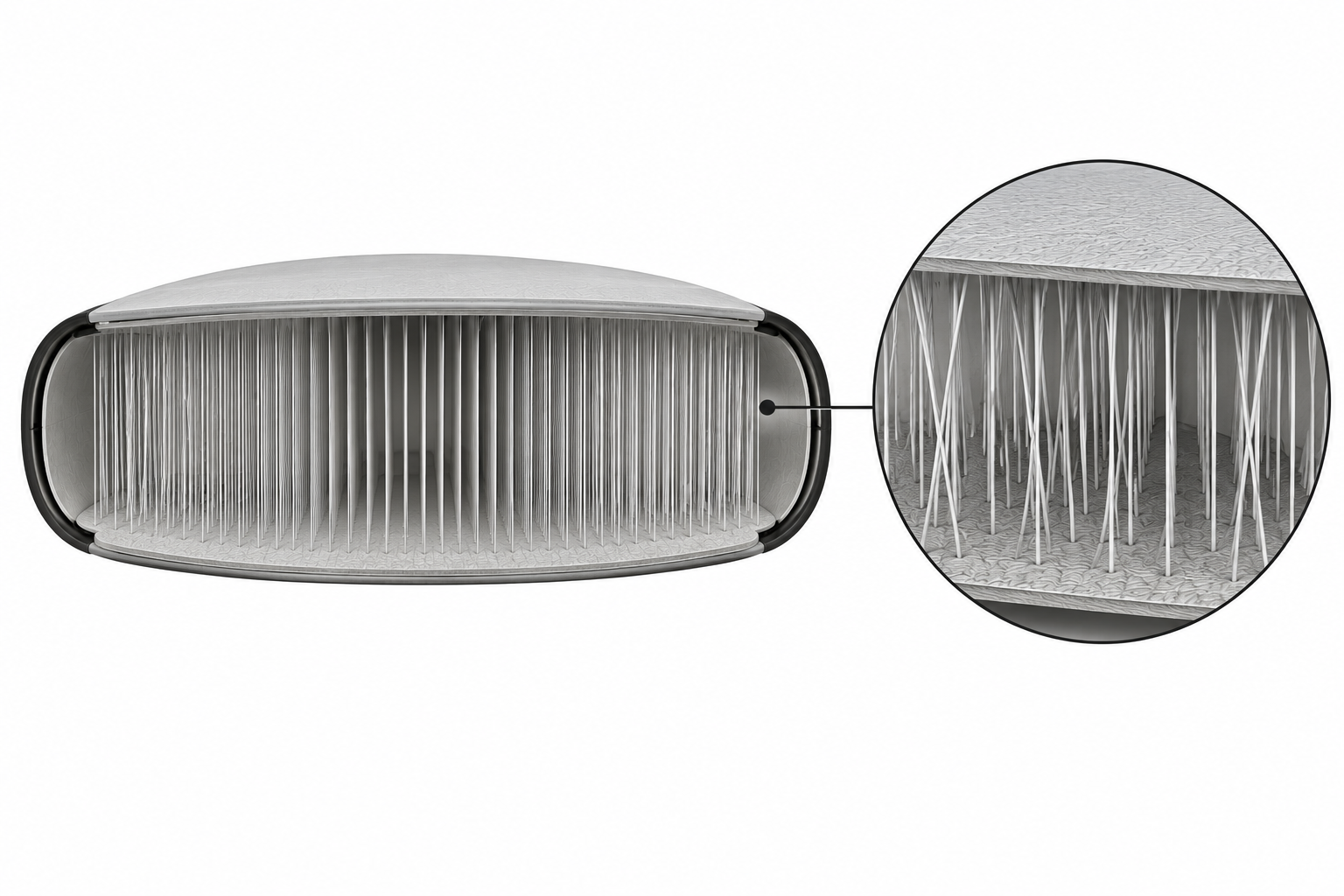
In higher-end inflatable kayaks you’ll often find drop stitch construction, particularly in the floor or other structural panels. This technology uses internal threads from one side of the chamber to the other to stop the panels from bulging when inflated, creating a flat, rigid surface that helps the kayak maintain its shape. In practice, this is one of the biggest upgrades you can feel, as full drop stitch construction is widely recognized as the gold standard in inflatable kayak manufacturing.
Drop Stitch Cross Section
The Small Details
Construction does most of the heavy lifting, but there are also a few smaller details that can tell you a lot about the overall quality of a kayak.
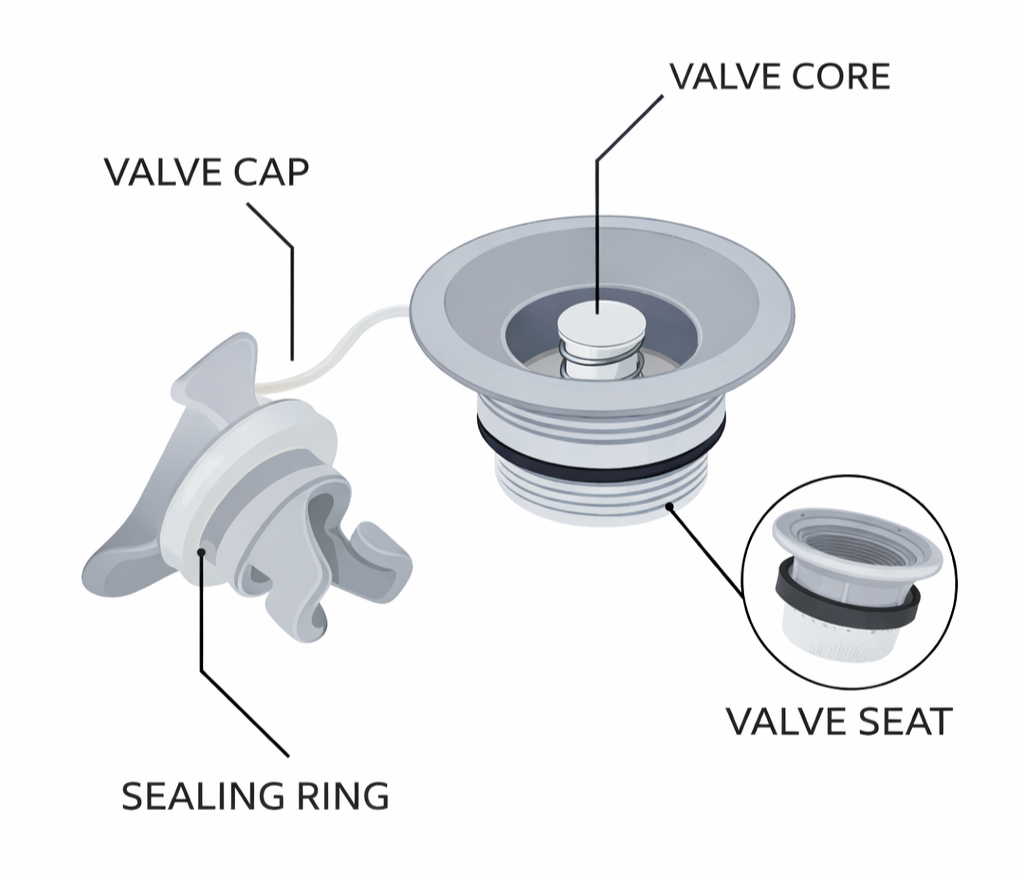
One of the first things we usually look at is the valves. Most well-built inflatable kayaks use a Halkey-Roberts (HR) style valve, which are user-friendly and designed to handle higher pressures and seal reliably once the kayak is inflated. If a kayak uses simple push-in valves like those found on air mattresses or beach inflatables, it’s a sign that it isn’t designed to operate at higher pressures.
Footrests are another detail people often overlook. A good kayak should allow you to brace your feet firmly and adjust the position easily. Being able to plant your feet properly makes a surprising difference to both stability and paddling comfort. Without this, many paddlers end up feeling like they’re sliding slightly in the seat, which reduces control and makes longer paddles more tiring.Nothing fancy is required here but a solid padded strap or brace is a must.
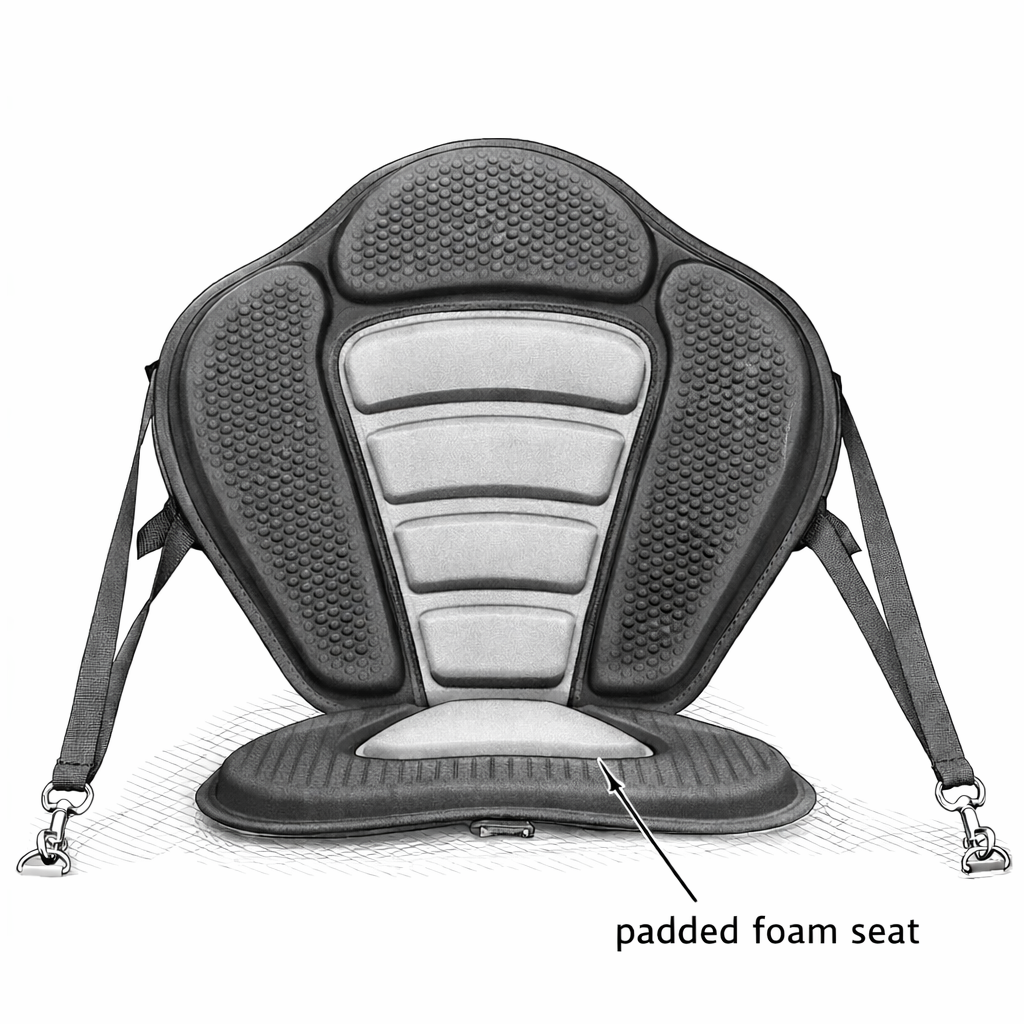
Seats are worth paying attention to as well. Inflatable seats pack down small but are an extra setup step. More structured padded seats that clip into place usually provide better long-term support and a more comfortable paddling position, especially on longer trips.
Individually these details may seem small, but together they can make a noticeable difference to how comfortable and practical a kayak feels once you’re actually using it.
It’s also worth noting that not every inflatable kayak fits neatly into the three construction categories mentioned earlier. Some designs combine elements from different styles. For example, a kayak might use a high-pressure drop stitch floor while still including a protective outer fabric shell.
In practice, these categories simply help explain why inflatable kayaks vary so much in price. As materials become stronger and features like drop stitch panels or high quality seats are added, designs naturally move toward the high-performance end of the spectrum. If you’d like to know more about this topic, see our detailed guide on Materials & Construction Explained.
Another critical element to performance that can influence price, is design.
Design and Performance
Why Design Matters
Two inflatable kayaks can be built from the same materials, inflated to the same pressure, and still feel completely different once you get them on the water. That difference comes down to design. Materials and construction affect durability and rigidity. Design, on the other hand, determines how the kayak actually behaves when you paddle it.
Things like the kayak’s shape, length and width influence how it moves through the water, how stable it feels, how straight it tracks, and how easily it turns.
Understanding those design elements makes it much easier to choose a kayak that suits the kind of paddling you actually want to do.
Hull Shapes: Flat, V-Shaped and Rounded
The overall shape of the hull has a major influence on how a kayak feels on the water, from stability through to speed and turning.
Flat Hulls
One of the most common designs is the flat hull, often referred to as a planing hull. There are two main variations you’ll come across.
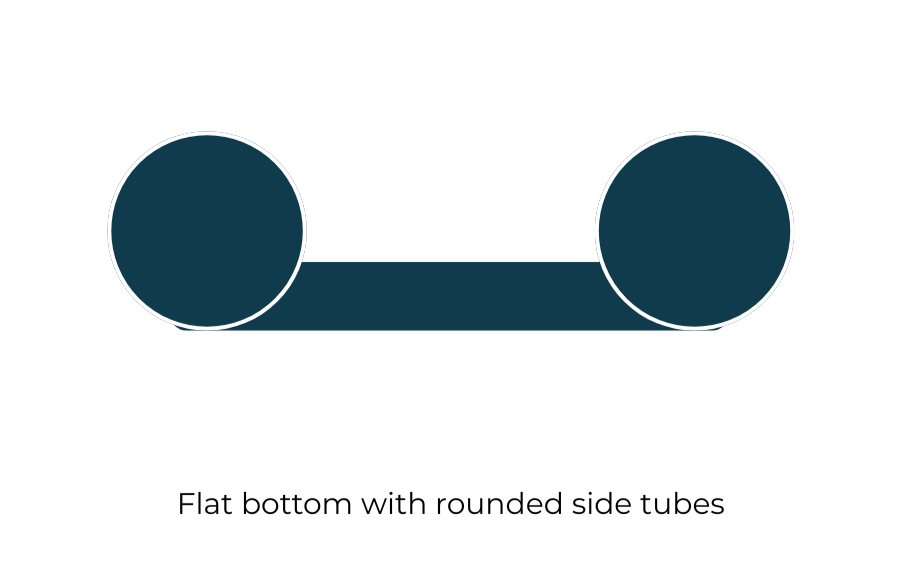
The first is a flat bottom with rounded side tubes. These are very common in inflatable kayaks. The wider footprint spreads your weight across the water, creating strong initial stability. This makes them feel steady when you first get in, which is why they’re popular with beginners. The trade-off is that they tend to be less efficient through the water.
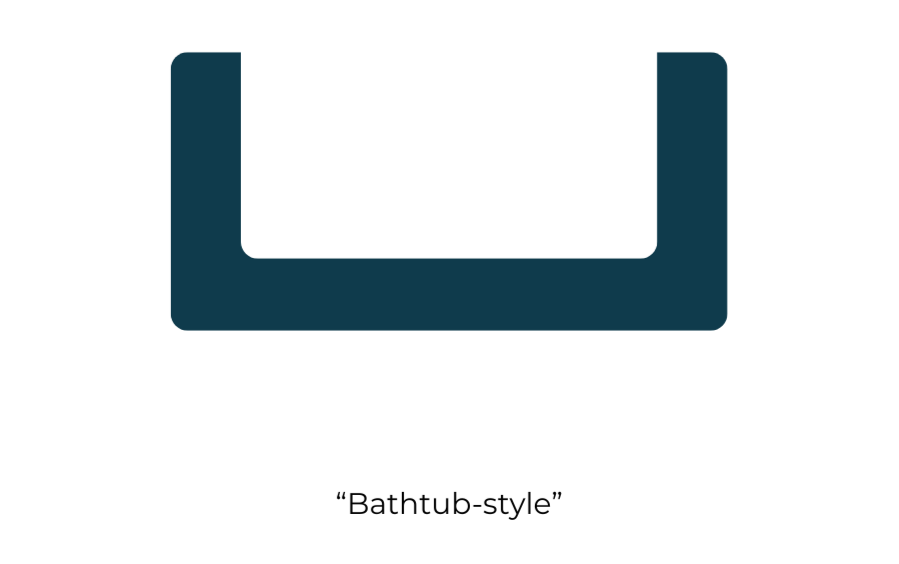
The second type is a flat bottom with flatter, more vertical side walls, sometimes referred to as “bathtub-style” hulls. These can feel faster and more efficient, as they move through the water with less resistance. However, they are typically less forgiving when you start to lean the kayak, and can feel a bit more unsettled as a result.
Flat hulls are generally easy to use and confidence-inspiring at first, but they don’t offer as much support or control once you begin edging into turns.
V-Shaped Hulls
At the other end of the spectrum are V-shaped and rounded hulls, often grouped under displacement hulls.
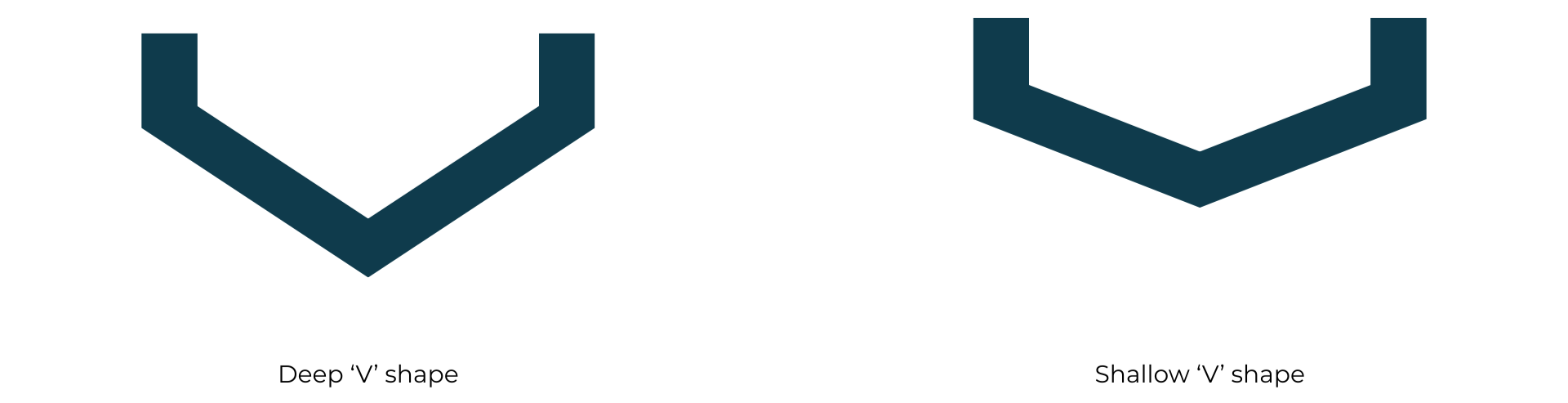
A V-shaped hull features a central ridge that helps the kayak track in a straight line and cut efficiently through the water. This can make it feel fast and directional. However, that same shape can feel less stable, particularly for newer paddlers, and these kayaks are often longer, which can make them slower to turn. You’ll commonly see this style in touring and racing designs where efficiency is the priority, in either a ‘deep-V’ or ‘shallow-V’ shape.
Rounded Hulls
A rounded hull creates a very different on-water feel. The curved shape reduces drag and moves smoothly through the water, while also allowing for more natural, controlled turning. As the kayak leans, the rounded profile provides a progressive, supportive feel rather than a sudden drop in stability. Many paddlers find rounded kayaks offer a good balance between efficiency and overall comfort on the water. However, this hull shape is generally only associated with hard shell kayaks due to manafufacturing limitations making this shape difficult to replicate with inflatables.
Each hull type has its place, and the right choice depends on how you plan to use your kayak. Flat hulls prioritize initial stability, turning and ease of use, while displacement hulls focus more on efficiency, ability to deal with waves, and performance over distance.
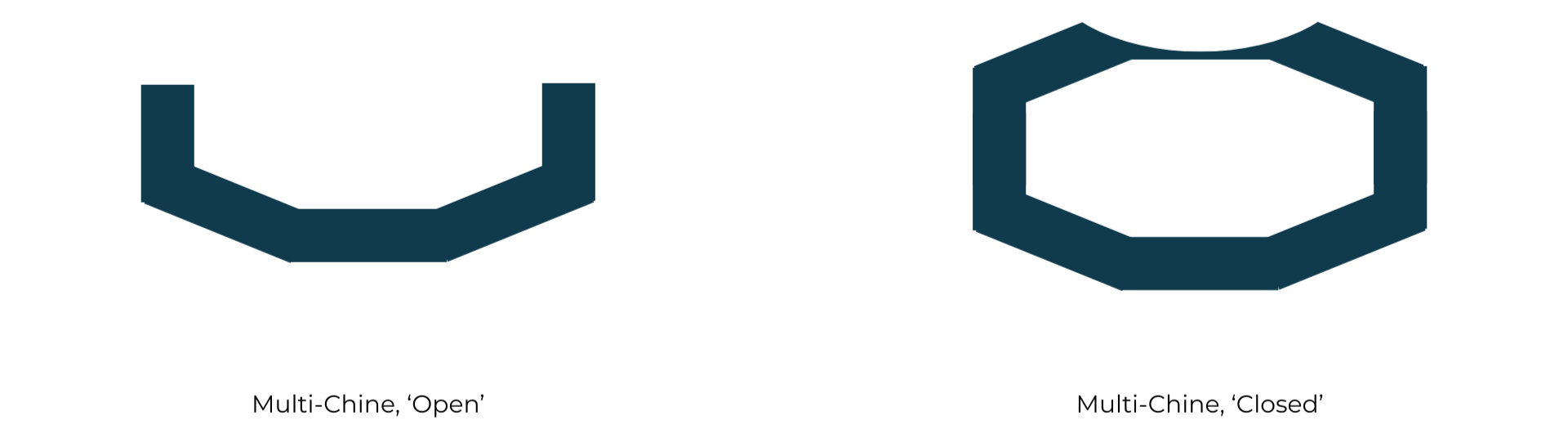
Advances in technology: Historically, inflatable kayaks have been limited to the flatter hull shapes mentioned above. However, modern drop-stitch construction is changing what’s possible. Through laser cutting and advanced manufacturing techniques, designers can now create sharper hull lines, more refined curves, and increasingly defined profiles. This includes ‘multi-chine’ designs which provide a great balance of performance features. To find out how, take a look at our article on Inflatable Kayak Design: Explained.
The result is a new generation of inflatables that are far closer to hard-shell performance than ever before, delivering efficient, responsive handling on the water, without giving up the portability that defines the category.

Width and Stability
Width is usually the first thing that influences how stable a kayak feels.
Wider kayaks spread your weight across a larger surface area, which makes them feel calm and steady when you first sit in them. That immediate steadiness is known as primary stability, and it’s one of the reasons many inflatable kayaks are designed with fairly generous widths.
But stability in inflatable kayaks isn’t just about width.
The large inflatable side chambers also play a role. These chambers contain a lot of air, and air naturally wants to stay above the waterline. As the kayak begins to tilt, those buoyant side walls resist being pushed underwater.
Therefore, compared with many hard shell kayaks, inflatables often feel surprisingly forgiving when your balance shifts.

Hull Length: Glide vs Maneuverability
A key factor affecting how a kayak behaves on the water is length.
In simple terms, the more of the kayak that sits in the water, the more efficiently it moves forward. Longer kayaks have a greater waterline length, which helps them glide further between strokes and maintain momentum. Think of Olympic rowing boats. They’re long and narrow because that shape glides efficiently through the water and maintains speed.
Shorter kayaks behave quite differently. With less hull in the water they pivot more easily, which makes them quicker to turn and easier to reposition. In smaller waterways or when you’re simply exploring, that responsiveness can actually make them feel more playful.
If there’s one simple rule to remember on length, it’s this: Longer kayaks usually favour glide, efficiency, and straight-line tracking, while shorter kayaks favour maneuverability and easier turning.
How Design Comes Together
No single measurement tells you exactly how a kayak will behave on the water; it's a combination of them. What really matters is how the different design elements work together once the kayak is moving.
Longer kayaks tend to glide more efficiently, but they may turn more slowly. Wider kayaks feel stable, but extra width can reduce efficiency through the water. Good kayak design is really about balancing these trade-offs.
Once you understand how design elements interact, choosing the right kayak becomes much easier. To understand in greater detail, check out our article on Inflatable Kayak Design: Explained.
Types of Inflatable Kayaks
Putting Design Into Practice
One of the most important decisions when choosing an inflatable kayak is how you plan to use it. While there are some excellent all-rounders available, no kayak can truly excel at everything. Different activities demand different designs and construction. For example, a kayak built for category V whitewater won’t be suitable for long-distance touring, and vice versa, because each requires very different performance characteristics.
Below are some of the most common types of inflatable kayaks and the kinds of paddling they’re designed for.

Touring Inflatable Kayaks
Best for distance paddling and longer trips.
Touring kayaks are designed to cover distance efficiently. They are typically longer and narrower, which helps them glide smoothly between paddle strokes and maintain momentum over longer paddles. Many include fins to help them track straight in wind or open water.
Because they’re often used for extended trips, touring kayaks usually include generous deck rigging or cargo areas at the bow and stern, allowing paddlers to carry dry bags, food, spare clothing, and safety gear.

Adventure Inflatable Kayaks
Best for versatile paddling and exploring different waterways.
Adventure kayaks are designed to be adaptable all-rounders. They usually balance stability, efficiency, and cargo capacity, making them suitable for day trips, exploring rivers and lakes, or light overnight trips.
Their length and width generally sit between touring and recreational designs, offering a mix of glide and maneuverability. Many also include deck rigging or attachment points for carrying additional gear.
Recreational Inflatable Kayaks
Best for relaxed paddling on calm water.
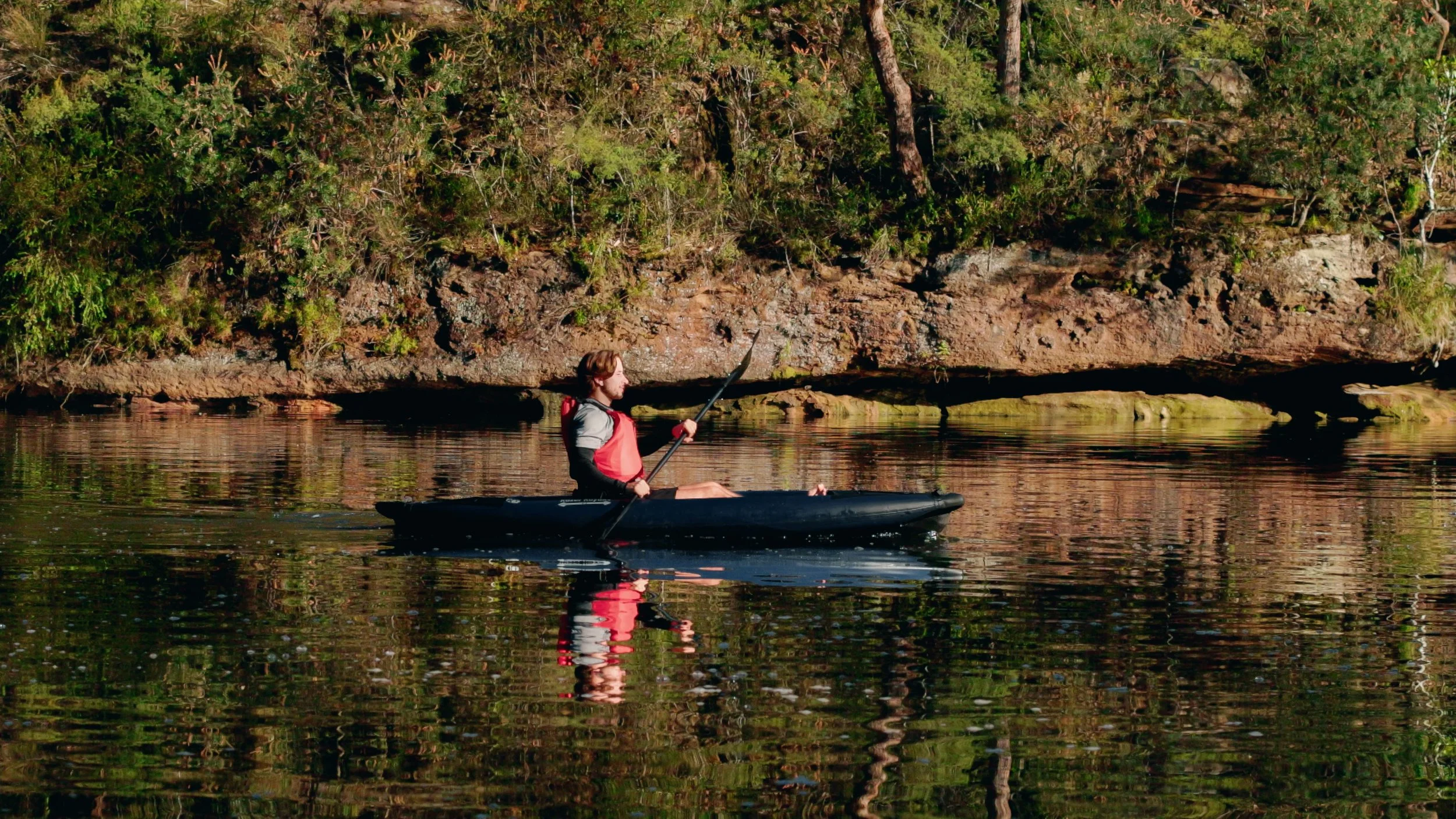
Recreational kayaks prioritize simplicity and ease of use. They are usually shorter and wider, which makes them feel stable and approachable for beginners or casual paddlers. Speed and long-distance efficiency are not the main priorities.
Storage space is typically modest, often limited to small deck bungees or cargo areas for essentials such as a dry bag or water bottle. These kayaks are best suited to relaxed paddling on calm lakes, sheltered waterways, or short trips close to shore.
Fishing Inflatable Kayaks
Best for stability and gear-heavy outings.
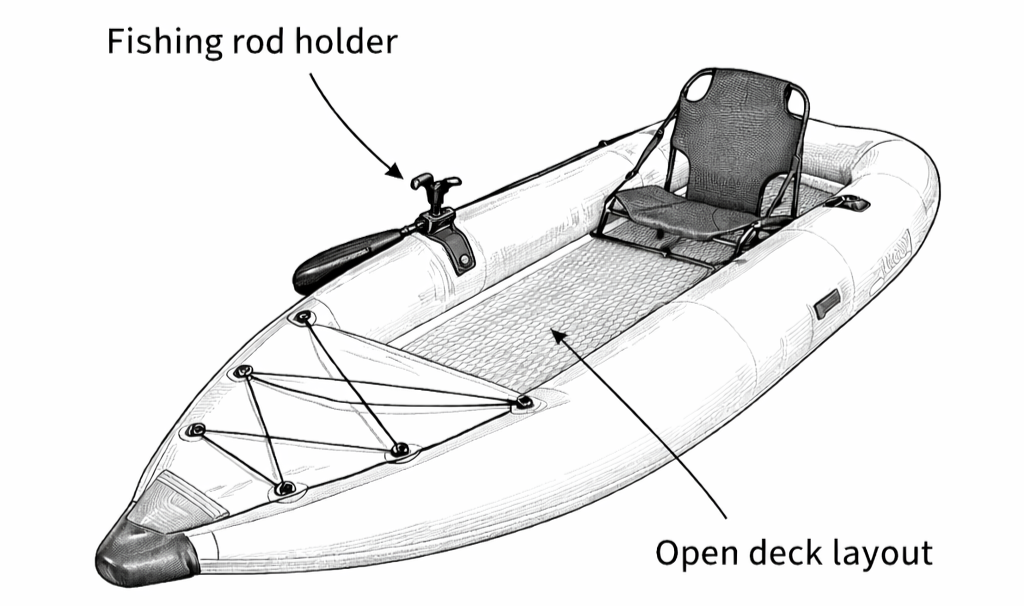
Fishing kayaks prioritize stability and equipment storage. Because anglers often reach for gear or cast while seated, these kayaks are usually wider and designed to feel very stable on the water.
They commonly include open deck layouts, mounting points and space for rods, tackle boxes, higher seats and other fishing equipment. Efficiency is less of a focus, as the main goal is providing a steady platform for managing gear comfortably.
Whitewater Inflatable Kayaks
Best for maneuverability in moving water.
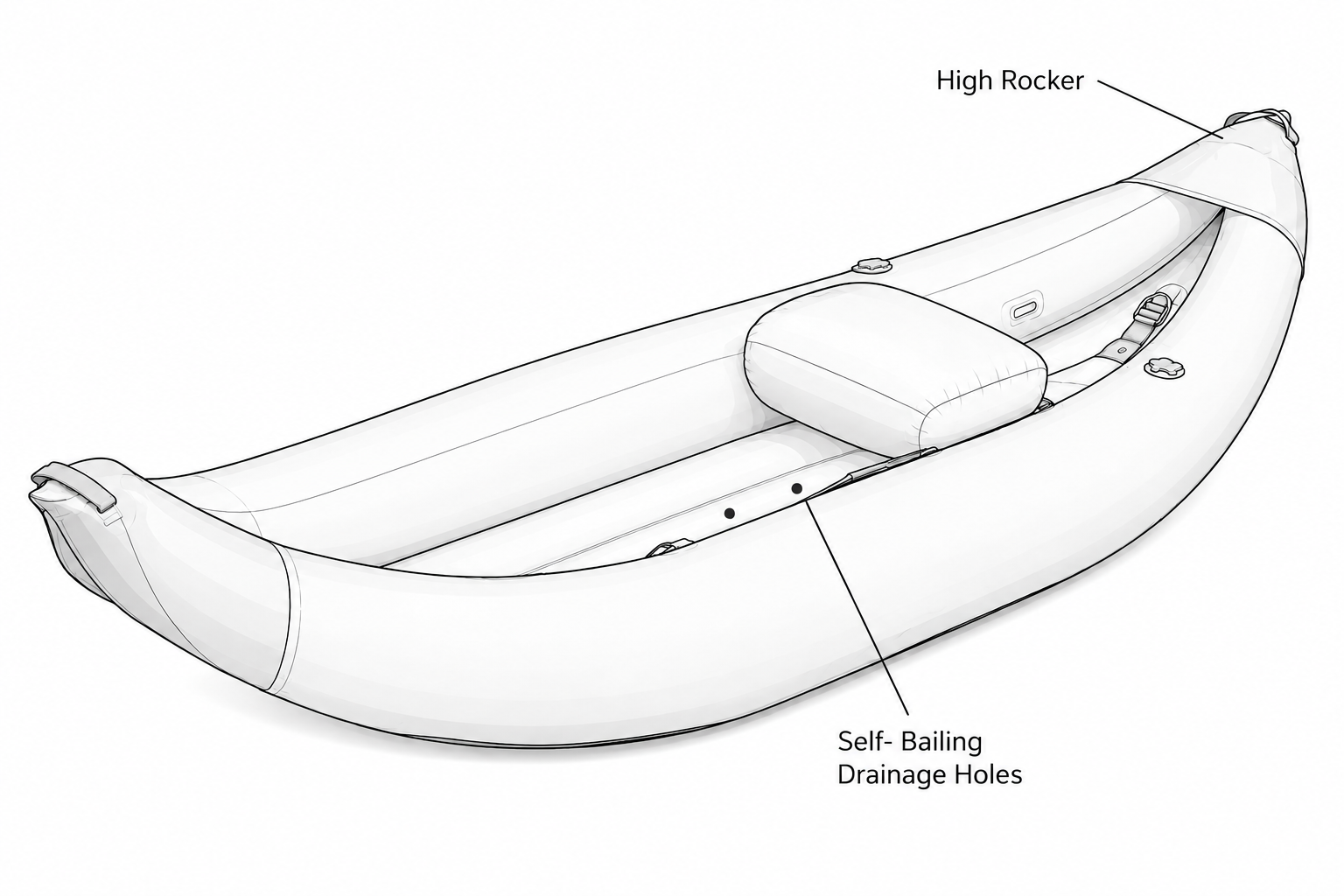
Whitewater kayaks are designed for control in rivers and rapids. They are typically shorter and include significant rocker, which helps them turn quickly and ride over waves, currents, and obstacles. They usually include self-bailing drainage holes, which can reduce efficiency on flat water but allow water to drain out of the hull as you move down the river through rapids.
In these environments, maneuverability and responsiveness matter far more than straight-line efficiency. Storage space is usually minimal, as the kayak is built to remain compact and agile rather than carry large amounts of gear.
Finding Your Type of Kayak
By this point, you’ve seen how materials, construction, and design all influence how an inflatable kayak performs on the water. In practice, choosing the right kayak is about finding the best one for you.
A kayak designed for long-distance touring will feel completely different to one built for relaxed paddling or fishing. The key is understanding which features matter most for your kind of paddling, and which ones don’t.
If you’re planning to use your kayak across a range of environments, there are also excellent adventure and multi-purpose designs that offer a well-balanced mix of performance and versatility. To explore which kayak types match each environment, take a look at our deep dive Types of Inflatable Kayaks: Explained. Also, if you are specifically looking for a tandem kayak, see our guide to choosing the best 2-person inflatable kayak.
It’s also worth noting that higher-performance kayaks can make a significant difference to your overall experience. A more rigid, efficient design will feel noticeably easier to paddle and more rewarding to use over time.
One of the biggest advantages of inflatable kayaks is what happens off the water — how easy they are to set up, transport, pack down, and store. These practical factors often have just as much influence on how often you use your kayak as how it performs once you’re paddling.
In the next sections, we’ll look at what to expect when setting up an inflatable kayak, the accessories that can improve your experience, and how to choose a model that suits your needs in the real world.
Set Up and Pack Down
One of the biggest advantages of inflatable kayaks is portability. They can be packed into a bag, transported easily, and stored in places where a traditional kayak simply wouldn’t fit.
Inflatables do need to be set up before paddling though. Because of this, good design (and a good pump, preferably electric) becomes vitally important to reducing the mental barrier to getting on the water. We’ve seen this make a big difference in real-world use. If setup feels like a chore, people paddle less often. If it’s quick and easy, they go out far more regularly. Inflation points should be easy to access, and components like seats and skegs should attach quickly and securely.
When everything is designed well, the transition from bag to water can take only a few minutes. Below, we’ll look at what to expect when setting up and packing down an inflatable kayak.
Set Up: What to Expect
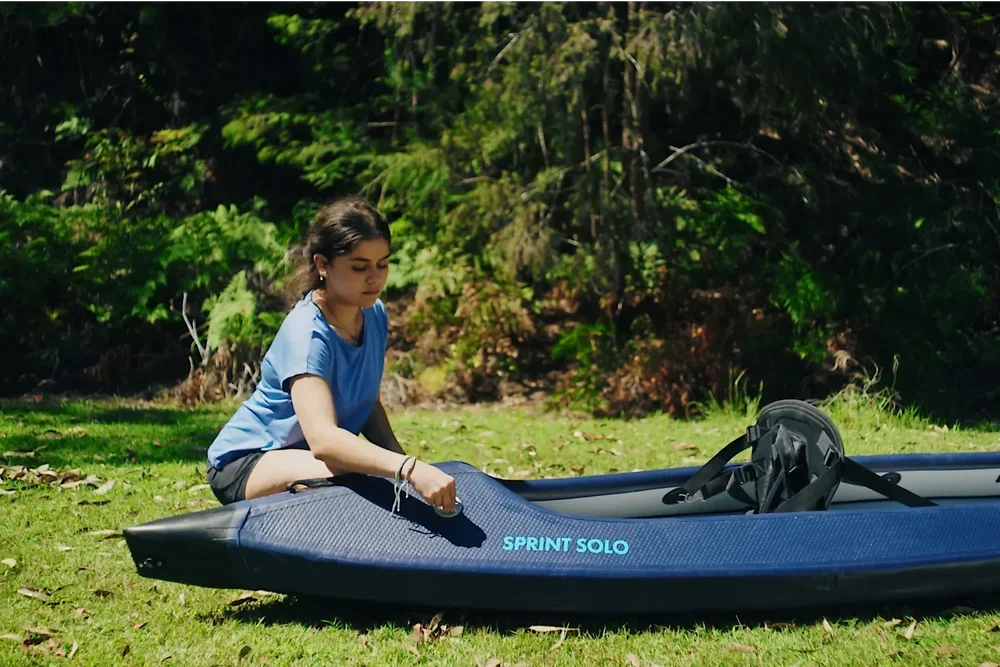
Setting up an inflatable kayak is usually a simple and predictable process.
In most cases, it involves three main steps: unpacking the kayak, inflating it, and attaching any removable components such as seats or skegs.
Once the kayak is unpacked, inflation is usually the main part of the setup process.
In general, inflation takes around 3–8 minutes, depending on the size of the kayak, the number of inflation points, and critically the type of pump being used.
Manual high-volume pumps are a common choice and can be surprisingly quick with a good design. Pumps with large cylinders move more air with each stroke, so many kayaks can be inflated in just a few minutes, although it does require some physical effort.
Electric pumps take a different approach by doing the work for you. Most include built-in pressure sensors, allowing you to set the desired pressure and inflate the kayak at the press of a button. Some run from a 12V car outlet, while others are rechargeable via USB-C and can be used anywhere. Modern rechargeable pumps are great and worth the investment to simplify setup.
As mentioned, a key factor that can influence setup time is the number and type of inflation points. Kayaks with multiple chambers spread all over the hull can take longer to inflate and may start to feel a bit tedious over time. It’s also worth checking whether all valves use the same fitting, as needing to switch pump adaptors mid-setup can quickly become frustrating. Some designs even rely on mouth inflation for certain chambers, which can be awkward and typically won’t allow for higher pressures, resulting in a less firm and responsive structure once on the water.
The final step is attaching removable components such as the skeg, seats, or footrests. Well-designed fittings should clip or slide into place easily and feel secure once attached. If you have a rechargeable pump this can be done whilst inflation is in progress.
Once these components are in place, the kayak is ready to launch.

Pack Down
Packing down is often overlooked , but in practice it makes a big difference to your experience. One thing to consider when comparing pack down times is that a PVC kayak can simply be wiped down and packed away whereas a mesh kayak needs to be left out to dry.
From there, the process to packdown is simple. You will start by removing any components such as the fin, seats, footrests.
If you’ve been paddling in saltwater, the kayak should be rinsed with fresh water before long-term storage. Even after freshwater paddling, allowing excess water to drain away and wiping down wet areas can help keep the kayak in good condition. If you have a PVC kayak you can then just wipe it down.
Most modern kayaks have valves that release air quickly once opened, so that much of the air escapes within a minute or two. Many paddlers simply allow the air to flow out naturally, although some pumps can also be connected in reverse to actively pull air out of the kayak. This can make the kayak easier to pack and help it fit more comfortably back into the bag.
The final step is rolling or folding the kayak so it fits back into its bag. The key is simply removing as much air as possible first. Rolling is often easier than folding because it pushes out any remaining air as you go. It’s best to follow the manufacturer's guidance on this.
Some carry bags are designed with a bit of extra space, it’s best to look out for those as small bags can make it difficult to pack away.
For most paddlers, pack down ends up being a simple final step at the end of a day on the water.
For further information around on how to look after your kayak, see our article Everyday Use, Storage and Maintenance.
So What Makes the Best Inflatable Kayak?
After everything we’ve covered in this guide, one question naturally remains:
What actually makes the best inflatable kayak?
The right kayak for you will always depend on how and where you plan to paddle. A kayak designed for fishing will prioritize stability and maneuverability which is different to kayaks with more streamlined shapes built for long-distance touring or carrying gear on multi-day trips.
That said, if we compare it to cars; a high end sports car might not be better for moving the family around than an SUV but it’s generally considered a better car. The “best” kayak varies depending on your needs but there are still some clear markers of high-quality inflatable kayak design.
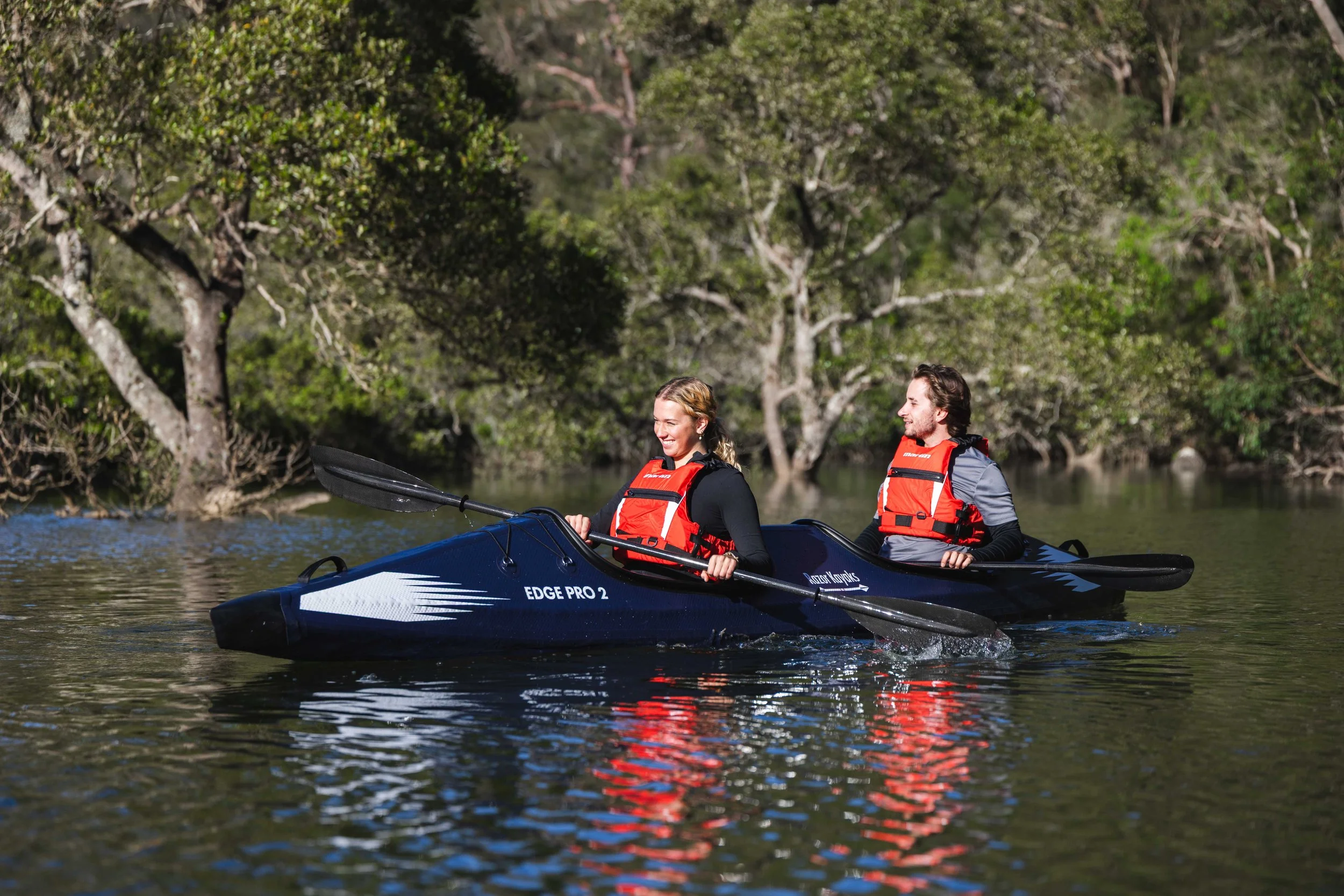
High-quality kayaks also tend to use well-designed components. Reliable valves, such as Halkey-Roberts style valves, make inflation easier and ensure the kayak holds pressure securely. Supportive seats and adjustable footrests also make a noticeable difference to comfort and paddling efficiency, particularly during longer sessions on the water.
Even the accessories can influence the overall experience (which we will dive into in our accessories section below). Good paddles, reliable pumps, and practical storage options all contribute to making setup easier and paddling more enjoyable. Inexperienced paddlers often underestimate this. It’s worth investing in a rechargeable pump and a more rigid fiberglass or carbon fiber paddle in our view.
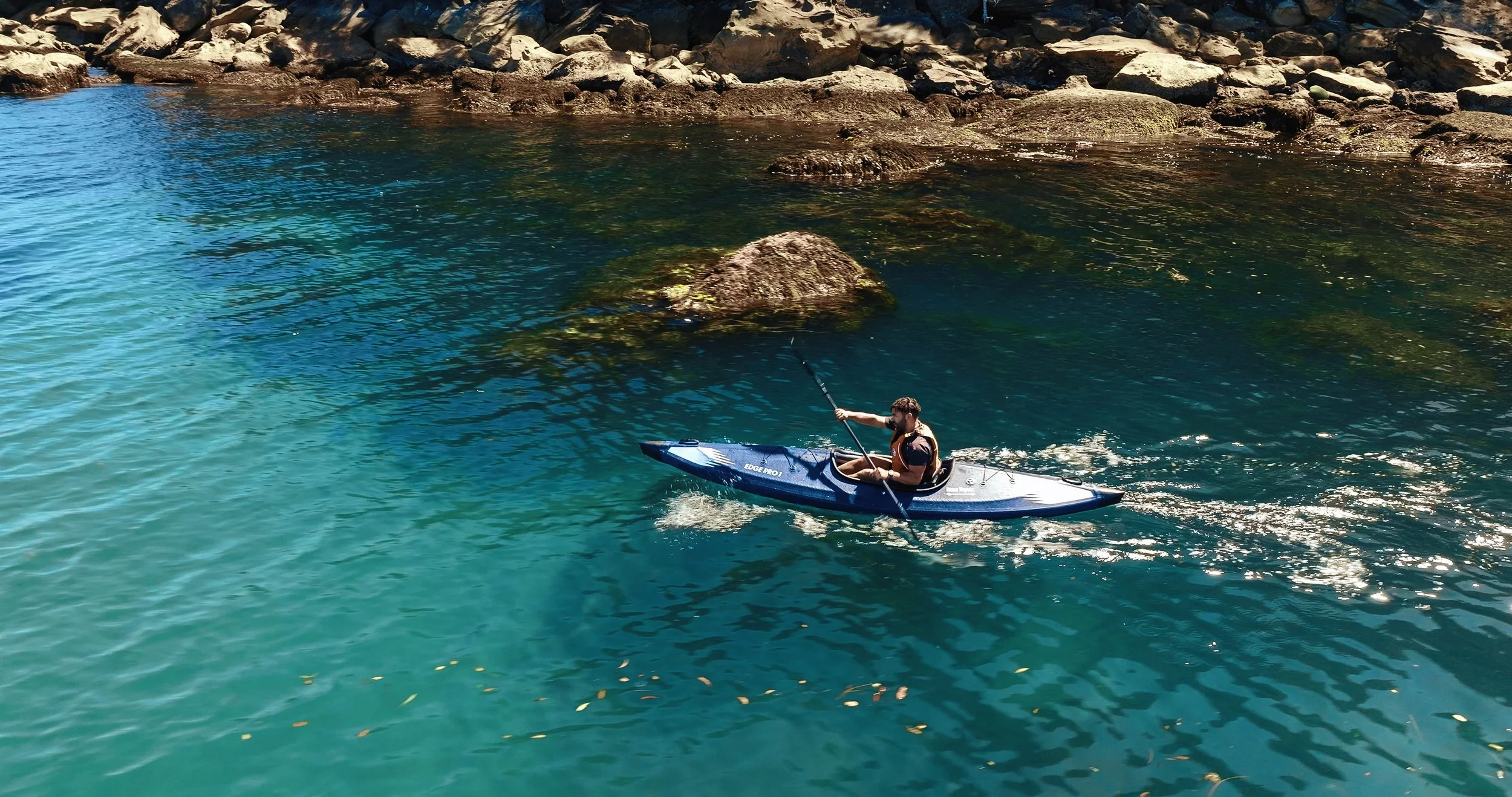
In general, better inflatable kayaks tend to share several characteristics.
They are usually built from thicker, reinforced PVC materials, which improves durability and helps the kayak maintain its shape over time.
They also incorporate drop stitch construction, particularly in the floor and structural panels. As discussed earlier in this guide, drop stitch technology allows kayaks to be inflated to much higher pressures and achieve better shapes, creating a far more rigid and efficient hull.
Design plays a critically important role too. A well-built kayak should feel thoughtfully designed for its intended purpose, shape matters, whether that’s efficient touring, stable recreational paddling, or carrying extra gear for longer adventures.

None of these factors alone determine whether a kayak is right for you. But when several of them come together, they are usually strong indicators of a kayak that has been designed with durability, performance, and long-term usability in mind. If you’re unsure, prioritize construction quality (drop stitch + high pressure), then choose design based on how you plan to paddle. This approach consistently leads to better long-term satisfaction.
So How Do I Choose A Kayak
If you’re still not 100% sure what’s right for you or want to learn more about a particular topic we have a number of in-depth guides and videos on: Materials,Design, Types of Kayaks, Everyday use & Accessories.
We’ve also designed this online guide to help make the process easier, and match you with the inflatable kayak we believe best fits your needs.
Our global customer service team is knowledgeable and always happy to help. If you have any further questions please feel free to call or email us. Details can be found on our contact page.
Accessories
Often overlooked, inflatable kayak accessories can have a significant impact on enjoyment, ease of use, and overall paddling experience. Some are essential, while others simply add convenience.
Many brands include paddles and pumps with their kayaks, but these are often basic and built to keep costs down rather than deliver performance. In practice, this is one of the most common upgrade points we see. After a few outings, many paddlers realize that a poor-quality pump makes setup feel like a chore, and a flexible or heavy paddle wastes energy with every stroke.
Below we discuss a few of the most common accessories and why they’re worth considering.
Pumps
If a pump is slow, awkward, or tiring, it has a real impact on how often you go out. It’s easy to overlook, but in practice it’s the difference between a quick, effortless setup and something that feels like a chore.
Most pumps fall into four broad categories, and the real difference between them isn’t just technical, it’s how they feel to use.
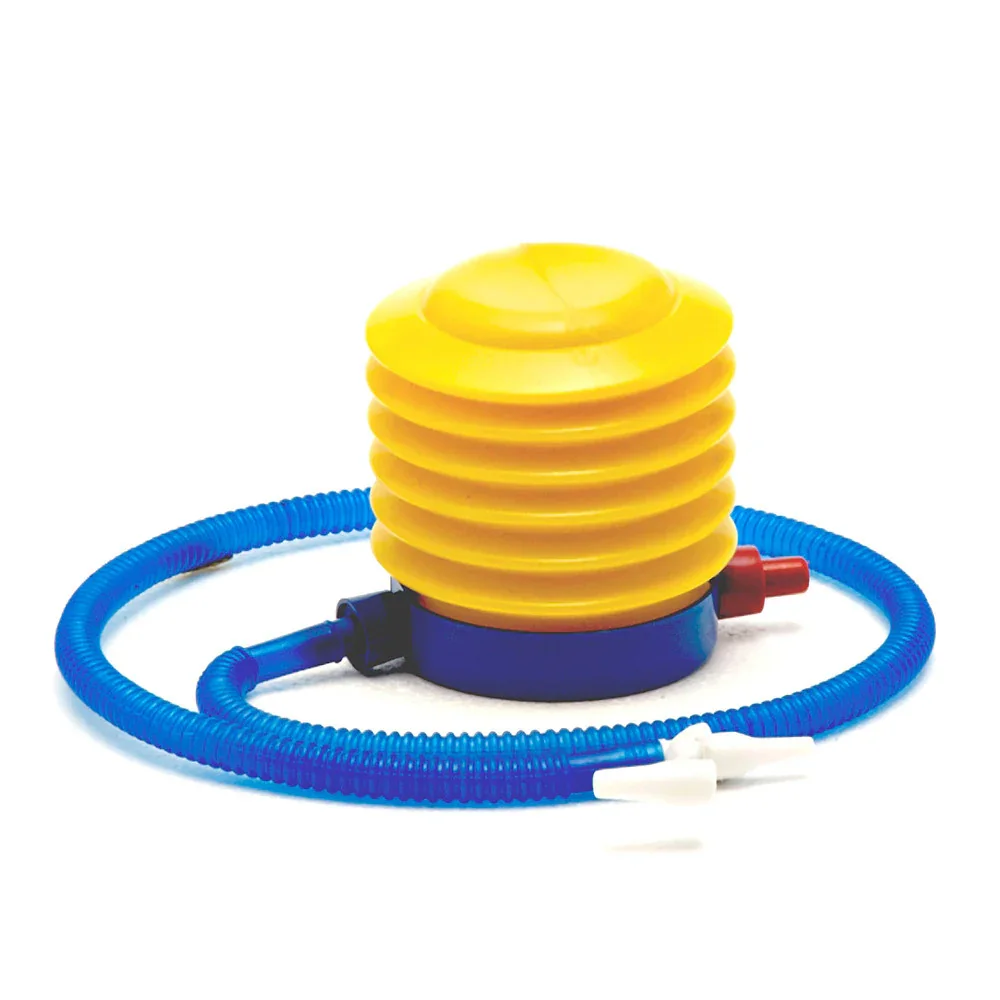
Poor Manual Pumps
These are the basic hand pumps and foot pumps often bundled with entry-level kayaks. They’ll get the job done, but they tend to move very little air with each stroke, so inflation feels slow and repetitive. Foot pumps in particular can be awkward to use and often struggle to reach higher pressures. They’re acceptable for occasional use with entry-level kayaks, but they can take two to three times longer than better-quality pumps. If you’re inflating regularly, the extra effort quickly becomes tedious, which is why they’re often the first thing people upgrade.
High-Volume Manual Pumps
A good high-volume pump feels completely different. Larger cylinders move more air with each stroke, so inflation is noticeably faster and more efficient. Many use double-action modes, inflating on both the up and down stroke. Others are marketed as ‘Triple-Action’ pumps that have the same functionality as double action pumps but also come with three gears for high volume, high pressure and then a gear in between. These High-volume manual pumps are still simple and reliable, but much less of a physical barrier to getting on the water.
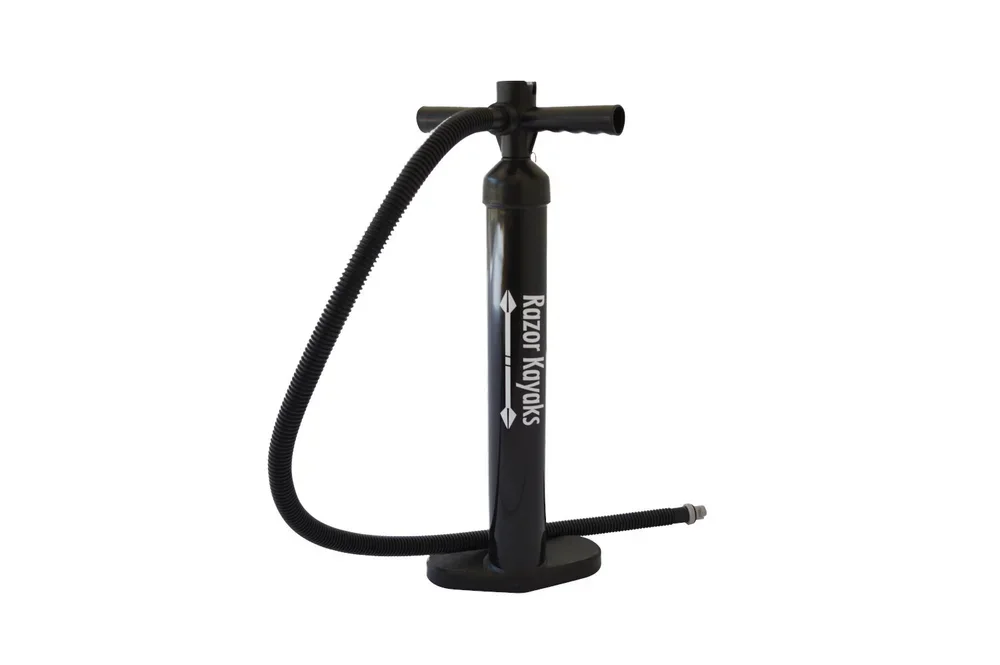
Double-Action Pump
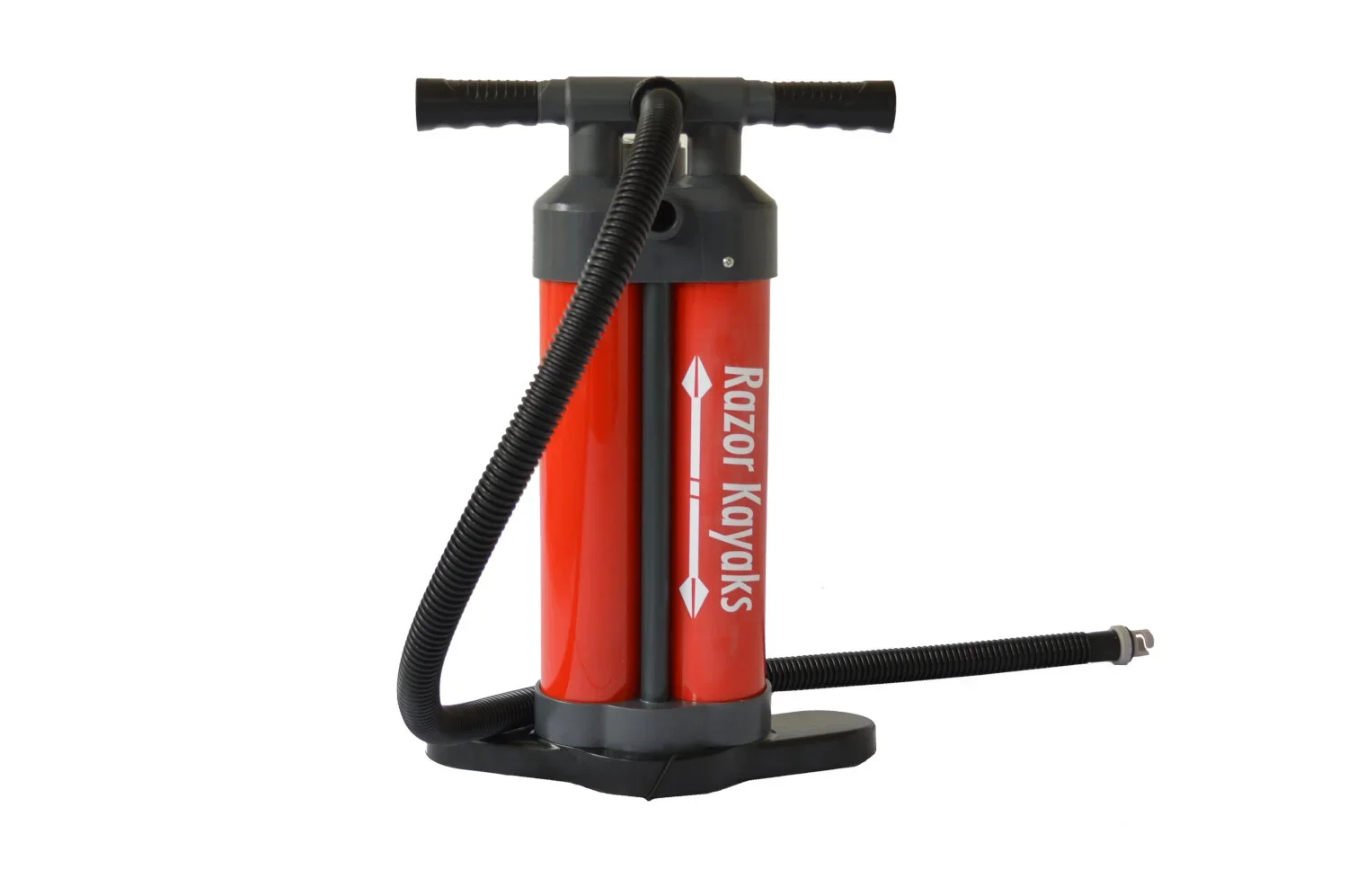
Triple-Action Pump
Electric 12V Pumps
These remove most of the effort entirely. You connect them to your car, set your target pressure, and let them run while you organise the rest of your gear. They’re particularly useful for larger or multi-chamber kayaks. The main limitation is needing a vehicle nearby, which doesn’t suit every launch.
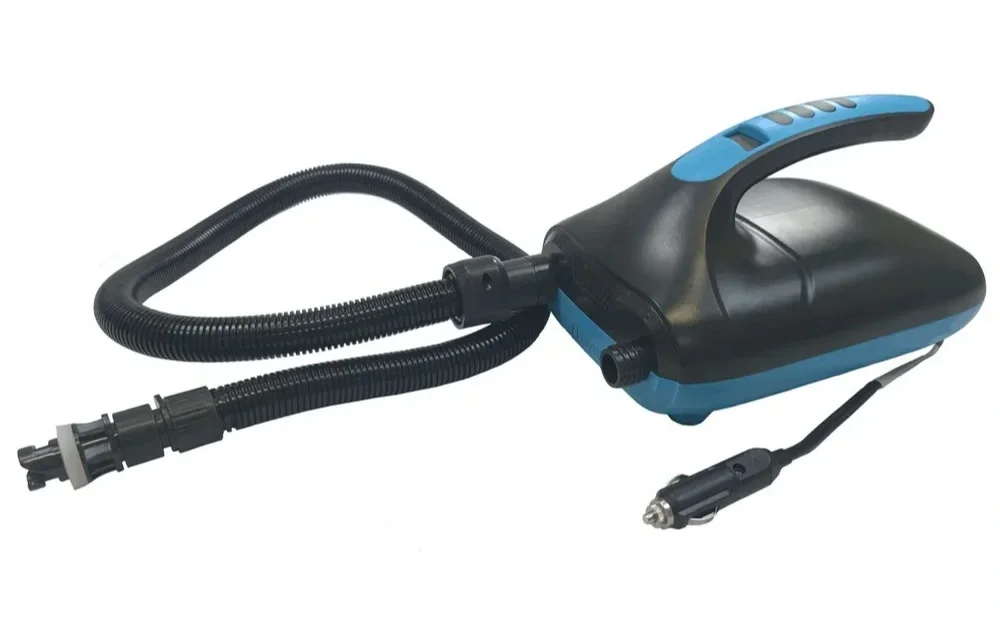
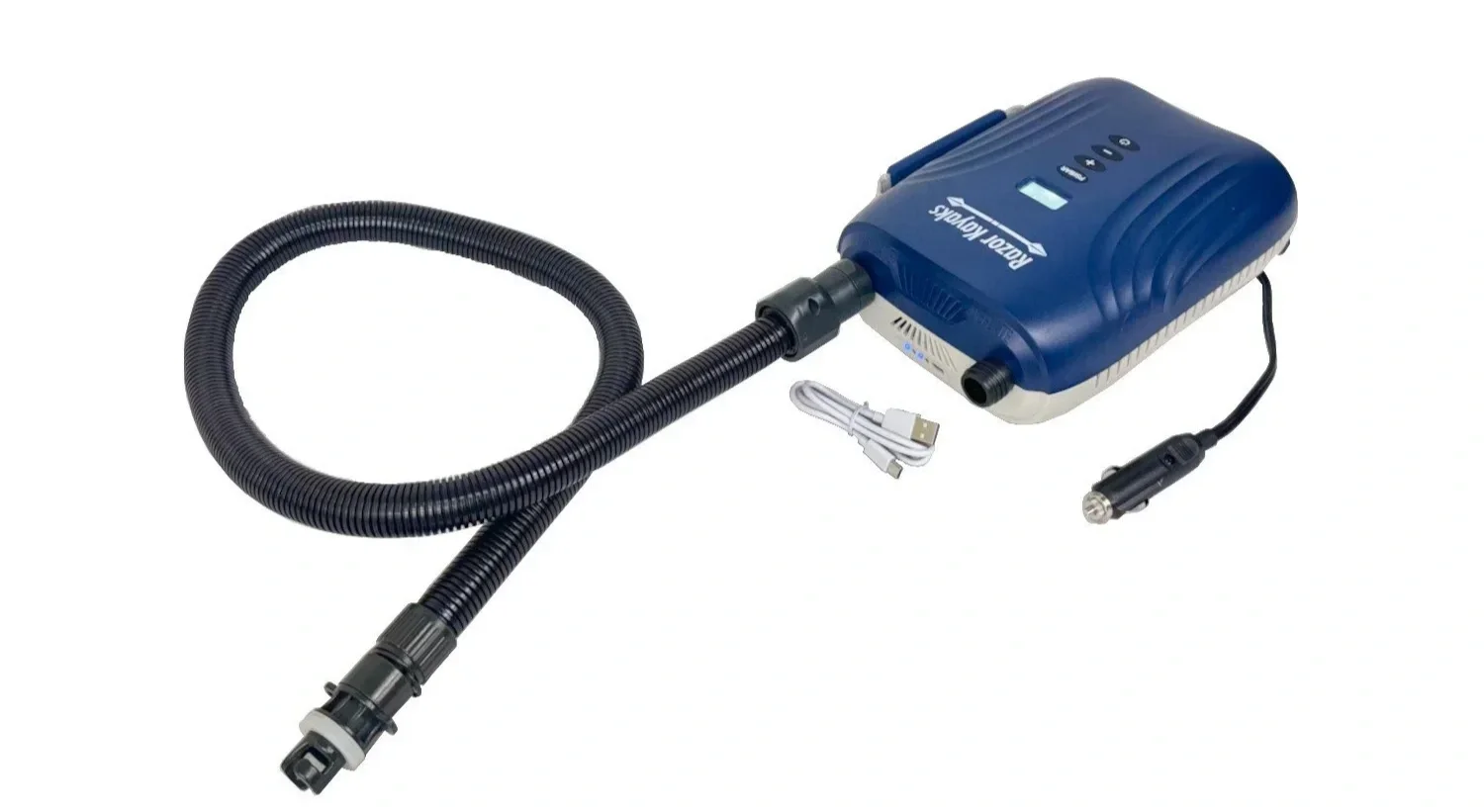
Rechargeable Electric Pumps
Rechargeable pumps offer the same convenience without being tied to a car. They’re compact, portable, and easy to carry with the rest of your kit, which makes a big difference if you’re walking to the water. They’ve come a long way in recent years and are now a very practical option if ease of use is your priority.
Paddles
The paddle is one of the most important accessories you’ll use with your kayak. In many ways, it’s your engine.
A well-designed paddle transfers your effort into forward movement efficiently. A poor paddle can waste energy through flex or unnecessary weight, which becomes particularly noticeable over longer paddles.
One of the key factors here is rigidity. When you apply force through a paddle stroke, a rigid shaft and blade transfers more of that energy directly into the water. If the paddle flexes too much, effort is lost, meaning you need to work harder to maintain the same speed.



Paddles are commonly made from three main materials.
Aluminum paddles: These are usually the most affordable option. They’re durable and suitable for casual paddling, although they tend to be heavier and can flex more under load as they typically have plastic blades. Good quality aluminum paddles are worth the investment over cheap ones as the aluminum and plastic are typically low grade and flimsy. You typically get what you pay for.
Fiberglass paddles: Fiberglass paddles offer a middle ground between weight, rigidity, and cost. They’re lighter and more efficient than aluminum paddles, making them a popular upgrade for paddlers who spend longer on the water.
Carbon fiber paddles: Carbon fiber paddles are the lightest and most rigid option. Because they transfer energy very efficiently and reduce fatigue, they’re often preferred by paddlers who plan to cover longer distances or paddle regularly.
For many people, upgrading the paddle is one of the simplest ways to improve the overall paddling experience. To explore what makes the right paddle for you, see our article Kayak Accessories: What’s Worth It (and What’s Not!).
Personal Flotation Devices (PFDs)
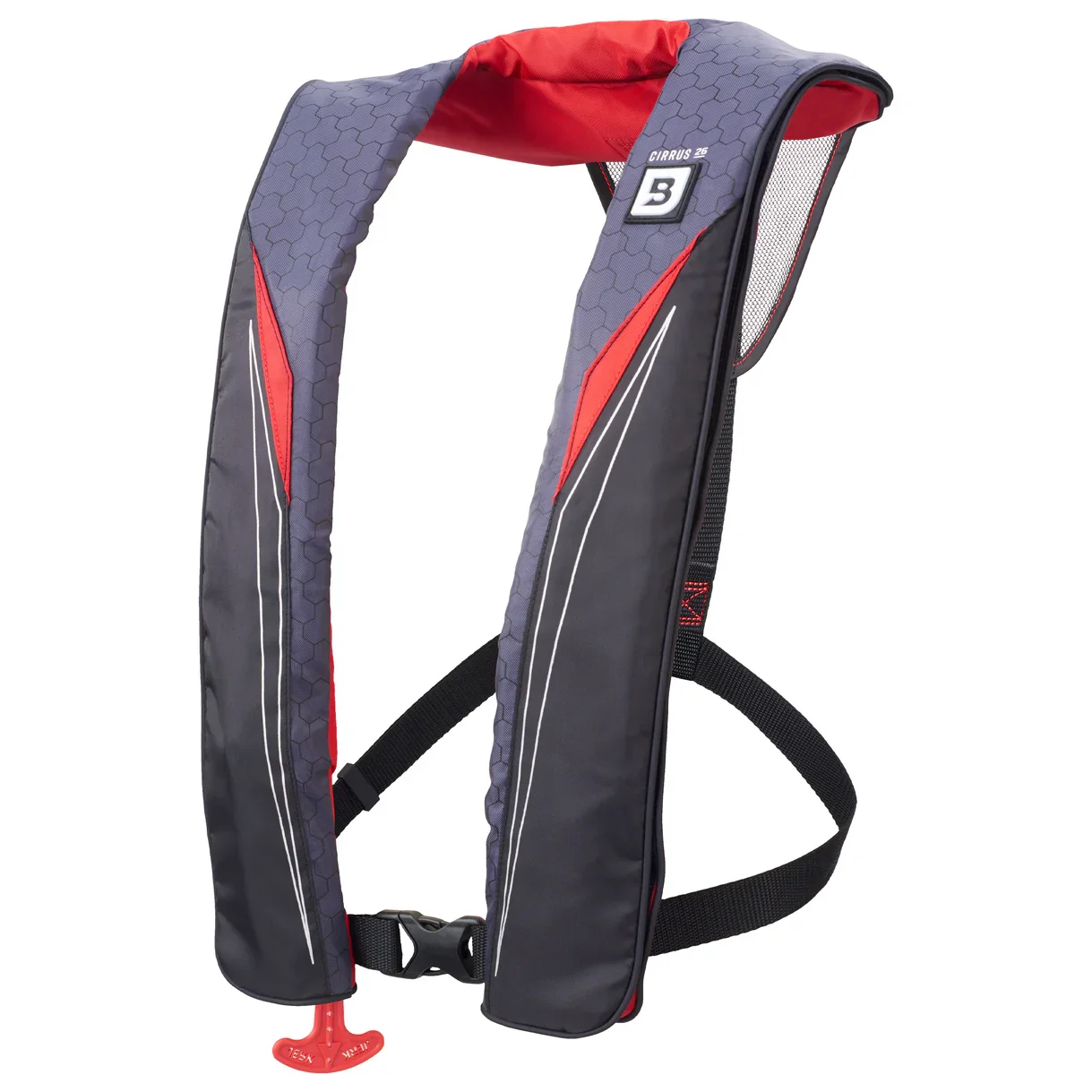
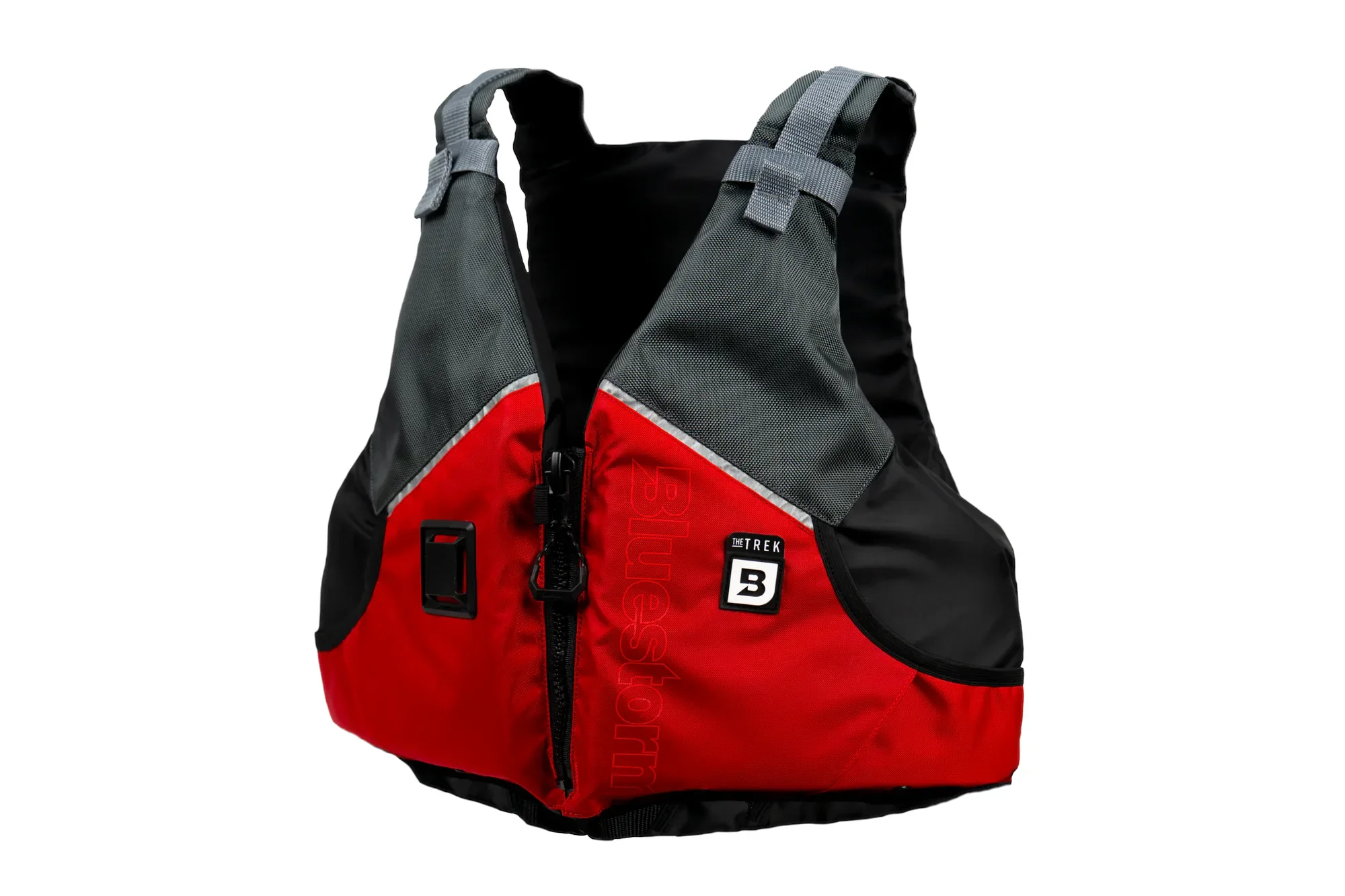
A personal flotation device, or PFD, is one of the most important pieces of kayaking safety equipment. In the U.S., recreational vessels are generally required to carry a USCG-approved PFD for each person on board, and we strongly recommend wearing one at all times while paddling.
Water conditions can change quickly, so fit and comfort matter. Choose a PFD that sits securely without restricting your movement.
There are two common styles.
Traditional foam paddling PFDs are worn like a vest and provide constant buoyancy. Many include practical features such as pockets, attachment points, or safety whistles.
Inflatable PFDs are much more compact and only inflate when needed, either manually or automatically. They’re noticeably more comfortable to wear, especially over longer paddles, because they’re so low profile.
One thing to be aware of is that automatic versions can sometimes go off unexpectedly if they get hit with enough water or heavy splashes. It’s not common, but it does happen, and it can catch people off guard the first time.
Electric Motors
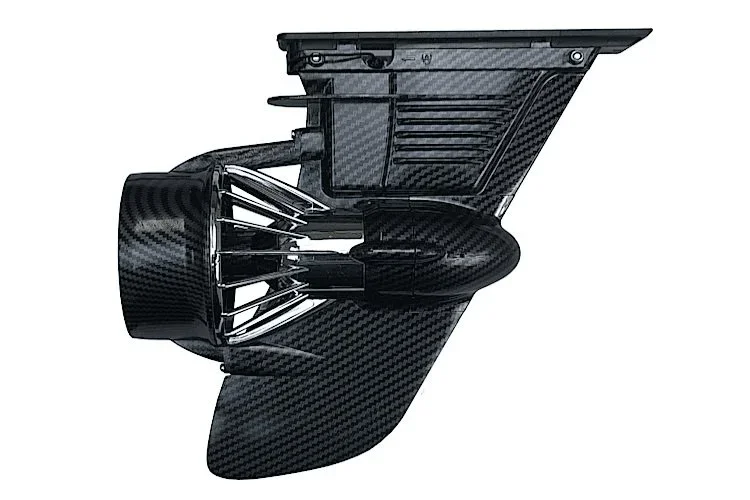
Some paddlers also choose to add electric motors to their kayaks.
These small propulsion systems can be mounted to certain kayak designs and provide assisted movement through the water. They’re not intended to replace paddling entirely, but they can be a great boost for when you’re tired over longer distances or when paddling against wind or current.
For paddlers covering longer distances or carrying heavier gear, a motor can be a useful way to extend how far and how comfortably you can explore.
Not every kayak is designed for motor use, so it’s worth checking compatibility before considering this option.
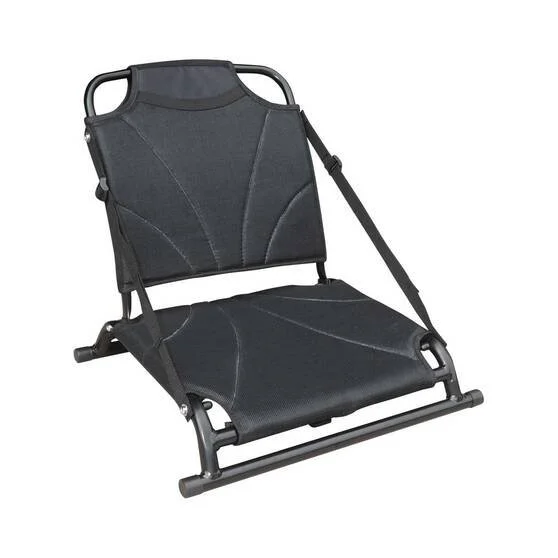
Kayak Fishing Seat
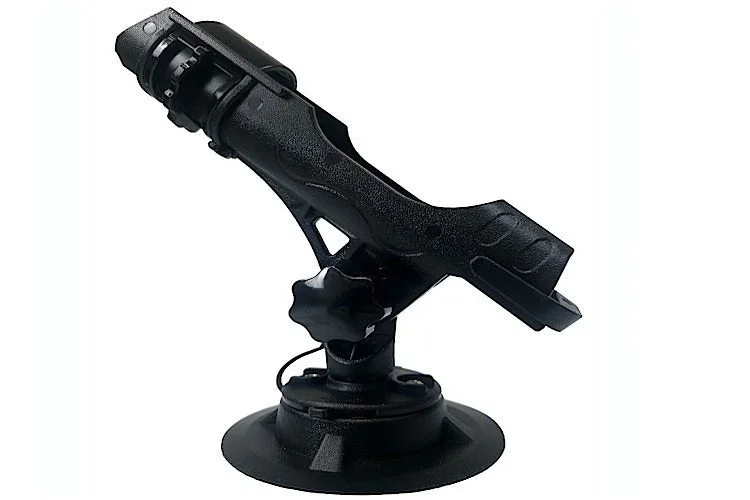
Fishing Rod Holder
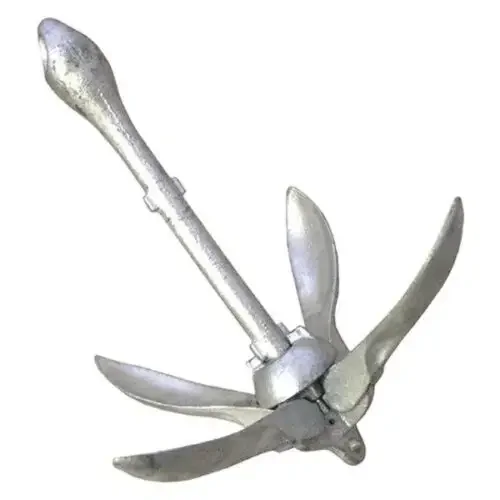
Kayak Anchor
Fishing Gear
When you start fishing from an inflatable kayak, you quickly realise it’s less about piling in gear and more about how you use the kayak itself as a platform. The biggest upgrades are the ones that attach directly to the kayak and make everything feel more controlled and within reach. A simple rod holder is usually the first step, it frees up your hands and makes trolling possible, but from there people often add things like gear tracks or mounting bases so they can position accessories exactly where they want them. Anchor systems are handy. A basic anchor with a trolley lets you control your angle to the wind or current, which makes a huge difference when you’re trying to hold a spot or fish structure. The same goes for fish finder mounts and battery setups, they turn a guess into something far more deliberate.
Comfort and organisation matter just as much over a longer session. A raised fishing seat can change how long you’re happy to stay on the water, and once you start adding deck bags, tankwell storage or clip-on side bags, everything has its place instead of rolling around your feet. On inflatables especially, you tend to rely on strap-on or adhesive-mounted accessories like D-rings, paddle holders and leashes to keep things secure without compromising the kayak. None of it is essential on day one, but each addition solves a small frustration, and over time those small improvements add up to a setup that feels purpose-built for fishing rather than just a kayak you happen to fish from.

Dry Bags
Dry bags are a simple accessory that can make a big difference when it comes to protecting your gear.
As the name suggests, dry bags are designed to keep items protected from water. They’re commonly used for clothing, phones, food, or other items you want to keep dry while paddling. They’re particularly useful for touring or adventure paddling where you may be carrying spare layers, lunch, or overnight equipment. Even on shorter paddles, a small dry bag can be useful for keeping essentials safe and organised.
Completing the Puzzle
Accessories don’t change the fundamental design of a kayak, but they can have a big impact on the overall paddling experience and enjoyment.
A good paddle can make longer paddles easier. Electric pumps take the hassle out of setup. A well-fitting PFD improves safety and confidence on the water. Dry bags protect your gear, and other equipment can add convenience depending on the kind of paddling you plan to do.
Once you’ve chosen the right kayak, the right accessories help complete the setup and make each trip on the water smoother, safer, and more enjoyable.