
Inflatable Kayak Design: Explained
As discussed in our article Inflatable Kayaks: The Complete Guide, a kayak’s performance isn’t defined by a single feature, it’s the combination of design choices working together.
In that guide, we touched on several of the key factors that influence how an inflatable kayak behaves on the water, things like length, width, and hull shape. In reality, these elements interact in more complex ways than we were able to cover there. Kayak design ultimately comes down to balancing three main characteristics: how well a kayak tracks, how easily it turns, and how stable it feels when you’re sitting in it.
In this deeper dive, we’ll take a closer look at how hull shape, width, and length influence those behaviours, as well as introducing some new concepts. Some of the ideas below may sound technical at first, but once you understand the fundamentals, it becomes much easier to recognise why different kayaks feel so different on the water.
If you’ve already read the complete guide, feel free to skip ahead to our section on Rocker. If not, read on.
Why Design Matters
Two inflatable kayaks can be built from the same materials, inflated to the same pressure, and still feel completely different once you get them on the water. That difference comes down to design. Materials and construction affect durability and rigidity. Design, on the other hand, determines how the kayak actually behaves when you paddle it.
Things like the kayak’s shape, length and width influence how it moves through the water, how stable it feels, how straight it tracks, and how easily it turns.
Understanding those design elements makes it much easier to choose a kayak that suits the kind of paddling you actually want to do.
Design and Performance
Hull Shapes: Flat, V-Shaped and Rounded
The overall shape of the hull has a major influence on how a kayak feels on the water, from stability through to speed and turning.
Flat Hulls
One of the most common designs is the flat hull, often referred to as a planing hull. There are two main variations you’ll come across.
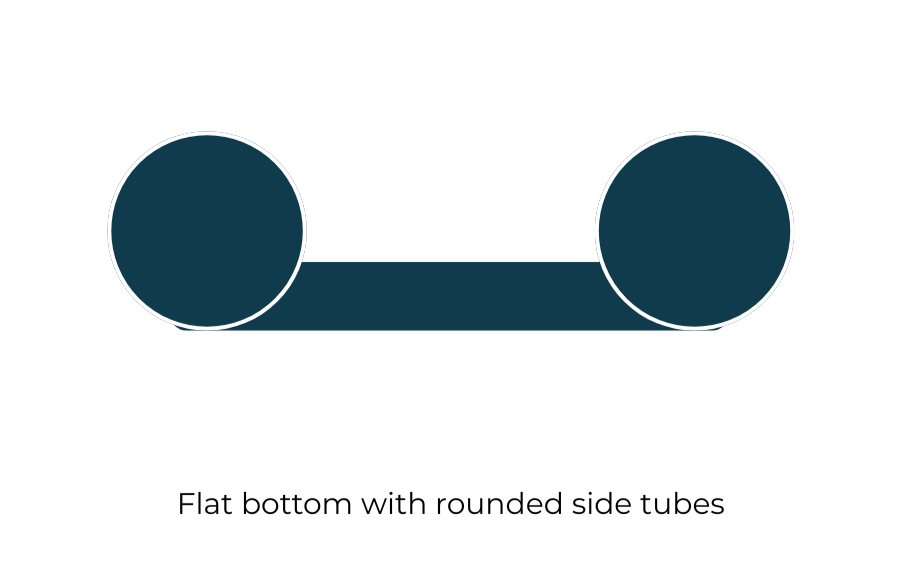
The first is a flat bottom with rounded side tubes. These are very common in inflatable kayaks. The wider footprint spreads your weight across the water, creating strong initial stability. This makes them feel steady when you first get in, which is why they’re popular with beginners. The trade-off is that they tend to be less efficient through the water.
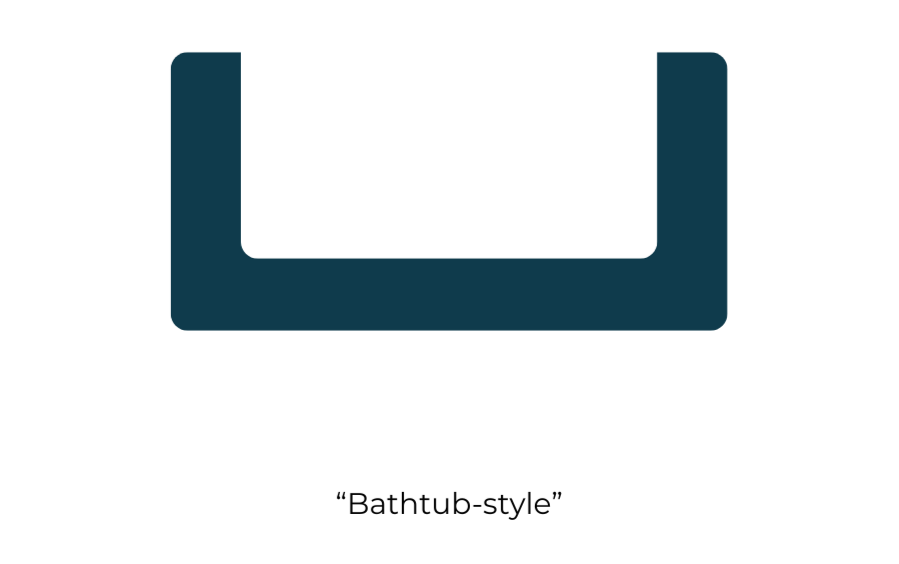
The second type is a flat bottom with flatter, more vertical side walls, sometimes referred to as “bathtub-style” hulls. These can feel faster and more efficient, as they move through the water with less resistance. However, they are typically less forgiving when you start to lean the kayak, and can feel a bit more unsettled as a result.
Flat hulls are generally easy to use and confidence-inspiring at first, but they don’t offer as much support or control once you begin edging into turns.
V-Shaped Hulls
At the other end of the spectrum are V-shaped and rounded hulls, often grouped under displacement hulls.
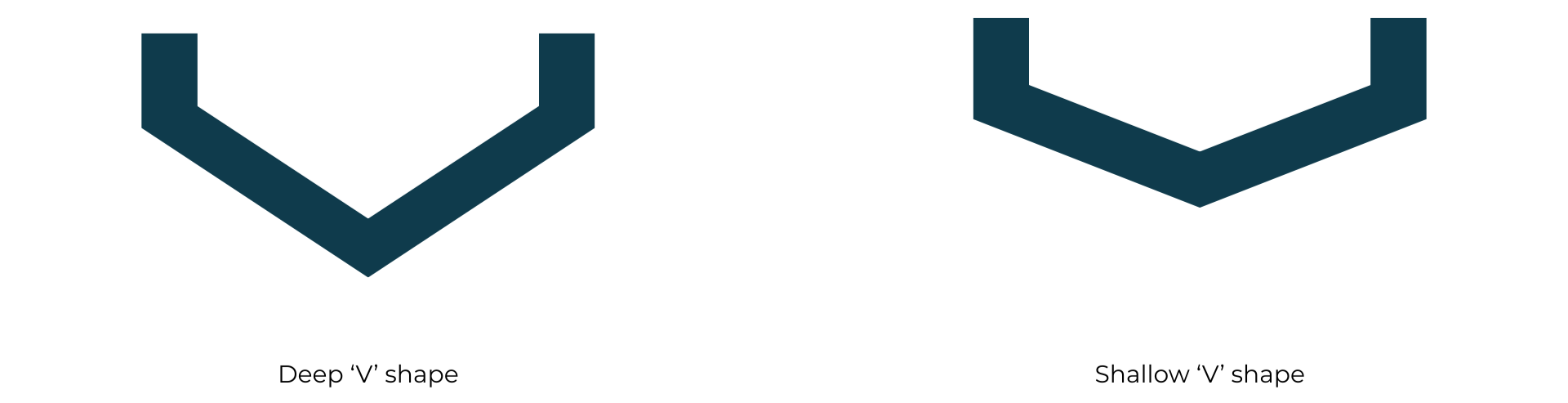
A V-shaped hull features a central ridge that helps the kayak track in a straight line and cut efficiently through the water. This can make it feel fast and directional. However, that same shape can feel less stable, particularly for newer paddlers, and these kayaks are often longer, which can make them slower to turn. You’ll commonly see this style in touring and racing designs where efficiency is the priority, in either a ‘deep-V’ or ‘shallow-V’ shape.
Rounded Hulls
A rounded hull creates a very different on-water feel. The curved shape reduces drag and moves smoothly through the water, while also allowing for more natural, controlled turning. As the kayak leans, the rounded profile provides a progressive, supportive feel rather than a sudden drop in stability. Many paddlers find rounded kayaks offer a good balance between efficiency and overall comfort on the water. However, this hull shape is generally only associated with hard shell kayaks due to manafufacturing limitations making this shape difficult to replicate with inflatables.
Each hull type has its place, and the right choice depends on how you plan to use your kayak. Flat hulls prioritize initial stability, turning and ease of use, while displacement hulls focus more on efficiency, ability to deal with waves, and performance over distance.
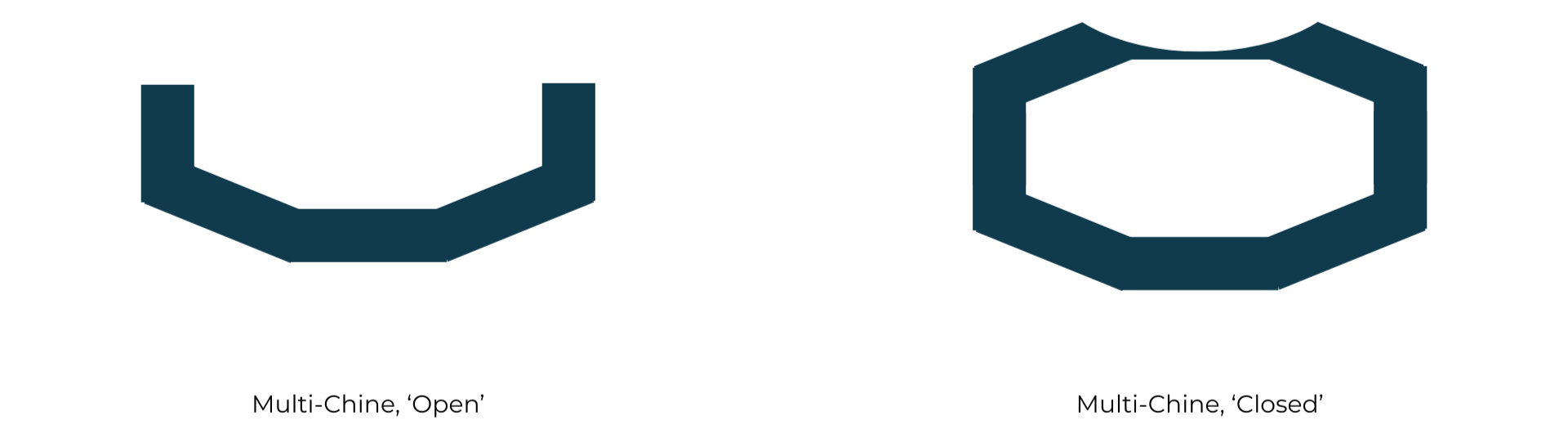
Advances in technology: Historically, inflatable kayaks have been limited to the flatter hull shapes mentioned above. However, modern drop-stitch construction is changing what’s possible. Through laser cutting and advanced manufacturing techniques, designers can now create sharper hull lines, more refined curves, and increasingly defined profiles. This includes ‘multi-chine’ designs which provide a great balance of performance features. To find out how, take a look at our article on Inflatable Kayak Design: Explained.
The result is a new generation of inflatables that are far closer to hard-shell performance than ever before, delivering efficient, responsive handling on the water, without giving up the portability that defines the category.
Width and Stability
Width is usually the first thing that influences how stable a kayak feels.
Wider kayaks spread your weight across a larger surface area, which makes them feel calm and steady when you first sit in them. That immediate steadiness is known as primary stability, and it’s one of the reasons many inflatable kayaks are designed with fairly generous widths.
But stability in inflatable kayaks isn’t just about width.
The large inflatable side chambers also play a role. These chambers contain a lot of air, and air naturally wants to stay above the waterline. As the kayak begins to tilt, those buoyant side walls resist being pushed underwater.
Therefore, compared with many hard shell kayaks, inflatables often feel surprisingly forgiving when your balance shifts.

Hull Length: Glide vs Maneuverability
A key factor affecting how a kayak behaves on the water is length.
In simple terms, the more of the kayak that sits in the water, the more efficiently it moves forward. Longer kayaks have a greater waterline length, which helps them glide further between strokes and maintain momentum. Think of Olympic rowing boats. They’re long and narrow because that shape glides efficiently through the water and maintains speed.
Shorter kayaks behave quite differently. With less hull in the water they pivot more easily, which makes them quicker to turn and easier to reposition. In smaller waterways or when you’re simply exploring, that responsiveness can actually make them feel more playful.
If there’s one simple rule to remember on length, it’s this: Longer kayaks usually favour glide, efficiency, and straight-line tracking, while shorter kayaks favour maneuverability and easier turning.
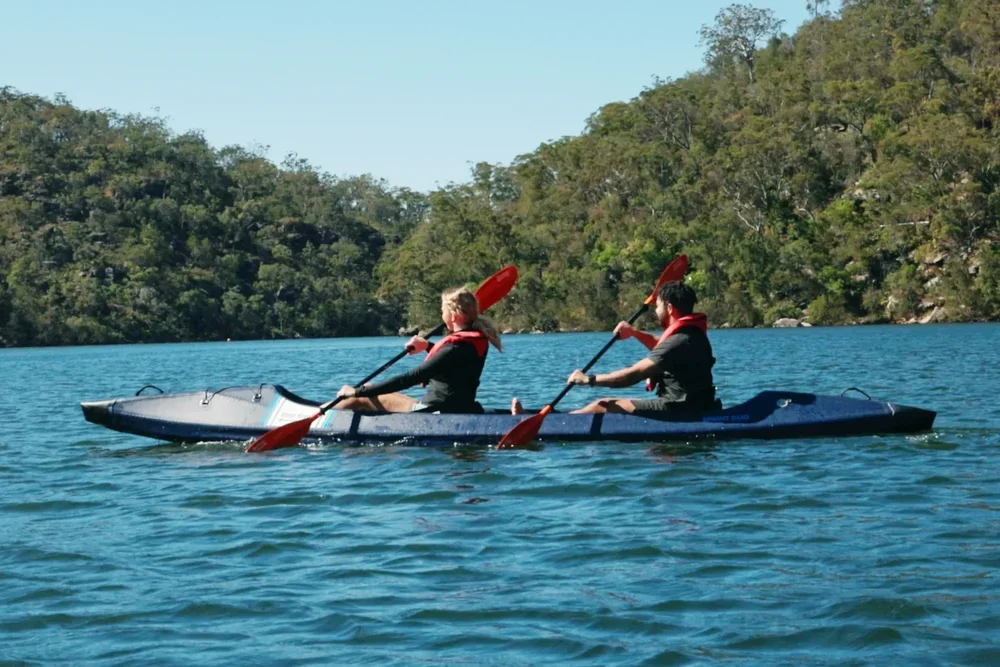
Rocker: How Designers Adjust the Effect of Length
While length plays a major role in how a kayak behaves, it doesn’t tell the whole story. One design feature that significantly influences turning behaviour is something called rocker.
Rocker refers to the upward curve of the kayak’s bow and stern. When a kayak has noticeable rocker, the ends lift slightly out of the water rather than sitting flat along the surface.
This changes how much of the hull actually sits in the water.
Even if two kayaks have the same overall length, the one with more rocker will usually have a shorter effective waterline, because less of the hull is in contact with the water at any given time. That shorter contact area makes the kayak easier to pivot.
A useful way to picture this is to think about how objects rotate around their contact point. A spinning top, with its small contact point, turns easily and smoothly. A flat disc of the same size, resting fully on a surface, takes far more effort to rotate.
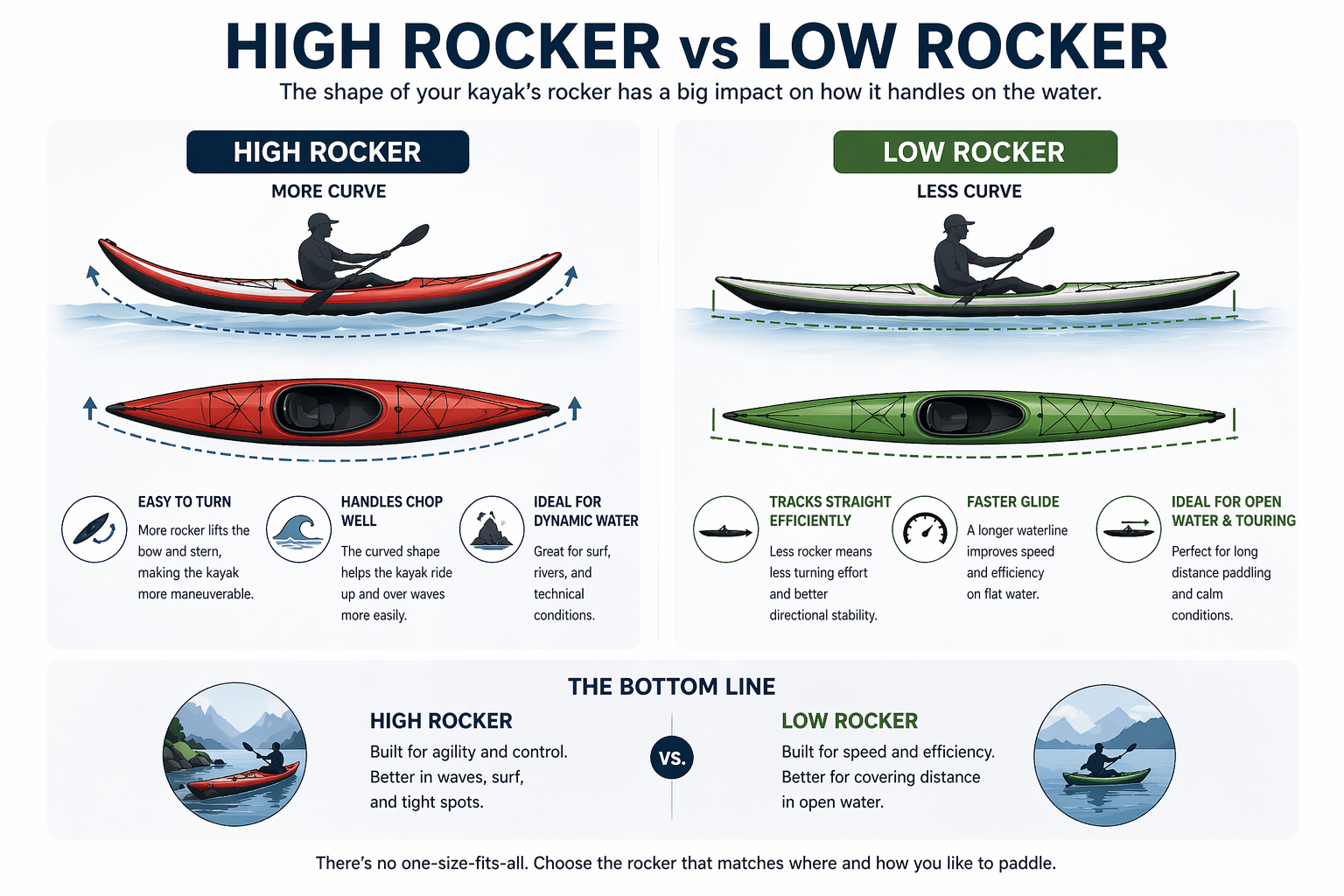
Kayaks behave in a similar way. When more of the hull sits flat in the water, the kayak resists turning. When the ends lift slightly out of the water, the pivot point becomes smaller and the kayak can rotate more easily.
This is why two kayaks of the same length can behave quite differently on the water. A longer kayak with generous rocker may still turn fairly easily, while a shorter kayak with very little rocker may feel more determined to keep going straight.
Designers use rocker carefully to balance tracking and maneuverability depending on the intended purpose of the kayak.
Tracking Aids: Keels, Fins, and Rudders
Even with thoughtful hull design, most kayaks benefit from features that help them maintain direction on the water. These are known as tracking aids.
Tracking aids work by increasing the kayak’s grip in the water, making it more resistant to sideways movement.
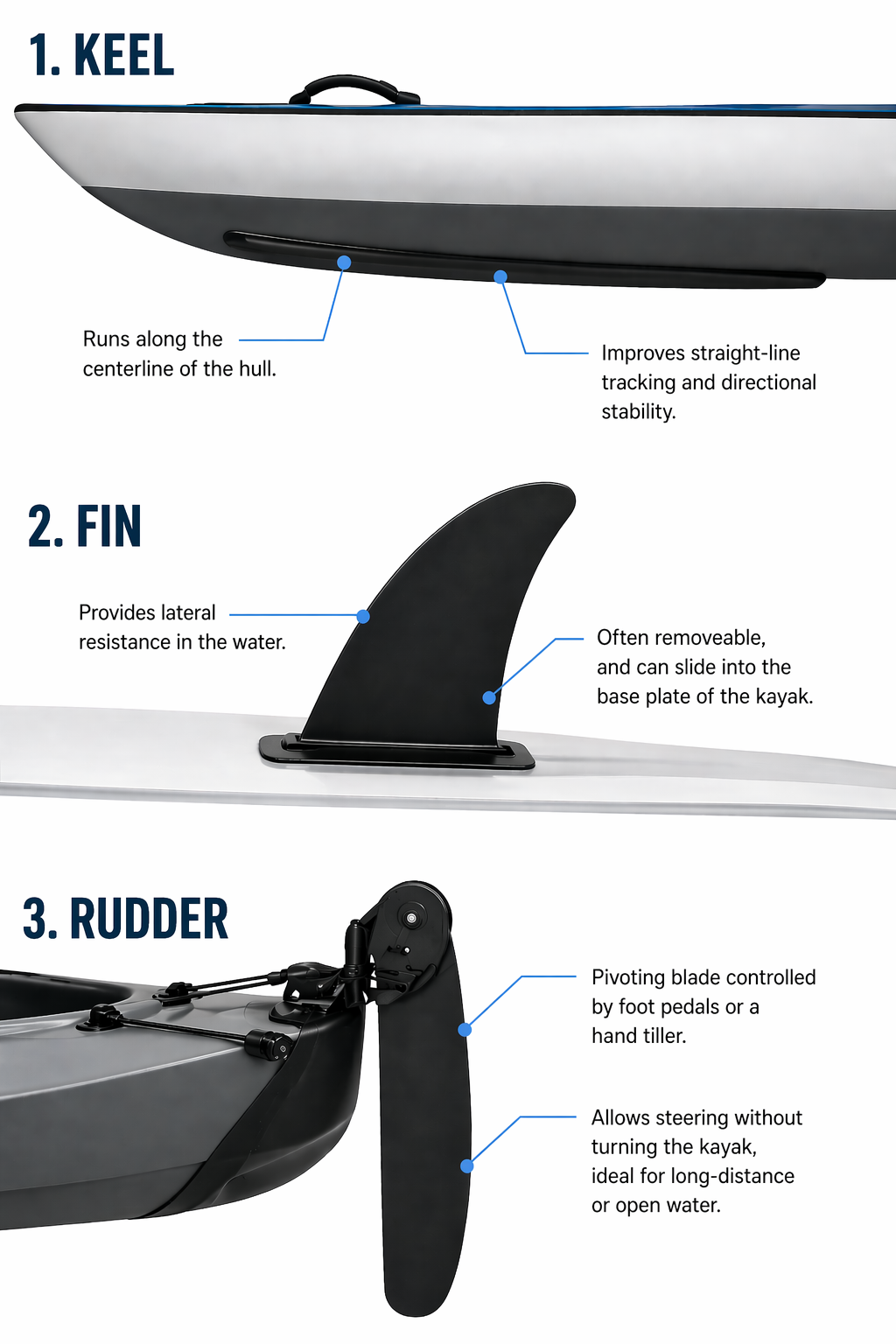
One of the simplest forms is a keel, which is a small ridge that runs along the center of the hull. Some kayaks have this built directly into the hull shape, while others use inflatable keels that add a subtle directional edge along the bottom of the kayak.
Another common tracking aid is the Fin . A Fin is usually positioned near the stern of the kayak. Because it extends slightly deeper into the water, it adds grip at the back of the boat and helps the kayak maintain a straighter course.
Most paddlers notice the effect immediately, especially in wind or over longer distances. Without a fin installed, the kayak may wander slightly with each paddle stroke. With the fing in place, it tends to track much more predictably.
Some longer touring or racing kayaks also use rudders. Unlike a fin , which simply stabilises the kayak’s direction, a rudder can be actively controlled using foot pedals. This allows paddlers to steer the kayak without changing their paddle stroke. For 99% of paddles a fin is sufficient but if you’re racing or planning a multi week trip, a rudder may be worth looking into.
Tracking aids don’t replace good hull design, but they help fine-tune how a kayak behaves once it’s on the water, particularly in wind or open conditions.
External Forces: Weathercocking and Lee Cocking
Even with good design and tracking aids, external conditions can influence how a kayak behaves on the water. Wind is one of the most common factors.
Wind pushes against the kayak above the waterline, while the water resists movement below it, so the forces acting on the kayak aren’t evenly balanced.
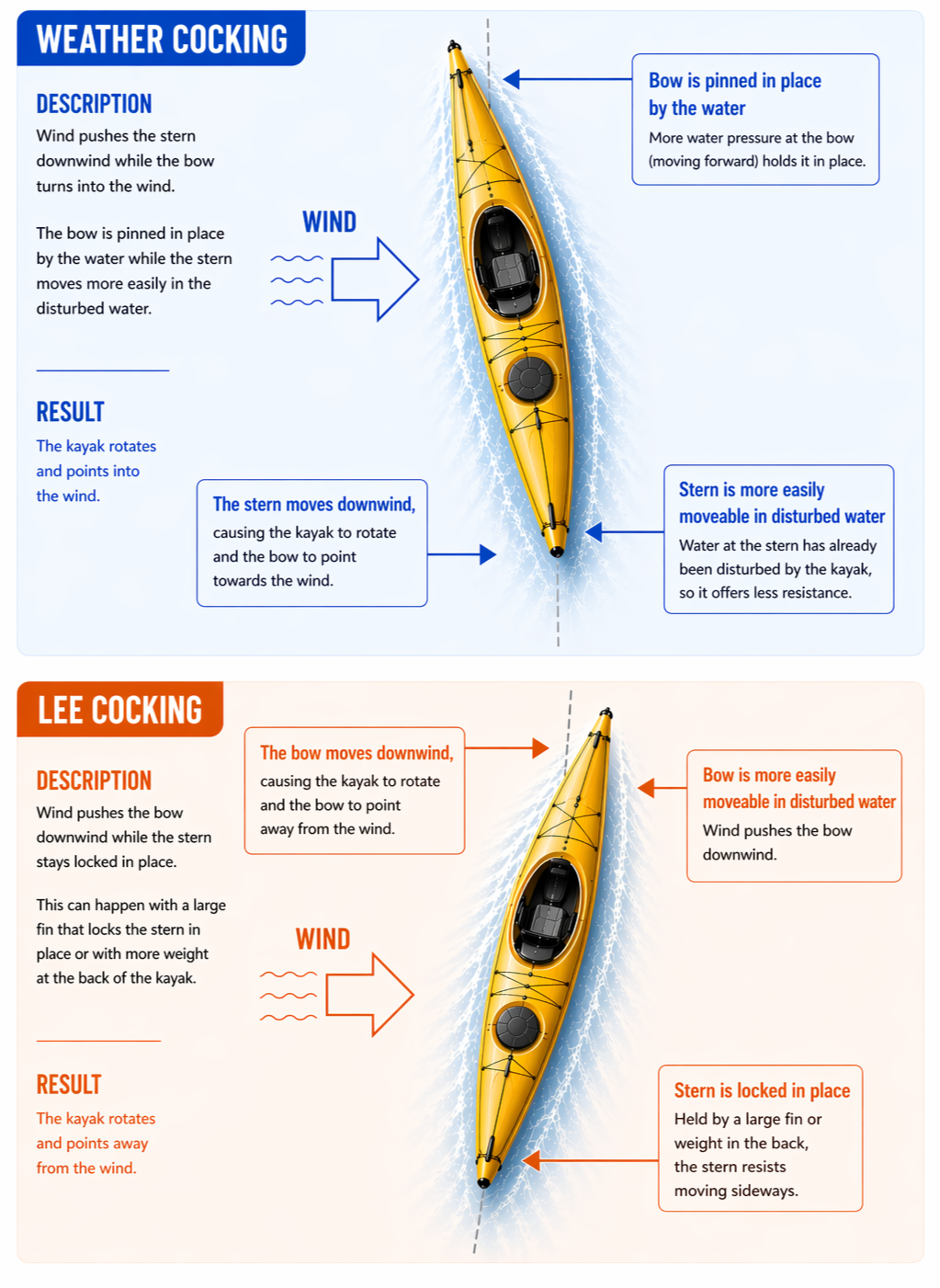
In many cases, this leads to a behaviour known as weathercocking.
Weathercocking occurs when the stern is pushed slightly downwind while the bow turns into the wind. This happens because the bow usually has more water pressure, locking it in place, as it moves forward, while the stern travels through water that has already been disturbed by the front of the kayak. As a result, the stern tends to move sideways more easily when wind pushes against the kayak. As the stern drifts downwind, the kayak naturally rotates and the bow turns toward the wind.
The opposite behaviour is known as lee cocking, where the bow is pushed downwind instead. This may occur when a kayak uses a large fin that locks the stern of the kayak in place or of there is lots of weight situated at that end.
Neither is ideal, although lee cocking is more problematic as it can cause paddlers to be stuck going down wind. The best way to avoid being blown around in the wind is to have a low profile or rounded hull shape. Bathtub style flat panel kayaks are more likely to get blown around in the wind. Rounded side tubes or rounded side panel designs are therefore much better in windy conditions.
This is also where tracking aids such as skegs and rudders can play an important role, helping paddlers maintain direction when wind or currents begin to influence the kayak’s movement.
So far we’ve focused on how kayaks track and turn. The other major factor shaping how a kayak feels on the water is stability.
Understanding Stability
Primary stability refers to how steady the kayak feels when you first sit in it on flat water.
While this is important, stability on the water isn’t only about sitting perfectly flat. When turning or cutting through waves, paddlers often lean the kayak slightly onto one side. This allows the hull to carve through the water rather than turning on top of it.
Leaning, often called edging, is an important skill because it allows you to control how the kayak interacts with the water. Rather than just turning with the paddle, leaning the kayak changes the shape of the hull in the water, helping you steer more smoothly, maintain balance in waves, and handle different conditions with confidence. It becomes especially useful as you progress, giving you greater control, efficiency, and stability on the water.
That’s where secondary stability comes in.
Secondary stability describes how supportive the kayak feels when it’s leaned over. Some kayaks feel very steady at rest but suddenly feel unstable once they tip slightly. Others may feel a bit livelier when sitting flat but become very supportive once you lean them. In practice, this is why some kayaks feel great at first but less predictable once you start turning.
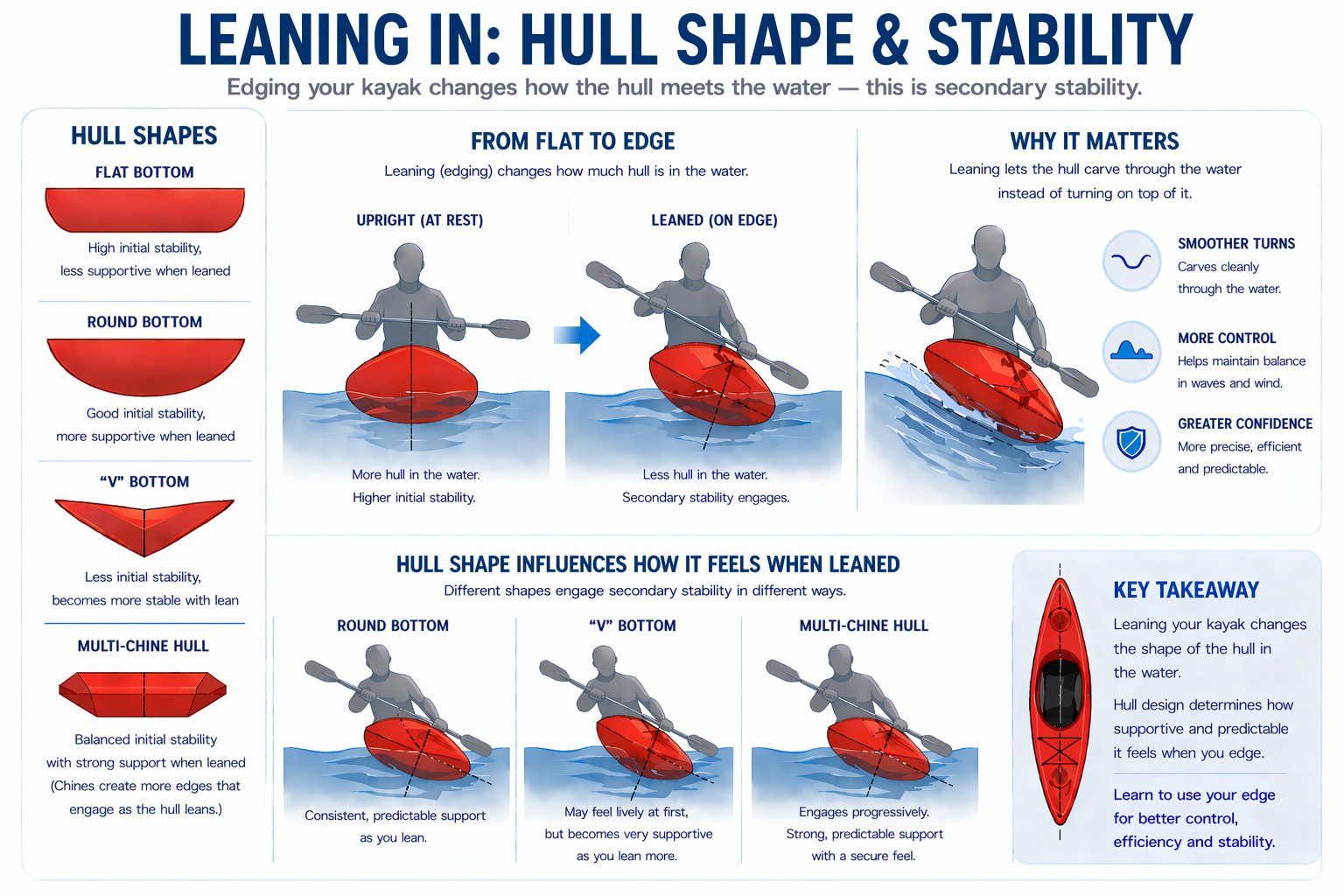
This behaviour is heavily influenced by the shape of the hull, particularly features like the chine and the overall hull profile. These design elements determine how the kayak interacts with the water as it tilts, which in turn affects how predictable and supportive it feels when edging or turning. Rounded hulls and flat hulls with round side tubes will typically have better stability.
Secondary Stability and Chine
The chine refers to the edge where the bottom of the hull meets the sides of the kayak. This shape plays a key role in how a kayak feels on the water, particularly when turning or leaning.
A soft chine has a smooth, rounded transition between the hull and the sides. This creates a very gradual shift as the kayak leans, resulting in a predictable and forgiving feel. Many paddlers find soft chine kayaks comfortable and easy to control, especially in changing conditions.
A hard chine, by contrast, has a more defined edge. As the kayak tilts and that edge engages with the water, it can create a noticeable stabilising effect. This often makes the kayak feel more “locked in” when edging or carving turns, which some paddlers prefer for precision and responsiveness.
A multi-chine design sits between these two approaches. Instead of one smooth curve or one sharp edge, the hull features multiple subtle angles. On the water, this creates a progressive transition as you lean, smoother than a hard chine, but with more support and feedback than a fully soft chine.
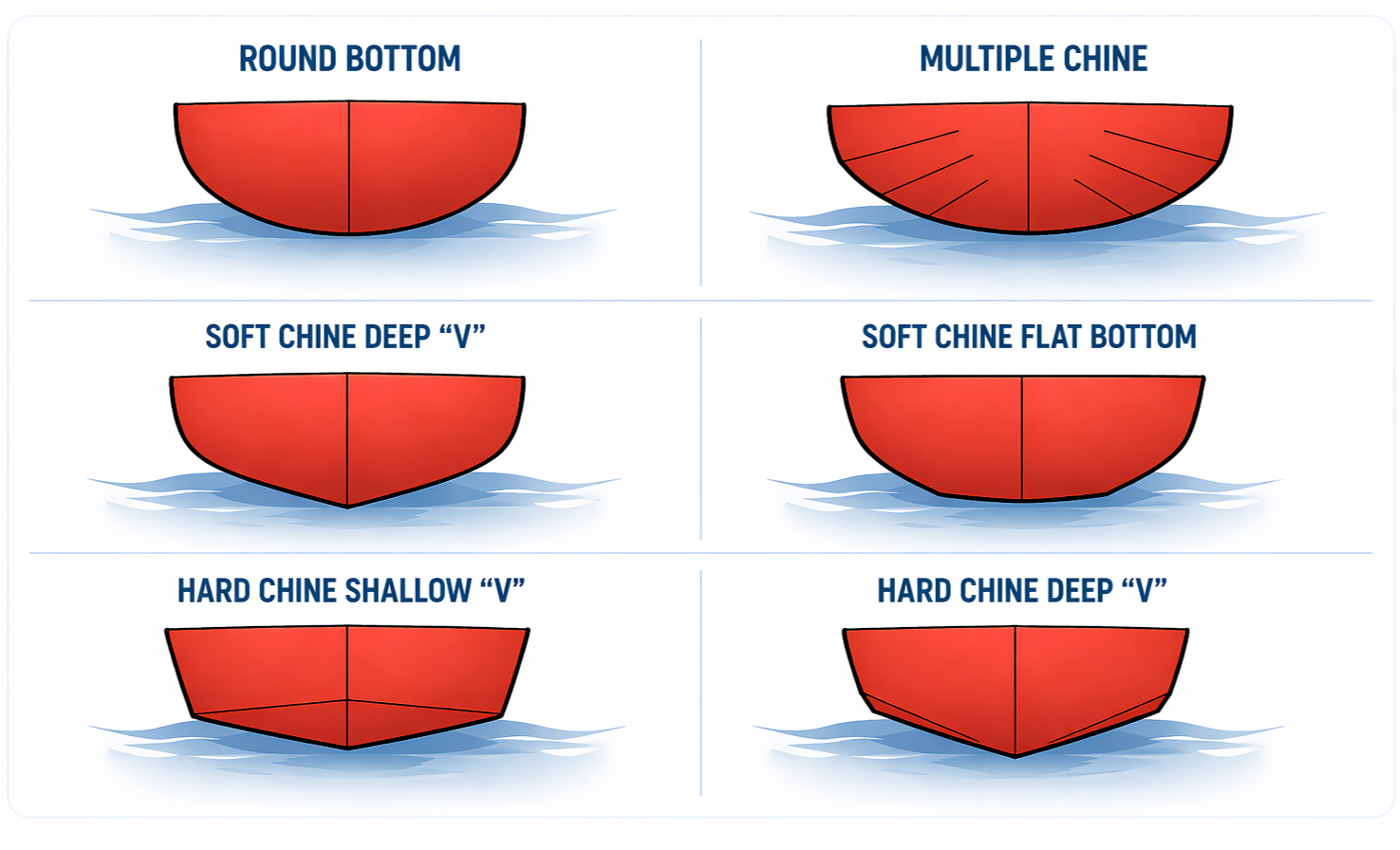
In practice a multi-chine design means:
A smoother, more controlled lean than a traditional hard chine
Added stability and confidence when edging compared to a fully rounded hull
A balanced feel that adapts well across different conditions and paddling styles
There is no universally “better” option. The right chine depends on how and where you plan to paddle. If you’re looking for a blend of stability, control, and versatility, a multi-chine hull offers a well-rounded middle ground that many paddlers find intuitive and confidence-inspiring.
Summary
After spending time in different kayaks, you quickly realise that no single feature defines how one feels on the water. It’s always the combination, how hull shape, width, length, and rocker work together to balance tracking, turning, and stability.
Hull shape sets the foundation, influencing everything from efficiency to how predictable the kayak feels when you lean into a turn. Width gives that initial sense of stability, but it’s the hull design and side chambers that really determine how forgiving the kayak feels once you’re moving. Length and rocker then fine-tune the experience, deciding whether the kayak wants to glide straight and efficiently or pivot easily and respond to input.
On top of that, elements like fins, rudders, and even wind conditions all play a role in how the kayak behaves in the real world. These aren’t theoretical differences, they’re things you feel immediately when you get on the water, especially as conditions change.
What this all comes down to is control. The more you understand how these design elements interact, the easier it becomes to choose a kayak that matches how and where you actually paddle.
Because in the end, a well-designed kayak doesn’t just perform better on paper, it feels more predictable, more efficient, and more enjoyable every time you use it.
Looking for more info
Check out our article Inflatable Kayaks: The Complete Guide for a comprehensive overview of inflatable kayaks, how they are made and what makes one inflatable kayak different to another. Alternatively, if you want to find the right tandem kayak for you, check out our guide 2 Person Inflatable Kayaks.
Our global customer service team are knowledgeable and always happy to help. If you have any further questions please feel free to call or email us. Details can be found on our contact page.
We’ve also designed an onguide line to help make the process easier, and match you with the inflatable kayak we believe best fits your needs.