
Choosing The Best Inflatable Kayak:
What You Need to Know
So you’ve decided you want to buy an inflatable kayak! Take it from us kayak addicts, you’re going to love it.
If you’re stuck on which one to choose, we’re here to help - here are our 8 key considerations that’ll help you choose the best inflatable kayak for you in no time.
Key Considerations

Usage - What Will You Use It For?
The biggest factor in deciding what inflatable kayak to choose is identifying what you’re mainly going to use it for.
Recreation: typically speaking something wider will be more stable and shorter will be more manoeuvrable. However you can’t sacrifice leg space and if it’s too wide it could significantly reduce speed. If you’re paddling with kids or pets, look for something with lower sides or a sit-on-top design.
Performance: set your sights on a longer, narrower, V-shaped kayak. This will offer excellent straight-line tracking and higher speed, and though it’s less stable when stopped, once you get up to speed it’s often not that different to other kayaks. Avoid self bailing kayaks as the holes can increase drag.
Touring: if you’re planning on being in your kayak for hours or even days at a time, look for something with a good amount of leg room and storage space. An efficient design will also help you reduce the amount of effort and time it takes to get from A to B. Again avoid self bailing kayaks as the holes can increase drag.
Fishing: stability and comfort are key when fishing - again go for something wider and shorter, and with a firm Tech-Stitch base or similar. You’ll also want to check whether the fishing accessories like rod holders are included or can be added.
Whitewater: if you’re going to be consistently paddling in coastal or choppy water, consider something with a reinforced v-shape bow and stern to cut through those waves. If you’re going down rapids, you need something made from a very high-denier PVC that will bounce! A self bailing kayak is also a good thing to have to allow water to drain from the cockpit.
One other note here is about the paddling level of the people using the kayak - beginners will be better served by a shorter, wider kayak offering more stability, while experienced paddlers may appreciate the speed and tracking offered by a longer, narrower kayak.

Capacity
Pick your number of people, and check the weight rating.
Whether you want a 1 person, 2 person or convertible kayak depends on what you think you’ll be doing most of the time. If you’re not sure whether you’ll want to paddle solo or with a buddy more often, a convertible kayak can be a great option but you’ll want to get something on the shorter end of the two-person spectrum (around 13 to 14 feet).
Weight-wise, a lot of inflatable kayaks are rated only up to about 220lbs capacity. If you’re a larger person or you want to carry extra gear for touring there are plenty of excellent options to suit you, just make sure you check the capacity before purchasing.

Width
Your width decision comes from what you want to use it for.
Wider kayaks as mentioned earlier in this article are typically more stable when still. This means if you’re a beginner or paddling with kids, wider kayaks are a better option. Around 2.8 feet is best as going above that can significantly slow you down.
Narrower kayaks move more quickly through the water in a straight line, and are therefore designed for performance paddling at speed but they’re less stable at rest. They’re perfectly suited for going down rivers or across lakes, and because of their greater paddling efficiency, are a great choice for touring and expeditions.
There are other factors at play but to an extent there is some trade-off between speed and stability.
Primary stability refers to how stable the kayak is at rest, so this is going to be your main consideration if you’re planning to be still and take in the scenery, or if your kids will jump into the water and need to climb back on, and in these cases, you’ll want a wider kayak. Secondary stability is the stability generated when the kayak is moving, and not all kayaks are created equal here. Many narrower kayaks are designed to have good secondary stability. If you’re choosing a wider kayak, make sure you look for one that has a skeg (fin) to assist with straight-line tracking.

Length
Consider here comfort and manoeuvrability.
There’s no hard and fast rule on inflated length, but there’s some basic logic - if you expect to fit two adults into a kayak then once you account for leg length, any two person kayak under 13 feet is going to be pretty tight!
The other thing to consider is that as we said above, the length plays into the kayak’s intended use. Longer kayaks are great for straight-line paddling, provide plenty of leg space and may give you room for extra gear, while shorter kayaks are easier to turn so are more manoeuvrable for playful or white water paddling.

Weight
Don’t sacrifice weight at the cost of quality.
One of the ways manufacturers develop lighter weight kayaks is to cut on construction and material quality - if it’s extremely lightweight and very cheap, check what it’s made from to make sure it’s durable enough to last and you don’t regret your purchase.
Yes you’d typically want to go for the lightest inflatable kayak within your price range but you’re best to find something that uses high-quality materials, and is the right size and weight for you. The best inflatable kayak weight range is under 33lbs for a 1 person kayak, and under 40lbs for a 2 person kayak.
Ensure it also has enough payload capacity for your intended use. It’s best to allow 55lbs more than you think you’ll need.
Materials
Materials are a make or break for an inflatable kayak.
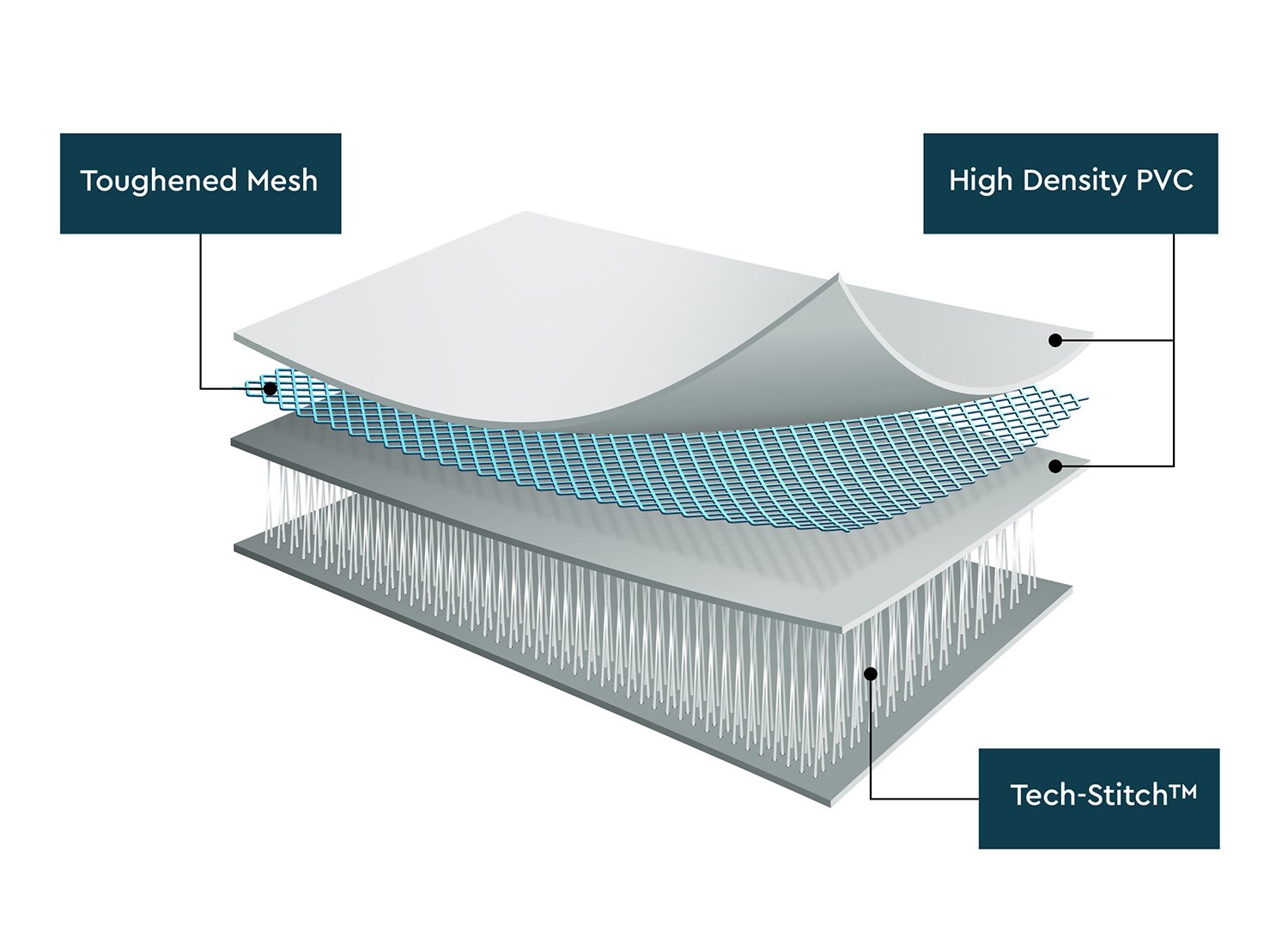
PVC is the standard material in inflatable kayaks (also some cheaper kayaks will use straight vinyl, which is much lighter weight but prone to puncture). Look for a high denier (denier signifies the PVC’s density, which corresponds to toughness on the water) - the best inflatable kayaks use 1000 denier PVC.
Tech-Stitch™ is a highly-engineered composite fabric where two layers of high-denier PVC are connected by precisely targeted threads. When inflated, the network of threads is designed to provide optimum tension, resulting in a solid surface. Tech-Stitch™ offers the best possible firmness in an inflatable surface. Most other kayaks on the market use drop-stitch, which is a similar concept with a standard patterning of internal threads.
Fabric Coverings are used on some kayaks to provide an additional layer of protection against scratches and punctures however the significant downside of fabric is that it takes a long time to dry when packing away, and over time can sag and fray. With good quality PVC’s (particularly double layer) you just don’t need the fabric coverings these days.
Seats, footrests and accessories are little things that can go a long way towards your comfort and long-term use of the kayak. Padded foam seats offer a firmness that’s much more supportive than inflatable seats, footrests need to be easily adjustable and anything metal on the kayak must be stainless steel to avoid rust.

Packed Size
Consider how small it packs down.
Many manufacturers make bags that are near impossible to get the kayaks back into. A smaller packed size is better but if you can’t get it back in the bag what’s the point?
We’d suggest looking for something that packs down small but comes with an oversized bag. Just make sure it’ll fit in the trunk!

Setup
Fewer inflation points with matching valves and quick-drying materials make a big difference to your enjoyment of the kayak.
Look for fewer inflation points. A good standard is three - one for the floor and one for each side tube/wall. Some kayaks have more separate chambers in case one of them punctures. In practice this means more time spent inflating, for not a whole lot more benefit - there’s still more than enough air in two large remaining chambers to get the kayak to shore.
Also make sure the valves match - it’s painful to have to spend time screwing on different valve adaptors. It’s also much more convenient if the valves are all located in the same area of the kayak and you can quickly move between them.
Finally, look for quick-drying materials like PVC. Inflatable kayaks must be completely dry before storing or they can grow mould, and fabric-covered kayaks can take a long time to dry out which makes pack-up more painful.
Best For Recreation
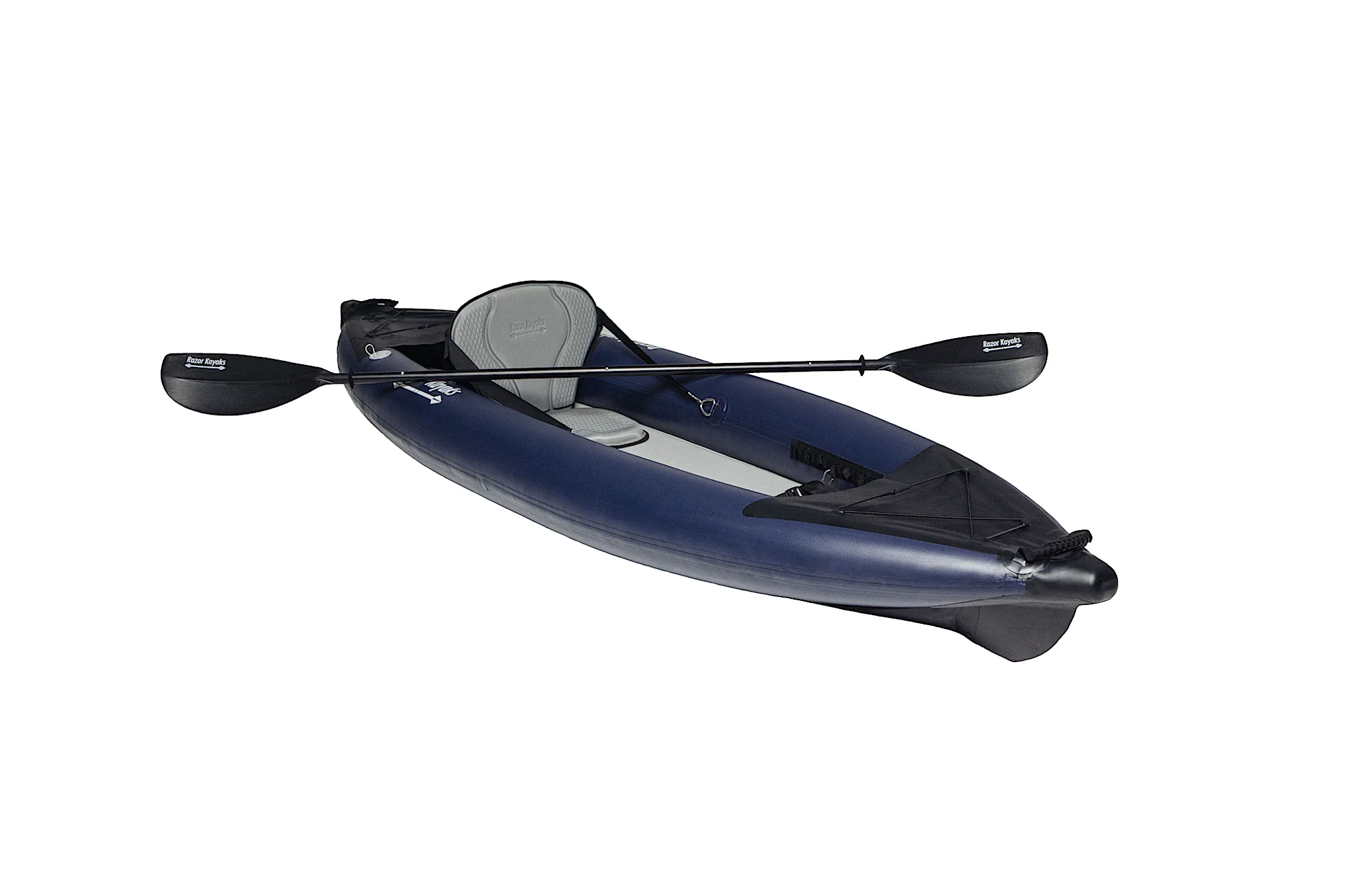
A fantastic all-round kayak
A dependable inflatable kayak built for recreational paddling, relaxed touring, fishing trips, and easy exploring on lakes, rivers, and coastal waterways.
Lightweight and easy to transport
Stable, confidence-inspiring handling
Smooth, efficient glide
Description
The R1 Ultra is built for paddlers who want a versatile inflatable kayak that’s stable, durable, lightweight, and easy to paddle. Compact and portable, it packs neatly into the included backpack for easy transport, storage, and spontaneous adventures on the water.
Its streamlined hull and rigid Tech-Stitch™ floor improve glide, handling, and efficiency for a smoother paddling experience than traditional recreational inflatables. Stable and easy to manoeuvre on the water, the R1 Ultra is ideal for relaxed touring, fishing trips, and everyday exploring.
Built with heavy-duty materials for long-lasting performance, the R1 Ultra also features front and rear bungee deck lacing, a removable fin, an ultra-comfortable seat, and an adjustable footrest for a more enjoyable paddling experience.
Paddles sold separately - view our great range of accessories here.
What The Critics Say
“Undoubtedly the all-around best inflatable kayak for this price range.” — Water & Outdoors
“Compact and lightweight.” — We Are Explorers
In Stock. Arrives in 2-4 business days.
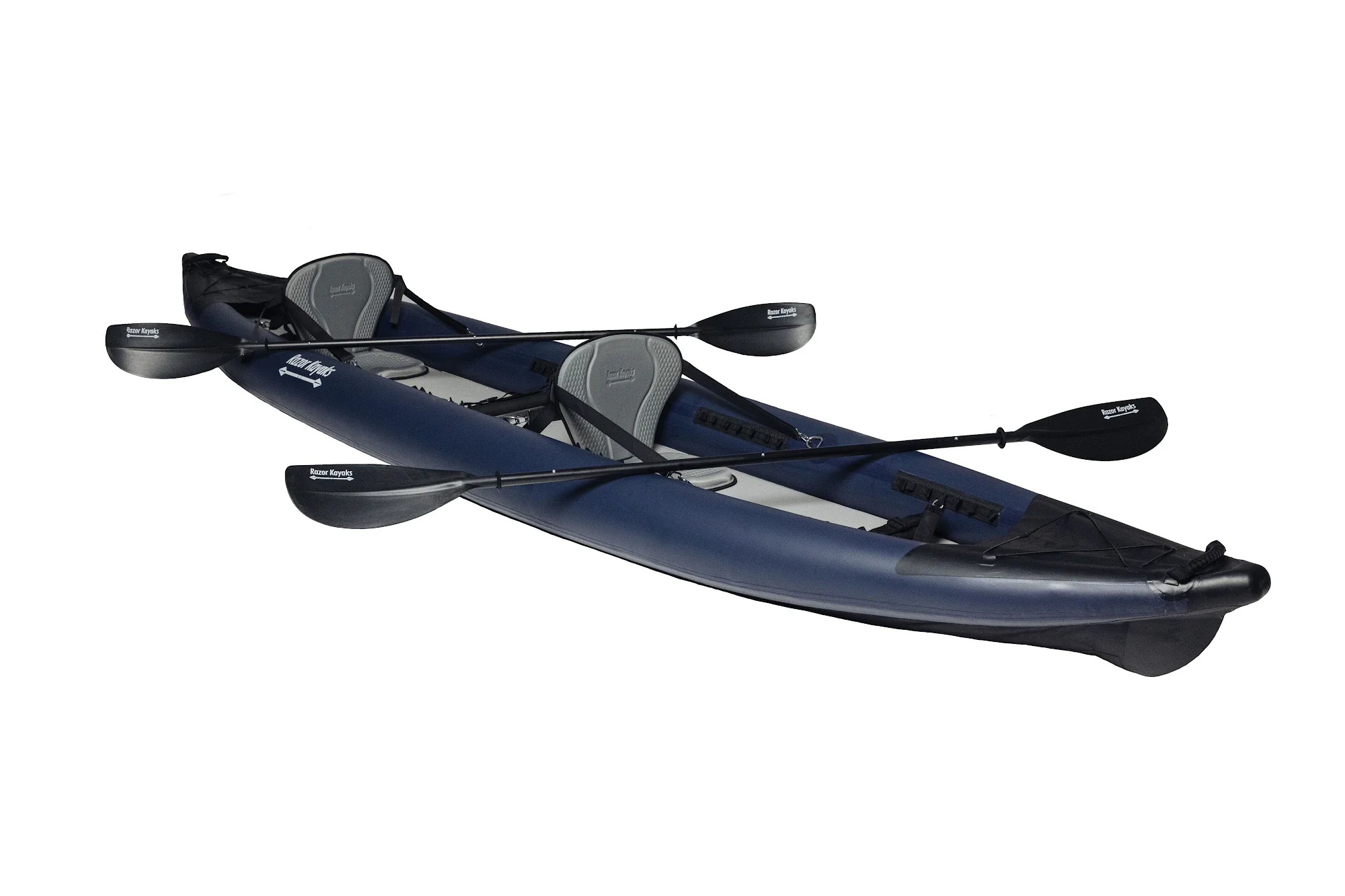
A fantastic all-round kayak for two.
A dependable inflatable kayak built for recreational paddling, weekend adventures, and easy exploring.
Configures for one or two paddlers
Stable, confidence-inspiring handling
Easy to transport and store
Description
The R2 Ultra is a versatile inflatable kayak that’s stable, durable, and easy to paddle. Designed for 1 or 2 people, it offers the flexibility to head out alone or share the adventure with a partner.
Its rigid Tech-Stitch™ floor improves glide, tracking, and efficiency for a smoother paddling experience than traditional recreational inflatables. Stable and easy to handle on the water, the R2 Ultra is ideal for relaxed touring, family adventures, fishing trips, and everyday exploring.
Built with heavy-duty materials and designed for long-lasting performance, it packs neatly into the included backpack for easy transport and storage. This latest generation R2 Ultra also features front and rear bungee deck lacing, a removable fin, a supportive footrest, improved drainage systems, and an ultra-comfortable seat.
Paddles sold separately - view our great range of accessories here.
What The Critics Say
“The all-round best performing kayak we’ve tested.” — Water & Outdoors
“Incredibly easy to paddle and handle.” — The Equipment Guide
In Stock. Arrives in 2–4 business days. Ships from our LA warehouse.